


Listen to the article
Scottish Parliament Set to Vote on Historic Assisted Dying Legislation
Lawmakers in the Scottish Parliament will vote Tuesday on groundbreaking legislation that could make Scotland the first part of the United Kingdom to legalize assisted dying for terminally ill adults.
The vote, scheduled after 2200GMT, allows parliamentarians to vote according to their personal beliefs rather than following party lines, making the outcome difficult to predict. The bill represents a significant potential shift in end-of-life care within the UK healthcare landscape.
Scotland, which maintains devolved powers over healthcare policy within the United Kingdom, would establish a framework allowing individuals with six months or less to live to seek assistance ending their lives. The proposed legislation includes safeguards requiring confirmation from two doctors that the person is both terminally ill and mentally capable of making such a request.
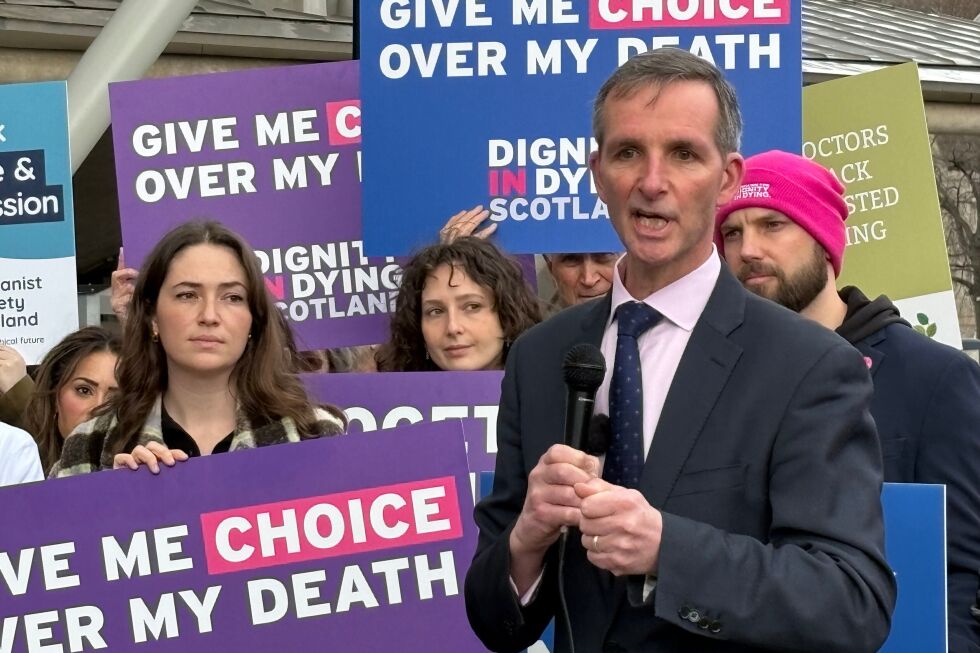
Liberal Democrat lawmaker Liam McArthur, who introduced the bill, made an impassioned appeal to his colleagues. “If you believe that dying people should not have to suffer against their will and you have heard, like I have, of the many instances where they have been simply failed by the lack of compassion and safety in our current law, you now have to back this bill,” McArthur stated. “It is time to look terminally ill Scots in the eye and make this change.”
The legislation has sparked intense debate, with opposition coming from various quarters. Critics worry the law could create subtle pressures on vulnerable populations, including elderly, disabled, ill, or depressed individuals, potentially leading them to choose death to avoid burdening others.
Deputy First Minister Kate Forbes of the governing Scottish National Party has publicly stated her intention to vote against the bill. Several prominent medical organizations have also expressed concerns, including the Royal College of Psychiatrists and the Royal Pharmaceutical Society.
“Doctors, psychiatrists, pharmacists and palliative care specialists — the people who would be tasked with implementing this — are asking us not to do it,” Forbes emphasized. “They think this bill is unsafe.”
The Scottish vote comes amid parallel efforts to legalize assisted dying elsewhere in the UK. In England and Wales, similar legislation passed the House of Commons in June but faces significant obstacles in the House of Lords, where over 1,000 amendments have been proposed. Supporters claim these amendments represent deliberate delay tactics, while some Lords defend the process as necessary scrutiny to strengthen protections.
With the current parliamentary session expected to end in May, time constraints may prevent the English and Welsh bill from becoming law, potentially requiring advocates to restart the entire legislative process.
Meanwhile, two British Crown possessions outside the United Kingdom proper—Jersey and the Isle of Man—have already passed assisted dying laws. These self-governing territories await formal approval from King Charles III to implement their legislation.
If Scotland approves the measure, it would join a growing international movement. Assisted suicide, typically involving a doctor-prescribed lethal medication self-administered by the patient, is currently legal in various jurisdictions worldwide, including Australia, Belgium, Canada, Luxembourg, the Netherlands, New Zealand, Portugal, Spain, Switzerland, and parts of the United States.
Each of these locations has established different qualifying criteria and safeguards, reflecting varied cultural, medical, and ethical approaches to end-of-life care. The international trend suggests growing acceptance of providing options for terminally ill patients while attempting to balance autonomy with protections against potential abuses.
The Scottish vote represents not just a potential policy change but a profound societal decision about how to approach suffering and individual choice at life’s end—a question that continues to challenge healthcare systems and societies worldwide.
Fact Checker
Verify the accuracy of this article using The Disinformation Commission analysis and real-time sources.

10 Comments
End-of-life care is a deeply personal matter. I hope the proposed safeguards can help ensure the legislation protects the rights and dignity of terminally ill individuals.
You raise a good point. Robust safeguards will be critical to ensure this legislation is implemented ethically and responsibly.
I appreciate the Scottish Parliament taking on this challenging but important issue. Allowing terminally ill individuals to die with dignity is a complex moral and ethical question.
Agreed. This is a delicate balance between individual autonomy and societal values. The debate will surely be vigorous.
While I don’t have a personal stake in this issue, I’m curious to see how the vote turns out and what it might mean for the future of end-of-life care policy in the UK.
A pioneering move by Scotland, if passed. It could set a precedent for other parts of the UK to consider similar legislation.
This is a sensitive and emotive topic. I hope the lawmakers are able to reach a thoughtful and balanced decision that respects the rights and needs of terminally ill individuals.
This is a very sensitive and complex issue. I appreciate the lawmakers taking the time to carefully consider the perspectives of all stakeholders on assisted dying legislation.
As a mining and commodities follower, I’m curious to see how this debate unfolds and what implications it may have for the healthcare industry and related sectors.
That’s an interesting perspective. Legislation around end-of-life care could potentially impact the pharmaceutical and medical technology segments.