


Listen to the article
Iran Erects Roofs Over Damaged Nuclear Sites Amid Rising Tensions
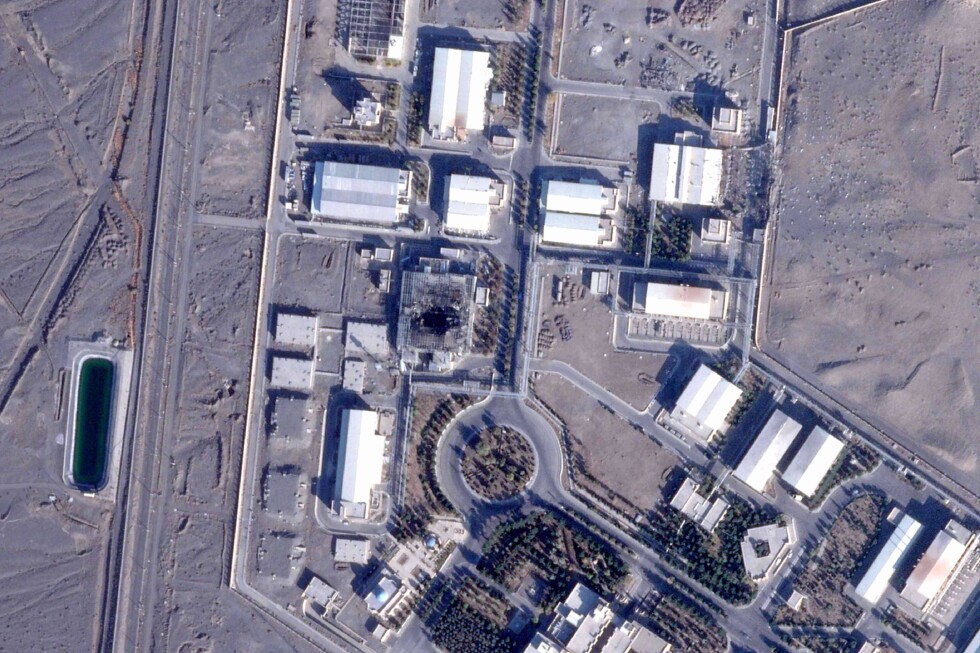
Satellite images reveal that Iran has constructed roofs over two nuclear facilities damaged in last year’s Israeli and American airstrikes, potentially concealing efforts to salvage materials from the sites. The activity at the Isfahan and Natanz nuclear facilities marks the first significant development visible by satellite since Israel’s 12-day war with Iran in June.
The images from Planet Labs PBC show new roofs built over damaged buildings at both locations, effectively blocking satellite surveillance—currently the only method for monitoring these sites, as Iran has prevented access by International Atomic Energy Agency (IAEA) inspectors.
These coverings appear to be part of Iran’s strategy to assess what survived the strikes rather than indicating reconstruction efforts, according to Andrea Stricker, an Iran analyst at the Washington-based Foundation for Defense of Democracies.
“They want to be able to get at any recovered assets they can get to without Israel or the United States seeing what survived,” Stricker explained.
The development comes amid escalating tensions over Iran’s crackdown on nationwide protests. U.S. President Donald Trump has repeatedly demanded that Iran negotiate a new nuclear deal to avoid potential American military strikes in response to the crackdown. The United States has moved the USS Abraham Lincoln aircraft carrier and several guided-missile destroyers into the Middle East, though it remains uncertain whether Trump will authorize military action.
Key Nuclear Sites Targeted in 2025
Prior to Israel’s military campaign last June, Iran maintained three major nuclear facilities. The Islamic Republic has consistently maintained that its nuclear program is peaceful, though Iranian officials have increasingly made threats about pursuing nuclear weapons in recent years. Western intelligence agencies and the IAEA have determined that Iran had an organized nuclear weapons program until 2003.
The Natanz facility, located approximately 220 kilometers south of Tehran, combined above-ground and underground laboratories that conducted most of Iran’s uranium enrichment. Before the attacks, the IAEA reported that Iran used advanced centrifuges at Natanz to enrich uranium to 60% purity—just short of the 90% required for weapons-grade material. Significant quantities of enriched uranium are believed to have been on-site when the complex was attacked.
The facility near Isfahan primarily produced uranium gas that feeds into centrifuges for purification. A third site, Fordo, situated about 95 kilometers southwest of the capital, housed a hardened enrichment facility beneath a mountain.
Last year’s military action began with Israeli strikes, followed by American attacks using bunker-busting bombs and Tomahawk cruise missiles. According to the White House’s National Security Strategy published in November, these strikes “significantly degraded Iran’s nuclear program,” though specific details about the extent of damage remain limited in public reports.
Activity at Damaged Sites
The main above-ground enrichment building at Natanz, known as the Pilot Fuel Enrichment Plant, was hit by Israeli forces on June 13, leaving it “functionally destroyed” and “seriously damaging” underground halls containing centrifuge cascades, according to IAEA Director-General Rafael Mariano Grossi. A subsequent U.S. attack on June 22 targeted Natanz’s underground facilities with bunker-busting bombs, likely causing catastrophic damage to remaining infrastructure.
Satellite imagery shows Iran began constructing a roof over the damaged Natanz plant in December, completing it by month’s end. The facility’s electrical system appears to remain non-operational. Additionally, Iran continues excavation work that began in 2023 at a site known as Kūh-e Kolang Gaz Lā (“Pickaxe Mountain”) just outside the Natanz complex perimeter, likely building a new underground nuclear facility.
At Isfahan, a similar roof was constructed over a structure near the facility’s northeast corner, with work completed in early January. The Israeli military had previously stated its strikes at Isfahan targeted sites associated with centrifuge manufacturing.
“The roofs appear to be part of an operation to recover any sort of remaining assets or rubble without letting us know what they are getting out of there,” said Sarah Burkhard, a senior research associate at the Washington-based Institute for Science and International Security.
Sean O’Connor, an expert at the open-source intelligence firm Janes, agreed, noting the purpose was likely “to obscure activity rather than to, say, repair or rebuild a structure for use.”
Broader Recovery Efforts
Since the war’s conclusion, Iran has worked to reconstitute its ballistic missile program, rebuilding multiple sites. Recent weeks have seen construction at the Parchin military complex southeast of Tehran, specifically at a site identified as “Taleghan 2,” which Israel destroyed in an October 2024 airstrike.
According to the Institute for Science and International Security, previously seized Iranian nuclear data identified this building as housing an explosive chamber and specialized X-ray systems used to study explosive tests—technology potentially applicable to developing implosion-style nuclear weapons.
“This has been reconstituted very rapidly,” noted Lewis Smart, a Janes analyst who studies Iran’s nuclear program. “It’s being expanded to potentially make it more resistant to penetration attacks and bombings…. A rather large containment vessel is being put into the facility, which could be used for high explosive testing.”
As Iran continues these activities, international attention remains focused on the country’s nuclear ambitions and the potential for further escalation in an already volatile region.
Fact Checker
Verify the accuracy of this article using The Disinformation Commission analysis and real-time sources.

11 Comments
Tensions are certainly running high, with the crackdown on protests compounding the nuclear issues. Maintaining open lines of communication and diplomatic engagement will be crucial to de-escalating the situation.
The construction of roofs over damaged nuclear sites suggests Iran is trying to conceal recovery efforts and prevent external monitoring. This raises concerns about their intentions and transparency.
Absolutely. The lack of IAEA access exacerbates those concerns. Careful analysis of the available data will be vital to understanding Iran’s actions and plans.
While the satellite imagery is concerning, it’s important to rely on authoritative sources and objective analysis when assessing the developments at Iran’s nuclear sites. Speculation should be avoided.
Well said. Maintaining a fact-based, impartial approach is key to understanding the complex dynamics at play here.
The satellite imagery raises valid concerns, but the full context and implications require careful analysis. Jumping to conclusions could exacerbate an already fragile situation.
Interesting developments at Iran’s nuclear facilities. Curious to see how this escalating situation plays out amid the ongoing protests. Monitoring the activity and tensions will be important going forward.
You’re right, the satellite imagery provides an intriguing window into the situation. Guarding against further escalation and maintaining oversight will be crucial.
This situation highlights the importance of effective monitoring and verification mechanisms when dealing with sensitive nuclear programs. Continued diplomatic efforts to ensure transparency and compliance are essential.
I agree. Upholding the international nonproliferation framework is crucial, even in the face of escalating tensions and domestic unrest in Iran.
The activity at the Isfahan and Natanz facilities bears close watching. Any indications of Iran pursuing nuclear weapons capabilities would be extremely troubling and require a firm international response.