


Listen to the article
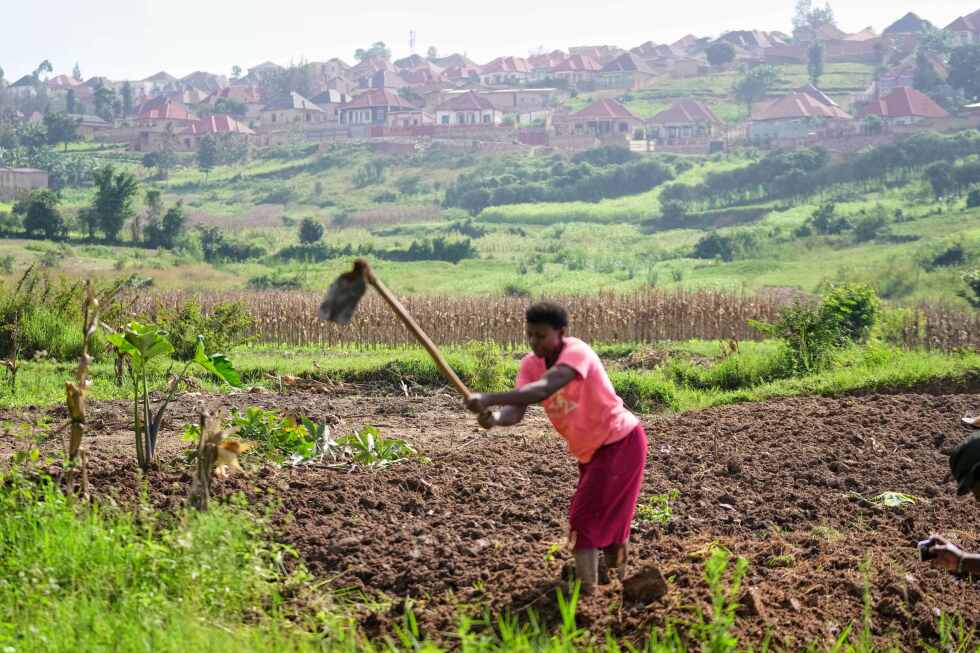
The rhythmic sounds of construction muffle the thud of farmers’ hoes on a chilly morning in Rwanda’s capital, where new efforts aim to protect remaining agricultural land from relentless development in Africa’s most densely populated country.
Eighty-four-year-old Mukarusini Purisikira had been a farmer before fleeing to Congo during the 1994 Rwandan genocide. Upon returning, she found her family’s land, which had stretched across the hills, had been taken away for construction. She gestured toward Kigali’s high-rise buildings with resignation.
“It is all I have,” she said, looking warily at construction equipment on a ridge nearby. She now grows maize and sweet potatoes on a plot the size of a small cottage, barely enough to feed herself.
But Purisikira and other small-scale farmers now have a measure of protection. Since September, Rwanda’s government has implemented an aggressive land preservation initiative, mapping agricultural areas and using satellite imagery to track development encroaching on farmlands and forests. The urgency is clear: Rwanda’s population is expected to reach 22 million in just a couple of years.
The government has imposed substantial penalties for violations – fines of up to $3,000 and jail terms of up to six months for developers found encroaching on protected agricultural land. Some buildings in Kigali have already been demolished, though those affected declined to comment, fearing government retaliation. Officials now plan to incorporate drone technology for more effective real-time monitoring.
Land use data from the mayor’s office reveals that Kigali’s master plan has dedicated nearly a quarter of the city’s land – 22% – to agriculture, reflecting the government’s commitment to food security.
“We recognize that housing construction is attractive due to demand, but our future projections show that farming will be even more productive,” said Emma-Claudine Ntirenganya, spokeswoman for the mayor’s office. “The demand for food is also rising, and with innovation, we believe it can be grown efficiently on smaller pieces of land.”
While most of Kigali’s food traditionally comes from other districts in Rwanda, farmland in those areas is also diminishing rapidly. Last year, the government printed and displayed maps showing areas in districts across Rwanda designated for construction versus those reserved for agriculture, creating clear boundaries for development.
“We’re approaching agriculture in an urban way,” Ntirenganya explained. “We will be able to show Kigalians that they can also do agriculture and be productive.” The city administration is leading by example, setting up a greenhouse on its own roof and requiring developers seeking building permits to include green spaces and gardens in their designs.
Innovative approaches to urban farming are gaining momentum throughout Kigali. Christian Irakoze co-founded a local company, Eza Neza (“grow well”), that installs vertical farms where vegetables and fruits such as strawberries are grown in stackable plastic containers. One of their installations grows 600 plants in vertical rows stretching about 50 meters along a perimeter wall.
“This is a different way of thinking about farming, from traditional large-scale upcountry farming to something smaller, modular, and that anyone can really do,” Irakoze said. By using locally available inputs such as manure and volcanic sediment in place of soil, his company aims to make farming less dependent on imported materials.
“We really have to find ways to develop our own solutions, whether through inputs like fertilizers or seeds. Global events are always a reminder that we should definitely have some alternatives,” he added, referencing how global fertilizer prices have risen since the outbreak of conflicts like the war in Ukraine.
Elsewhere in Kigali, young agronomists are training farmers to adopt technologies such as hydroponics – growing plants in water instead of soil – to maximize productivity in limited spaces.
“The population is increasing, yet our land is not increasing. We make sure that we find solutions that can help farmers overcome that challenge so they can produce more,” said Richard Bucyana, one of the agronomists.
Bucyana emphasized that solutions like Rwanda’s help buffer against global supply chain disruptions. “African governments should start thinking how they can be self-sustainable,” he urged.
Rwanda’s approach highlights a growing trend across Africa, where urbanization and population growth are putting unprecedented pressure on agricultural land. By embracing innovative farming methods and implementing strict land protection policies, Rwanda is attempting to secure its food future while continuing its ambitious development goals.
For a nation still healing from the scars of genocide while pursuing rapid modernization, balancing urban development with agricultural preservation represents a critical challenge that could offer lessons for other densely populated countries facing similar pressures.
Fact Checker
Verify the accuracy of this article using The Disinformation Commission analysis and real-time sources.

5 Comments
I’m curious to learn more about the specific policies and initiatives Rwanda is implementing to track encroachment on agricultural areas. Satellite imagery and penalties for violations sound like a proactive approach, but the details on implementation and enforcement would be interesting to understand.
With Rwanda’s population expected to grow significantly in the coming years, the pressure on available land will only intensify. I hope the government’s preservation efforts can strike an effective balance between development needs and protecting vital farmland and food production.
Urban farming can be a creative solution to address land scarcity, but it’s concerning to hear about the loss of generational farmland for families like Mukarusini Purisikira’s. Balancing development needs with food security is a complex issue Rwanda will need to grapple with.
This is an interesting story about the challenges of urban development and preserving agricultural land in densely populated Rwanda. It’s good to see the government taking steps to map and protect farmlands, but the pressures of rapid population growth will be a constant struggle.
This article highlights the challenges of urban planning and resource management in densely populated regions. Rwanda’s approach of mapping agricultural areas and using satellite monitoring is a creative solution, but the ultimate success will depend on consistent policy implementation and community engagement.