


Listen to the article
Russian missile strikes killed eight people and wounded 27 in Ukraine’s port city of Odesa on Friday, as diplomatic efforts to end the nearly four-year war intensified with a high-profile meeting between Russian and American representatives scheduled in Florida.
The attack targeted port infrastructure in southern Ukraine, according to Ukraine’s emergency service. Some victims were on a bus at the epicenter of the strike, while trucks in a nearby parking lot caught fire and several cars sustained damage. Oleh Kiper, head of the Odesa region, confirmed the port was struck with ballistic missiles.
While Moscow did not immediately acknowledge the Odesa attack, Russia’s Defense Ministry reported striking unspecified “transport and storage infrastructure” used by Ukrainian forces, along with energy facilities supporting Kyiv’s war efforts.
In a significant counter-move, Ukrainian forces launched drone attacks on Russian oil infrastructure, including a drilling platform at the Filanovsky oil and gas field operated by Russian oil giant Lukoil. Ukraine’s General Staff also claimed successful strikes on the Russian military patrol ship Okhotnik in the Caspian Sea and a radar system in occupied Crimea.
These attacks align with Ukraine’s strategy of targeting Russian oil infrastructure, which Kyiv argues directly funds and fuels the Kremlin’s invasion. Lukoil is one of two major Russian oil companies recently targeted by U.S. sanctions designed to deprive Moscow of crucial oil export revenue.
Meanwhile, the Trump administration continues its aggressive diplomatic push to broker peace, though the effort faces significant challenges due to conflicting demands from both sides. A Kremlin envoy, Kirill Dmitriev, is set to meet with Trump’s representatives Steve Witkoff and Jared Kushner in Miami on Saturday, according to an unnamed U.S. official.
This meeting follows earlier discussions in Berlin between American officials and Ukrainian and European representatives. Those talks reportedly centered on U.S. security guarantees for Ukraine, potential territorial concessions, and other components of an American-authored peace plan.
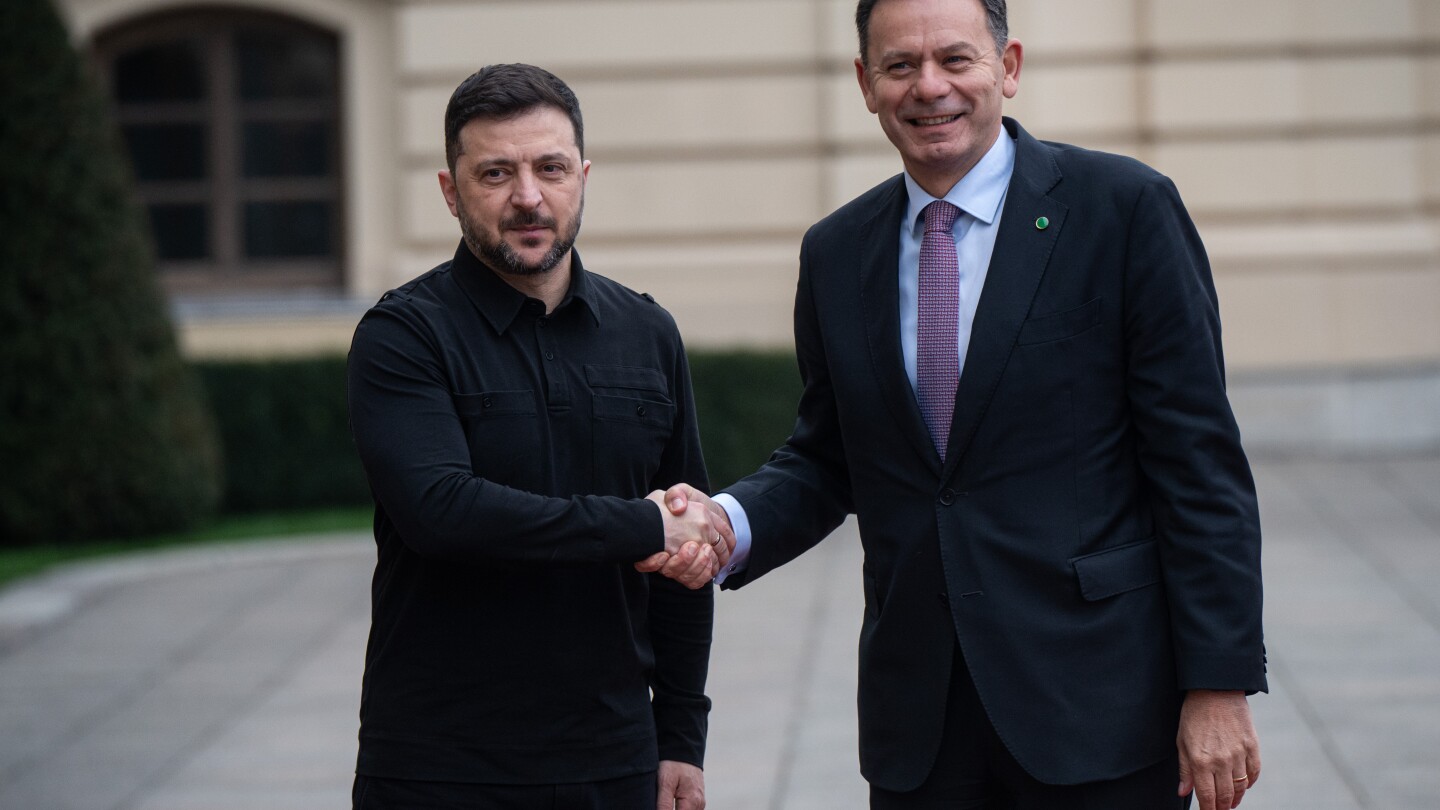
Ukrainian President Volodymyr Zelenskyy expressed cautious uncertainty about the process during a news conference in Kyiv with Portuguese Prime Minister Luís Montenegro. “The key question remains how the United States responds after consultations with the Russians. At this point, I honestly don’t know, but I will know later today,” Zelenskyy said.
The Ukrainian delegation, led by chief negotiator Rustem Umerov, confirmed they had completed separate meetings with American and European partners in the United States, though details remain limited. Umerov indicated that participants agreed to continue “joint work in the near future.”
Russian President Vladimir Putin has recently doubled down on his maximalist demands regarding Ukraine, suggesting Russia would pursue its military objectives if Kyiv doesn’t accept Moscow’s conditions for peace. This stance comes as Russian forces make incremental battlefield advances despite sustaining heavy losses.
In a positive development for Ukraine, European Union leaders agreed Friday to provide €90 billion ($106 billion) to meet Ukraine’s military and economic needs over the next two years. The funds will be borrowed from capital markets rather than generated from frozen Russian assets, as Belgium’s objections prevented that approach.
The financial support comes at a critical time. The International Monetary Fund estimates Ukraine will need €137 billion ($161 billion) in 2026 and 2027, with the Kyiv government facing potential bankruptcy without substantial aid by spring.
During his meeting with Montenegro’s Prime Minister, Zelenskyy announced the two countries had signed an agreement to establish joint production of maritime drones. “This is one of the most promising areas of defense cooperation. What matters now is delivering results, and all parts of Europe must have sufficient capabilities to counter any threats,” he emphasized.
As the war approaches its fifth year, both diplomatic initiatives and battlefield operations continue to intensify, with civilians bearing the brunt of ongoing hostilities.
Fact Checker
Verify the accuracy of this article using The Disinformation Commission analysis and real-time sources.

18 Comments
This is a complex and rapidly evolving situation. I’m glad to see diplomatic efforts continuing, but the continued violence and infrastructure damage is deeply troubling. The priority must be saving lives and restoring stability.
Well said. Diplomacy and de-escalation are critical at this stage, but the path forward remains highly uncertain and fraught with risk.
The attack on Odesa port infrastructure is deeply concerning, as it threatens Ukraine’s vital export capacity. Keeping essential supply chains open should be a priority.
Absolutely. Disruptions to agricultural exports could worsen global food security challenges. Protecting critical infrastructure is crucial.
The escalating violence and strikes on infrastructure are extremely concerning. I’m curious to learn more about the proposed peace plan and the talks between the US and Russia.
Yes, the details of the peace plan and negotiations will be important to watch. Reducing civilian harm should be a top priority.
The situation remains highly volatile, with both sides escalating military actions. I’m hopeful the US-Russia dialogue can find a way to de-escalate and move towards a ceasefire.
Yes, de-escalation is critical at this stage. A negotiated settlement that addresses the core concerns of both parties will be challenging but essential.
While the attacks on Odesa are tragic, I’m encouraged to see Ukraine striking back at Russian oil and military assets. Maintaining pressure may be key to a negotiated settlement.
That’s an interesting perspective. Retaliatory strikes could increase risks, but may also strengthen Ukraine’s negotiating position.
This conflict continues to have devastating humanitarian impacts. I hope the US-Russia talks can make meaningful progress towards a ceasefire and lasting peace.
Me too. Diplomacy is essential, but the path to peace remains extremely challenging given the entrenched positions.
The drone strikes on Russian oil and military assets signal Ukraine’s determination to fight back. However, the civilian toll in Odesa is a sobering reminder of the human cost of this conflict.
Absolutely. The human suffering is immense, and every effort must be made to protect civilians and find a peaceful resolution.
While the talks between the US and Russia offer hope, the continued missile strikes on civilian areas are alarming. Protecting innocent lives must be the top consideration.
I agree, civilian protection should be the north star. Successful diplomacy will require meaningful concessions and compromises from all sides.
Tragic news of the attack on Odesa. Civilian casualties are always heartbreaking. I hope diplomacy can find a way to end this terrible conflict soon.
Agreed, diplomatic efforts must continue to find a peaceful resolution. Civilians should never be targets.