


Listen to the article
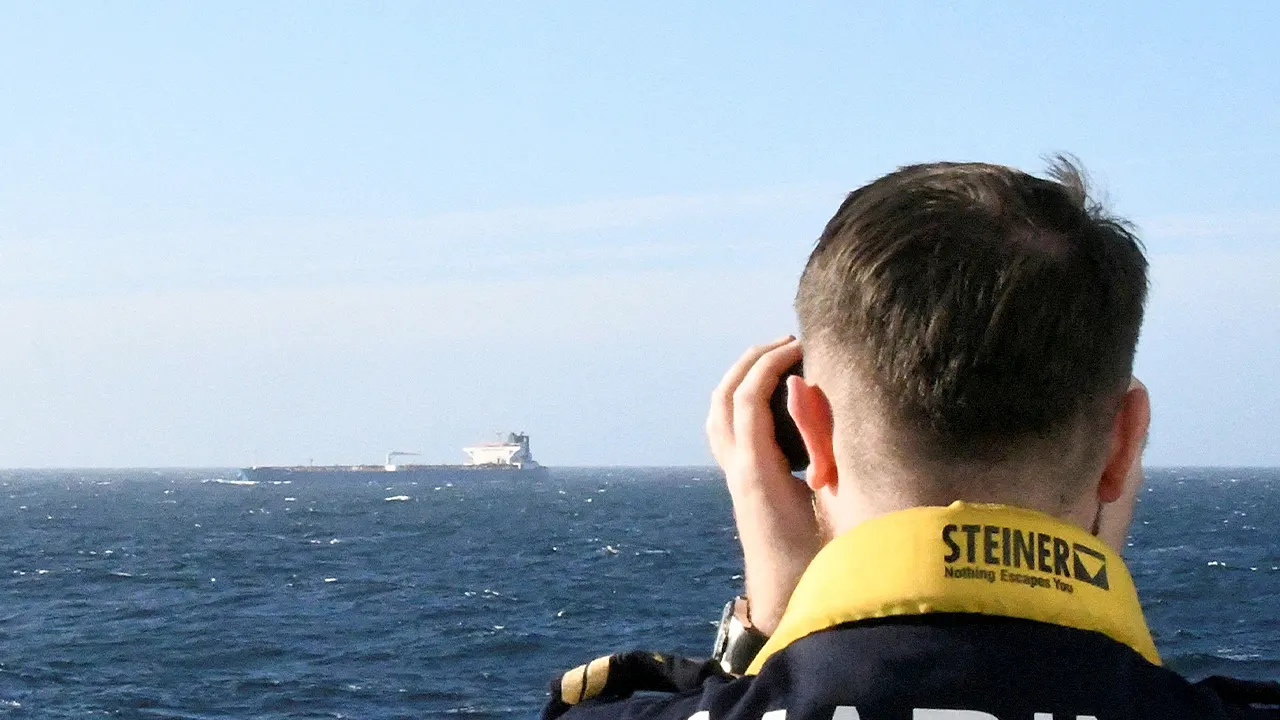
The French navy has intercepted a Russian oil tanker in the Mediterranean Sea, marking the latest effort by Western powers to disrupt Russia’s shadow fleet operations that circumvent international sanctions. French President Emmanuel Macron announced Thursday that French forces had boarded and searched the vessel, which was subsequently diverted for further inspection.
The tanker, identified as the Grinch, was sailing from Murmansk in northern Russia under the flag of Comoros when it was intercepted between southern Spain and northern Morocco. According to French maritime police, the operation was conducted on the high seas with support from several allied nations.
“The team that boarded the vessel inspected it and determined that documents raised doubts about the regularity of the vessel’s flag,” the French Mediterranean Maritime Prefecture said in a statement. The Grinch is now being escorted by the French navy to an anchorage location for additional verification.
This interception represents part of a growing international effort to crack down on Russia’s shadow fleet—a network of hundreds of aging, poorly regulated tankers that employ tactics such as changing names, ownership structures, and flags to evade detection and sanctions. Maritime data firm Lloyd’s List Intelligence estimates this global shadow fleet includes approximately 1,400 tankers, many subject to U.S., British, or European sanctions.
Intelligence for the operation was jointly gathered and shared by France and the United Kingdom, according to French military officials who spoke to The Associated Press on condition of anonymity due to the sensitive nature of the operation.
The European Union has imposed 19 rounds of sanctions against Russia since its full-scale invasion of Ukraine began in 2022. Despite these measures, Russia has continued exporting millions of barrels of oil, primarily to China and India, often at discounted prices. These ongoing exports have provided crucial revenue for Moscow’s war effort in Ukraine.
Western nations have recently intensified their efforts to disrupt these sanction-evading operations. In early January, U.S. European Command announced the seizure of the Russian-flagged Marinera oil tanker in the North Atlantic Sea, demonstrating a similar commitment to enforcing sanctions.
At the World Economic Forum in Davos on Thursday, Ukrainian President Volodymyr Zelenskyy criticized European countries for not doing enough to stop the transport of Russian oil using sanctioned vessels. “Why can [U.S. President Donald Trump] stop tankers of the ‘shadow fleet’ and seize their oil, while Europe can’t?” Zelenskyy asked. “Russian oil is transported right along the European coast. This oil funds the war against Ukraine. This oil helps destabilize Europe.”
The interception of the Grinch may signal a shift in European strategy toward more aggressive enforcement of sanctions against Russia’s maritime trade. Energy analysts note that disrupting Russia’s shadow fleet operations is particularly challenging given the complex web of shell companies, flag-switching tactics, and the involvement of third-party facilitators who help disguise the true origins of oil shipments.
The effectiveness of these interdiction operations remains to be seen, as Russia has demonstrated considerable resilience in adapting to sanctions. However, increased coordination between Western allies in tracking and intercepting shadow fleet vessels could potentially constrain Russia’s ability to monetize its oil exports—a critical source of revenue for its war chest.
Maritime security experts point out that these aging tankers also present significant environmental risks due to their poor maintenance standards and outdated safety equipment. Several incidents involving shadow fleet vessels have resulted in oil spills and other environmental hazards in recent years.
As Western nations continue to tighten the enforcement of sanctions, the cat-and-mouse game between Russia’s shadow fleet and international maritime authorities is expected to intensify, with significant implications for global energy markets and geopolitical tensions surrounding the ongoing conflict in Ukraine.
Fact Checker
Verify the accuracy of this article using The Disinformation Commission analysis and real-time sources.

10 Comments
This operation highlights the importance of international cooperation in enforcing sanctions. The coordinated efforts of multiple nations will be key to making the sanctions bite.
Kudos to the French navy and its allies for this action. Denying Russia access to global shipping networks is an important part of the sanctions strategy.
Absolutely. Targeting Russia’s logistical capabilities is crucial to increase the economic pressure.
Interesting developments on the sanctions enforcement front. Intercepting Russian oil tankers is a bold move – it will be important to see if this leads to more disruptions of Russia’s shadow fleet operations.
Agreed. Cracking down on these workarounds is crucial for the sanctions to be effective.
The French navy’s actions highlight the ongoing coordination between Western allies to target Russia’s ability to evade sanctions. Inspecting vessels for irregularities is a smart tactic.
Yes, this sends a strong message that there will be consequences for attempts to circumvent the sanctions regime.
The interception of the Grinch tanker is a significant development in the sanctions enforcement saga. It will be interesting to monitor if this leads to broader disruptions of Russia’s maritime oil exports.
I’m curious to see what other measures could be taken to further disrupt Russia’s shadow fleet. Seems like a cat-and-mouse game, so maintaining vigilance will be key.
Good point. Adapting tactics as Russia tries new evasion methods will be an ongoing challenge for the enforcement efforts.