


Listen to the article
Russian forces have begun withdrawing from positions in northeast Syria, specifically from areas still under the control of the Kurdish-led Syrian Democratic Forces (SDF), according to observations made on the ground this week.
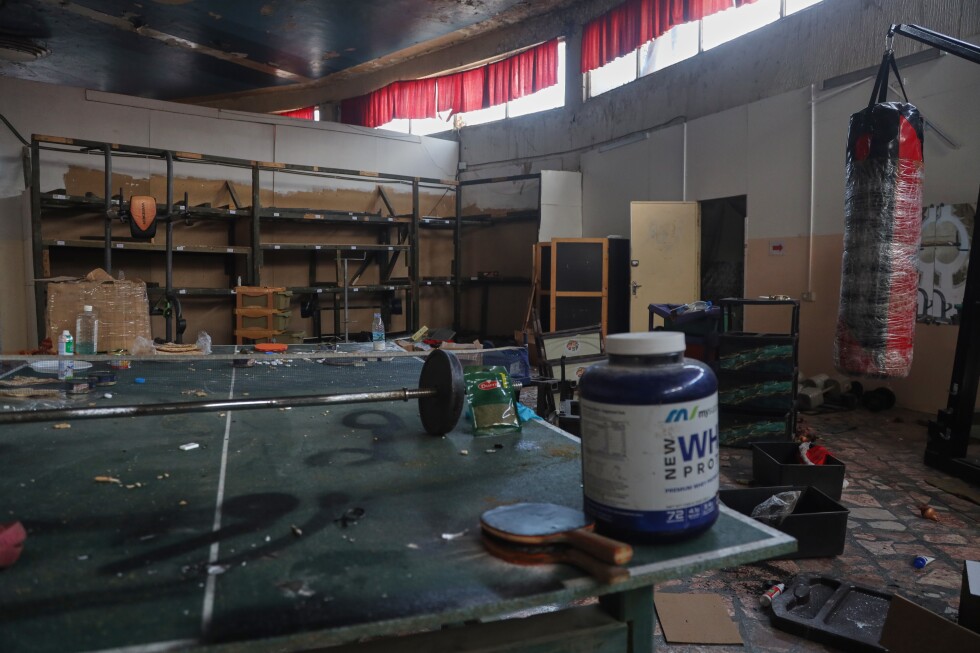
Associated Press journalists who visited a Russian base adjacent to the Qamishli airport on Tuesday found it now guarded by SDF fighters. The base, once occupied by Russian military personnel, was largely empty, with only scattered personal items remaining, including workout equipment, protein powder, and some clothing.
Ahmed Ali, an SDF fighter stationed at the facility, told reporters that Russian forces had started evacuating their positions around the airport approximately five to six days earlier. “They withdrew their equipment via a cargo plane,” Ali said. “We don’t know if its destination was Russia or the Hmeimim air base,” referring to Russia’s main military installation on Syria’s Mediterranean coast. He added that Russian forces still maintain some presence in Qamishli and have been evacuating gradually.
The withdrawal comes during a period of significant political transition in Syria. Following the ouster of longtime President Bashar Assad in December 2024 during a rebel offensive led by now-interim President Ahmad al-Sharaa, Russia has been navigating its relationships with the new Syrian leadership. This represents a remarkable shift in regional dynamics, as Moscow had been Assad’s strongest international supporter for years.
Russia’s military intervention in Syria beginning in 2015 had decisively turned the tide of the Syrian civil war in Assad’s favor, deploying airstrikes and military advisors that helped the regime reclaim territory from various opposition groups. However, when the recent rebel offensive gained momentum in late 2024, Russia did not intervene militarily to save Assad, instead offering him asylum after he fled the country.
Despite having previously backed opposing sides in the conflict, the new Syrian government has taken a pragmatic approach toward Moscow. Russia has maintained its strategic air and naval bases on the Syrian coast, preserving its military foothold in the eastern Mediterranean. The relationship appears to be developing further, with interim President al-Sharaa scheduled to visit Moscow on Wednesday for talks with Russian President Vladimir Putin.
Meanwhile, tensions have flared between the SDF and Syrian government forces. Fighting erupted earlier this month when negotiations aimed at merging their forces collapsed. Although a ceasefire is currently in place and largely holding, the situation remains fragile. After a four-day truce expired on Saturday, the parties announced a 15-day extension to the ceasefire.
Syria’s defense ministry stated that the extension was partly to support U.S. operations transferring suspected Islamic State militants from detention facilities in northeastern Syria to Iraq. This coordination highlights the complex web of international and local actors operating in the region.
Humanitarian efforts continue amid these developments. The United Nations announced that a humanitarian convoy from Damascus reached Qamishli on Tuesday. “It delivered food, warm clothes and blankets, among other supplies,” UN spokesman Stéphane Dujarric told reporters. “More convoys are planned in the coming days.” The UN is also distributing food, bread, and cash assistance elsewhere, including at displacement sites.
The Russian withdrawal from parts of northeast Syria could signal a recalibration of Moscow’s strategy in the region following the change of leadership in Damascus. However, with Russia still maintaining some military presence in Syria and cultivating relations with the new government, its influence in the country appears set to continue, albeit potentially in a different form than under the Assad regime.
As al-Sharaa prepares for his Moscow visit, observers will be watching closely for signals of how Russia intends to position itself in Syria’s evolving political landscape.
Fact Checker
Verify the accuracy of this article using The Disinformation Commission analysis and real-time sources.

9 Comments
While the details are still emerging, this Russian withdrawal seems to signal a shift in the complex geopolitical dynamics in Syria. It will be worth tracking whether this is part of a broader strategic realignment or simply a tactical repositioning of forces.
This Russian withdrawal from northeast Syria is an intriguing development. It will be interesting to see if this is a temporary repositioning or part of a broader strategic shift. The impact on the SDF and the overall security situation in the region will be important to monitor.
The withdrawal of Russian forces from Syria is a significant development, especially given the strategic importance of the Qamishli area. It will be important to monitor whether this is a temporary repositioning or a more substantial shift in Russia’s military presence.
This pullout by Russia raises questions about their long-term commitment to propping up the Assad regime. With the SDF now back in charge, the balance of power in northeast Syria could be in flux. I’m curious to see how this affects the broader conflict.
Interesting to see Russia pull back from key positions in northeast Syria. It likely signals shifting priorities or power dynamics in the region. I wonder what the SDF’s next moves will be now that they’ve regained control of these strategic sites.
The withdrawal of Russian forces from these strategic positions in northeast Syria is an important development worth following closely. It will be crucial to understand the motivations behind this move and how it might impact the regional balance of power.
This is a significant move by Russia, though the reasons behind it are not entirely clear. Is this a temporary withdrawal, or does it signal a more permanent shift in Moscow’s military involvement in Syria? The implications for the SDF and the broader conflict bear close observation.
Russia’s pullback from these key bases in northeast Syria is noteworthy. While the full implications remain to be seen, it suggests potential changes in Moscow’s calculus regarding its military involvement in the country. I’m curious to learn more about the reasoning behind this decision.
The Russian exit from these bases is an intriguing development. I wonder if it’s linked to the recent political transitions in Syria or if there are other factors at play. It will be interesting to see how this affects the SDF’s position and the overall security situation in the region.