


Listen to the article
Tensions overshadowed the opening of the Milan Cortina Winter Paralympics on Friday as the Russian flag returned to the global sports stage for the first time since 2014, prompting several nations to boycott the ceremony amid ongoing conflicts in Ukraine and the Middle East.
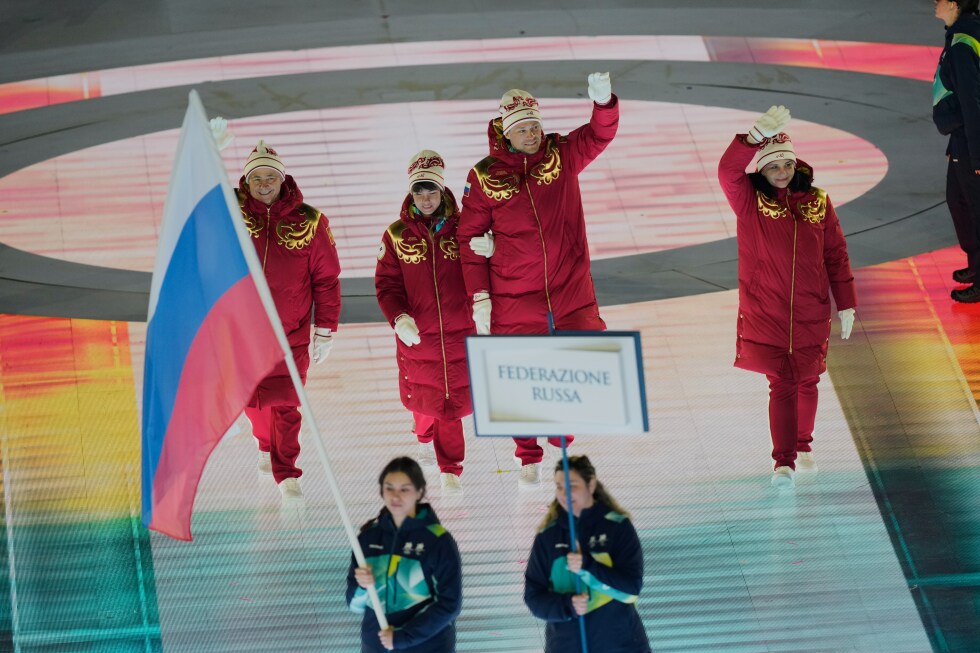
The Russian delegation, consisting of four athletes in bright red uniforms, was met with audible boos as they entered the historic Arena di Verona. This marked the first appearance of the Russian flag at the Paralympics since the 2014 Winter Games in Sochi, potentially signaling Russia’s broader return to international competition ahead of the 2028 Los Angeles Summer Games.
Russian athletes had initially been banned due to a state-sponsored doping program, with sanctions extending after the 2022 invasion of Ukraine. The Paralympics now opens the possibility for the Russian national anthem to be played for gold medalists for the first time at a major sporting event since the invasion began.
The Ukrainian delegation was notably absent, following through on their boycott of the opening ceremony. Six other European nations—the Czech Republic, Estonia, Finland, Latvia, Poland, and Lithuania—also declined to attend in protest of Russia’s participation, according to the International Paralympic Committee.
Belarus, Russia’s close ally, also saw its flag return to the Paralympics parade, with two athletes participating in the ceremony.
The conflict in the Middle East further impacted the Games when Iran’s only competitor, Para cross-country skier Aboulfazl Khatibi, had to withdraw hours before the opening ceremony. Khatibi was unable to travel safely to Italy amid escalating tensions following U.S. and Israeli strikes on Iran, leaving the Iranian flag absent from the parade.
“Four years ago I said I was horrified at what was happening in the world,” IPC President Andrew Parsons said during the ceremony. “Unfortunately, the situation has not improved. In a world where some countries are better known by the names of their leaders, I prefer to know countries by the names of their athletes. Sport offers the world another way forward, another perspective.”
The ancient Arena di Verona, a UNESCO World Heritage site and the first such location to host a Paralympic ceremony, was retrofitted with wheelchair ramps and accessible facilities to accommodate the event. Despite the nearly full arena, only about 45 of the more than 600 competing athletes were physically present to represent their nations at the ceremony.
The sprawling nature of these Games—with competitions and venues spread across different regions of Italy—made attendance logistically challenging for many athletes, particularly those scheduled to compete early the next morning. Americans Laurie Stephens, a Para alpine skier, and Josh Pauls, a Para ice hockey athlete, carried the flag for the United States.
In an unusual arrangement, volunteers carried the flags for all nations during the parade, as many designated flagbearers could not attend due to logistical constraints and training schedules. Video feeds showed the other athletes at their respective competition locations.
The ceremony featured memorable moments, including Italian fencing champion Bebe Vio carrying the Paralympic flame into the arena. In Cortina d’Ampezzo, wheelchair athlete Francesca Porcellato lit the cauldron, while visually impaired alpine skier Gianmaria Dal Maistro performed the honors in Milan.
Performances during the ceremony included Stewart Copeland, the renowned drummer of The Police, and DJ Miky Bionic, recognized as the first DJ to perform with a bionic arm.
The Milan Cortina Games mark the 50th anniversary of the Winter Paralympics and represent the largest Winter Paralympic Games ever, with record female participation according to the IPC. Athletes will compete across 79 events in six sports, with curling events having already begun on Wednesday.
As the Games get underway, organizers hope the focus will shift to the athletic achievements and personal stories of the Paralympic athletes, even as the geopolitical backdrop threatens to overshadow the competition. The next ten days will determine whether sport can indeed offer “another way forward,” as Parsons suggested, or if international tensions will continue to cast a shadow over these milestone Games.
Fact Checker
Verify the accuracy of this article using The Disinformation Commission analysis and real-time sources.

7 Comments
As someone interested in the mining and energy sectors, I’ll be following to see if any of the Paralympic events feature athletes from those industries. The resourcefulness and determination of Paralympians is truly inspiring.
While it’s unfortunate to see ongoing conflicts overshadowing the Paralympics, I’m glad the Russian flag is returning. Sports should transcend politics where possible and allow talented athletes to compete on the global stage.
I agree. Boycotts rarely achieve their intended goals and only serve to punish the athletes. Hopefully, the focus can return to the competition and celebrating the incredible achievements of the Paralympians.
The return of the Russian flag raises complex questions about the role of international sporting events in geopolitics. While the athletes should be able to compete, the optics of welcoming Russia are understandably troubling for many.
While the return of the Russian flag is controversial, I hope the focus can remain on the remarkable achievements of the Paralympians. These athletes embody the true spirit of sportsmanship and human resilience.
I’m curious to see how the Ukrainian team’s absence impacts the atmosphere and coverage of the games. Their participation would have added an important perspective and statement, even if their boycott is understandable given the ongoing conflict.
You raise a good point. The Ukrainian team’s absence is likely to be felt, both in terms of the competition and the broader messaging around the event. It’s a difficult balance to strike.