


Listen to the article
Russia Watches with Mixed Reactions as Trump Pursues Greenland Acquisition
As tensions escalate between the United States and Europe over President Donald Trump’s renewed push to acquire Greenland, Russian officials and state media have responded with a complex mixture of glee, strategic concern, and opportunistic commentary.
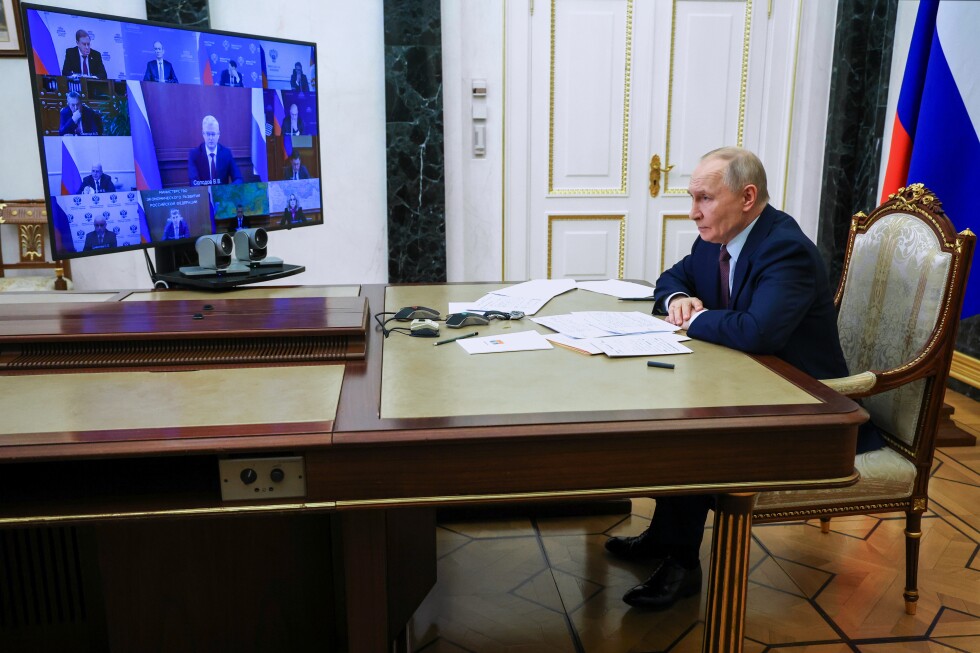
The Kremlin’s official position remains cautiously neutral. Russian President Vladimir Putin stated Wednesday that the matter “doesn’t concern us at all,” adding: “I think they’ll figure it out among themselves.” However, beneath this measured response lies a more nuanced Russian reaction that sees both opportunity and potential threat in Trump’s territorial ambitions.
Kremlin spokesman Dmitry Peskov highlighted the historical significance of the potential acquisition, noting that “if Trump takes control of Greenland he will go down in history, and not only U.S. history but world history.” The government newspaper Rossiyskaya Gazeta compared it to “such ‘planetary’ events as Abraham Lincoln’s abolition of slavery… or the territorial conquests of the Napoleonic Wars.”
Russian Foreign Minister Sergey Lavrov offered a perspective that appeared to support Trump’s position, suggesting that “Denmark’s control over Greenland” represents a vestige of colonial history. “In principle, Greenland isn’t a natural part of Denmark,” Lavrov said during a Tuesday news conference. He further drew parallels between Trump’s Greenland ambitions and Russia’s 2014 annexation of Crimea, claiming that “Crimea isn’t less important for the security of the Russian Federation than Greenland is for the United States.”
For Moscow, one clear benefit of the Greenland controversy is its potential to fracture Western alliances. Kirill Dmitriev, a presidential envoy involved in Ukrainian peace negotiations, boldly proclaimed on social media that “Transatlantic unity is over. Leftist, globalist EU/UK elites failed.” Lavrov echoed this sentiment, describing Trump’s bid as heralding a “deep crisis” for NATO that raises questions about the alliance’s future as a “single military-political bloc.”
Russian state news agency RIA Novosti mockingly portrayed European countries as powerless in the face of American territorial ambitions. “Europeans can only watch this in impotent rage — they have neither economic nor military leverage against Washington,” one column stated. Another described the situation as “amusing and didactical” in how it exposed the declining influence of European powers.
The Greenland controversy also provides Moscow with a welcome distraction from Ukraine. Russian media have suggested that global attention has shifted away from Ukrainian President Volodymyr Zelenskyy’s peace efforts. “The world seemed to have forgotten about Ukraine and Zelenskyy. And in this silence, U.S. negotiators were preparing to travel to Moscow,” claimed the pro-Kremlin tabloid Moskovsky Komsomolets.
However, Trump indicated in Davos that he would meet with Zelenskyy on Thursday, stating: “I want to stop it. It’s a horrible war.”
Despite the apparent diplomatic advantages for Russia, security experts within the country have expressed serious concerns about the strategic implications of U.S. control over Greenland, particularly regarding Arctic interests. Dmitry Medvedev, Russia’s former president and current deputy chairman of the Security Council, questioned what price Trump “is willing to pay to achieve this goal” and whether he intends to dismantle NATO in the process.
Military blogger Aleksander Kots claimed that by acquiring Greenland, Trump “wants to seize the Russian Arctic” and access natural resources that Moscow considers vital to its interests. Moskovsky Komsomolets described the situation as a “turning point” that transforms the Arctic “from a zone of cooperation into a zone of confrontation.”
“The Northern Fleet will be under threat. The economic projects will face hurdles. The nuclear deterrence will lose effectiveness. Russia will end up in strategic isolation,” the tabloid warned. “Greenland is not just Trump’s coveted 2 million square kilometer island. It is an icy noose around Russia’s throat.”
These security concerns contradict the Kremlin’s public statements about potential cooperation with Washington in the Arctic. Putin has previously indicated that Russia will respond to NATO’s activities in the region by strengthening its military capabilities there.
As protests against Trump’s Greenland policy continue in Nuuk, and Denmark maintains its military presence on the island, Moscow’s response remains characterized by opportunistic messaging that highlights Western divisions while privately calculating the strategic implications for Russian interests in the resource-rich Arctic region.
Fact Checker
Verify the accuracy of this article using The Disinformation Commission analysis and real-time sources.

11 Comments
The Kremlin’s mixed reaction is fascinating. While publicly maintaining neutrality, they seem to be assessing how they can leverage any US-European tensions to their advantage. The geopolitical implications of Greenland’s future could be far-reaching.
Russia’s strategic positioning in the Arctic is a key consideration here. They’ll be looking for ways to assert their influence, whether through diplomatic maneuvering or more covert means.
The race for resources and influence in the Arctic is heating up. Greenland’s strategic location and untapped mineral wealth make it a prime target for global powers like the US and Russia. It will be crucial to monitor how this situation unfolds.
Greenland’s resources and geostrategic location make it a prize worth fighting for, both literally and figuratively. The US, Europe, and Russia will all be closely watching how this situation unfolds, each seeking to maximize their own interests in the region.
Russia’s mixed reactions highlight the complex geopolitical dynamics at play here. They’ll likely continue to play a delicate balancing act, seeking to exploit any divisions that emerge between the US and Europe while avoiding direct confrontation.
The Arctic is increasingly becoming a theater of competition between global powers. Russia’s interests in the region, both economic and military, will heavily influence their approach to the Greenland situation.
Interesting geopolitical maneuvering by Russia here. They seem to be playing both sides, cautiously neutral on the surface but likely seeing opportunities to sow discord between the US and Europe if this situation escalates further.
Russia will likely try to capitalize on any rifts that emerge, whether through diplomatic channels or more covert means. Their strategic interests in the Arctic region are well-known.
Russia appears to be taking a pragmatic, if opportunistic, approach here. They’re likely weighing the potential benefits and risks of the US acquiring Greenland against their own interests in the region. This bears close watching in the coming months.
Russia’s strategic positioning in the Arctic is a key factor here. They’ll be closely monitoring the Greenland situation, looking for opportunities to assert their influence and potentially disrupt the balance of power in the region.
The Kremlin’s commentary on the Greenland situation is intriguing. They seem to be walking a fine line, publicly maintaining neutrality while likely assessing how to best leverage any US-European tensions to their advantage in the Arctic region.