


Listen to the article
Russia-Ukraine War Enters Fifth Year: Stalemate Gives Way to Shifting Momentum
Four years into Russia’s full-scale invasion, the war in Ukraine has evolved into a grinding conflict characterized by staggering casualties and minimal territorial changes. Russia maintains control of approximately one-fifth of Ukrainian territory, though Kyiv has recently regained limited ground through counteroffensives.
The human toll continues to mount at an alarming rate. Military estimates from a recent CSIS study place Russian casualties at roughly 1.2 million since 2022, including 325,000 troop deaths. Ukrainian casualties range between 500,000 and 600,000, with an estimated 140,000 troop deaths.
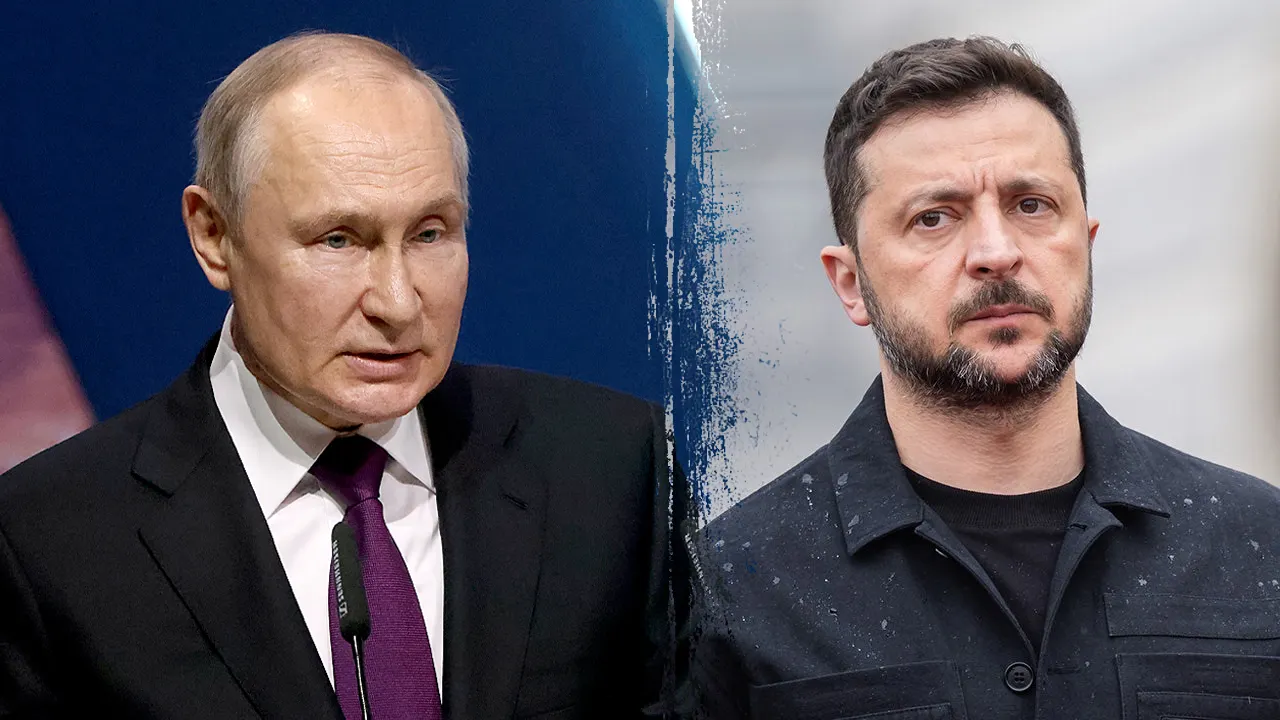
Diplomatic efforts have intensified alongside the military conflict. President Donald Trump met with Russian President Vladimir Putin in Alaska last August for high-stakes negotiations aimed at advancing peace talks. Ukrainian President Volodymyr Zelenskyy has made multiple trips to Washington since Trump’s return to office, including what observers described as a contentious Oval Office meeting in February 2025, followed by additional visits later in the year.
The most recent U.S. diplomatic engagement occurred during trilateral negotiations in Abu Dhabi earlier this year, with follow-up talks in Geneva on February 17-18. At these meetings, special envoy Steve Witkoff met with Russian and Ukrainian delegations as part of ongoing efforts to broker a settlement.
As the conflict enters its fifth year, former officials and security analysts suggest three possible scenarios for its future trajectory.
Scenario One: Prolonged Stalemate
The most immediate scenario is a continuation of the current situation. The war remains defined by attrition warfare, with neither side able to deliver a decisive blow and negotiations yielding minimal progress.
Retired U.S. Air Force Gen. Philip Breedlove, former NATO supreme allied commander of Europe, notes that despite Russia’s territorial control, Moscow is not winning the conflict.
“Russia, supposedly a world superpower with one of the world’s probably top three world armies and top four world air forces, in 12 years has gained about 20% of Ukraine. And they have lost some, say, over 1.2 million in the conflict so far,” Breedlove said. “It’s a conflict that Ukraine is working hard to manage. It’s also a conflict that Russia is not, I repeat, not winning.”
Scenario Two: Ukrainian Momentum Reshapes Diplomacy
Recent battlefield developments suggest another possibility. Breedlove highlighted rapid Ukrainian gains following disruptions in Russia’s command-and-control systems.
“In the last three or four days, because of the loss of the Starlink command and control system, Ukraine launched an offensive, and they have snatched back months of Russian gains in three days,” he explained. “Three-pronged push, hundreds of square miles regained, and Russia is backing up in several places right now.”
Carrie Filipetti, executive director of the Vandenberg Coalition, believes such advances could significantly alter the negotiating dynamics. “Ukraine’s recent advances to recapture its territory is yet another signal that Putin’s war machine is continuing to atrophy as the world marks the fourth year of Russia’s full-scale invasion,” she said.
“Not only is this the most significant Ukrainian advance on the battlefield in more than two years, its importance may be felt even more concretely at the diplomatic table. Finding a lasting and equitable peace deal through negotiation is often about momentum – and right now the Ukrainians have it.”
If sustained, these battlefield gains could force Moscow to recalculate its position and strengthen Kyiv’s hand in peace negotiations, provided Ukraine continues to receive strong U.S. support.
Scenario Three: Escalation or Western Fatigue
A third scenario concerns some Western strategists: that inconsistent international support could prolong the conflict or even tilt it in Russia’s favor.
Heather Nauert, who served as U.S. State Department spokesperson from 2017 to 2019, emphasized that the war extends beyond territorial disputes. “As we now enter the fifth year of Putin’s war in Ukraine, we’re reminded that this conflict has never been only about territory — it’s about identity, faith, and the future of a free nation,” she said.
Retired Lt. Gen. Richard Newton stressed that deterrence remains central to any resolution. “Four years into this horrific war, the fundamental lesson remains unchanged: Peace is only possible when strength shapes the terms. Putin will continue to savagely test our resolve until the costs of his aggression outweigh any possible gain.”
Newton argued that Ukraine requires more than symbolic gestures from the international community. “What Ukraine needs isn’t gestures from the world, but instead, unwavering support from the U.S. and Europe that convinces Moscow further advances carry unacceptable consequences,” he said.
Breedlove warned that negotiations alone will not shift the balance of power. “The most dangerous scenario is that we do not do what we should do in Ukraine and Russia takes over Ukraine because they’re not done,” he cautioned. “We have a policy of peace through strength and we’re using it in Iran. We’ve used it in Venezuela. We’re using it with oil tankers around the world… But when it comes to Putin and Ukraine, we are peace through weakness.”
As diplomatic efforts continue and battlefield dynamics evolve, the next phase of this devastating conflict will likely be determined by the resolve of Western allies, the resilience of Ukrainian forces, and the strategic calculations of the Kremlin.
Fact Checker
Verify the accuracy of this article using The Disinformation Commission analysis and real-time sources.

8 Comments
This war has dragged on for far too long, with immense suffering on all sides. I’m skeptical that any of the three scenarios outlined will lead to a truly lasting peace. More creative thinking may be needed.
You raise a fair point. The path to a sustainable peace agreement seems elusive so far. Continued diplomatic efforts, coupled with a shift in military dynamics, may be required.
The Russia-Ukraine war has been a protracted and devastating conflict. It’s concerning to see the massive human toll on both sides. I’m curious to see how the diplomatic efforts might evolve to try and reach a peaceful resolution.
Agreed, the human cost of this war has been tragically high. Diplomatic solutions seem crucial at this stage, but will likely be very challenging to achieve.
It’s sobering to see how this war has dragged on for so long, with such a heavy human toll. I’m curious to learn more about the potential scenarios ahead and what they might mean for the region’s stability and security.
Agreed, the three scenarios outlined raise a lot of questions about the future trajectory of the conflict. Careful analysis of the potential geopolitical implications will be crucial.
The staggering casualty figures on both sides are deeply concerning. I appreciate the detailed overview of the current state of the conflict and the diplomatic efforts, though the outlook appears grim. Hopefully, all parties can find a way to de-escalate tensions.
The persistent stalemate and shifting momentum in this war is deeply troubling. I appreciate the factual overview, though the lack of clear path to resolution is concerning. Diplomatic efforts will be key, but the path forward seems increasingly uncertain.