


Listen to the article
In a significant diplomatic development, Ukrainian, Russian, and U.S. envoys convened in Abu Dhabi on Friday, marking the first known meeting where officials from the Trump administration have engaged directly with both warring nations. This unprecedented trilateral discussion comes as part of Washington’s intensified efforts to broker peace in Russia’s nearly four-year-old invasion of Ukraine.
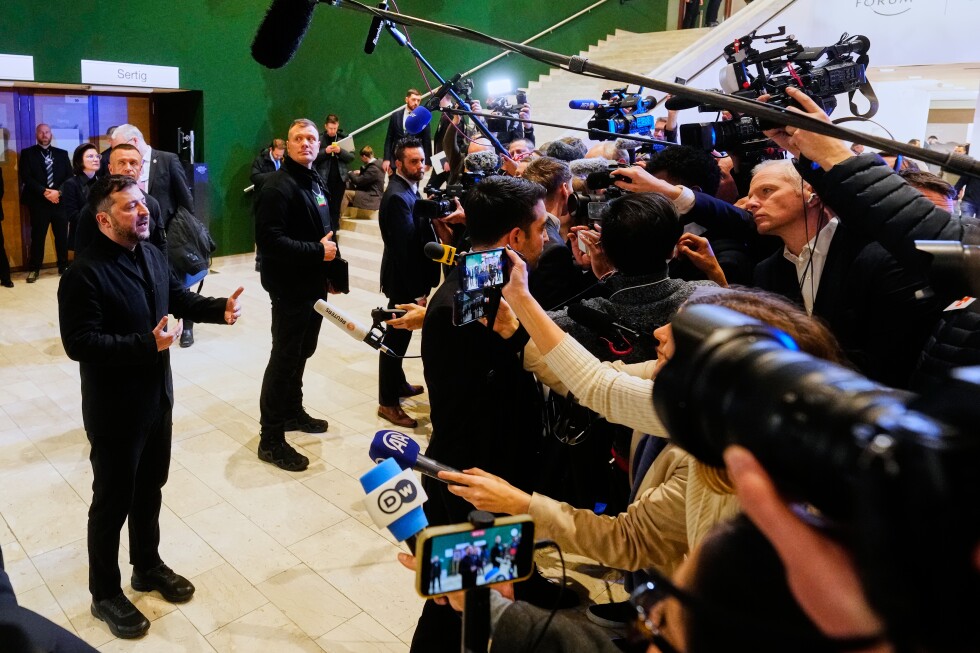
The Abu Dhabi talks follow a week of heightened diplomatic activity spanning from Switzerland to the Kremlin. While Ukrainian President Volodymyr Zelenskyy expressed optimism in Davos on Thursday, suggesting that a potential peace deal was “nearly ready,” substantial obstacles remain, particularly regarding territorial control.
The meeting’s location in the United Arab Emirates’ capital holds strategic significance. Though Russian and Ukrainian representatives have met separately on multiple occasions throughout the conflict, this appears to be the first time U.S. envoys have joined both parties simultaneously at the negotiating table. The development aligns with President Donald Trump’s publicly stated priority to end the war.
Despite these diplomatic overtures, Russia has maintained its military pressure, continuing attacks on Ukraine’s energy infrastructure and leaving parts of the country without power during harsh winter conditions. The timing is particularly critical as civilians face freezing temperatures with limited heating and electricity.
Before the Abu Dhabi meeting, Zelenskyy met privately with Trump for approximately an hour at the World Economic Forum in Davos. The Ukrainian leader described the session as “productive and meaningful,” while Trump later commented that both Russia and Ukraine were “making concessions” in pursuit of peace. In a parallel development, Russian President Vladimir Putin hosted U.S. envoys Steve Witkoff and Jared Kushner for nearly four hours of overnight discussions at the Kremlin.
The U.S. delegation in Abu Dhabi includes Witkoff and Kushner, along with Army Secretary Dan Driscoll and NATO’s top general, U.S. Air Force Gen. Alexus Grynkewich. Ukraine’s team consists of Rustem Umerov, head of Ukraine’s national security and defense council; Andrii Hnatov, chief of the general staff; and Kyrylo Budanov, head of the presidential office.
Russia’s delegation is led by Admiral Igor Kostyukov, chief of military intelligence, with additional representatives from the Defense Ministry. Putin’s envoy Kirill Dmitriev is also participating, with the talks scheduled to conclude on Saturday.
The substantive focus of the discussions remains somewhat opaque, though territorial disputes appear central. Zelenskyy identified control of the eastern Donbas region as a “key” issue in comments to journalists via WhatsApp on Friday. This territorial question represents perhaps the most intractable problem in reaching a sustainable peace agreement.
Russia has captured approximately 20% of Ukraine since hostilities began in 2014, accelerating with the full-scale invasion launched in 2022. However, these gains have come at considerable human and economic cost to Moscow, with the Russian economy increasingly strained under the pressure of international sanctions and war expenditures.
Kremlin officials emphasized that “reaching a long-term settlement can’t be expected without solving the territorial issue,” reiterating Moscow’s demand that Ukrainian forces withdraw from eastern regions that Russia illegally annexed in 2022 but never fully controlled. Dmitry Peskov, Putin’s spokesman, reiterated on Friday that Moscow’s position remains firm regarding Ukrainian withdrawal from the Donbas.
For its part, Ukraine continues to push for robust security guarantees from Western allies to prevent future Russian aggression – a demand that adds another layer of complexity to the negotiations.
The Abu Dhabi talks represent a potentially pivotal moment in the conflict, bringing together the principal parties under U.S. mediation for the first time. While significant hurdles remain, the meeting signals a possible shift toward more substantive peace discussions after years of devastating warfare.
Fact Checker
Verify the accuracy of this article using The Disinformation Commission analysis and real-time sources.

17 Comments
The mere fact that these talks are happening is a positive sign, even if substantial obstacles remain. Resolving the territorial disputes will be the key sticking point. Let’s hope the parties can find creative solutions to end the suffering of the Ukrainian people.
Agreed, this is a crucial moment. The international community will be closely watching to see if real progress can be made towards a lasting peace settlement.
Engaging the US directly with Russia and Ukraine is a bold move by the Trump administration. Bringing all sides together for face-to-face talks is a necessary step, but translating that into a viable peace plan will be the real challenge.
The significance of the US engaging directly with both Russia and Ukraine cannot be overstated. Bringing all the key parties together for these talks in Abu Dhabi is an important step, but the real test will be whether they can find common ground and a pathway to a sustainable peace agreement.
Absolutely. The location in the UAE is strategic, as they have relationships with both Russia and the West. Their role as a neutral host could be valuable in facilitating compromise between the parties.
It’s encouraging to see the Trump administration engaging directly with both Russia and Ukraine. Brokering a lasting peace deal will require compromise from all sides, but this direct dialogue is an important first step.
Zelenskyy’s optimism about a ‘nearly ready’ peace deal is promising, but the details around territorial control will be the true sticking point. This will require careful negotiation.
It’s encouraging to see the Trump administration taking a more active role in mediating the Russia-Ukraine conflict. Bringing all the key parties together for these talks in Abu Dhabi is a bold move that could pave the way for progress. But the path to a lasting peace deal will be arduous, with difficult compromises required on both sides.
Agreed. The UAE’s role as a neutral host is an interesting choice that could help facilitate dialogue and compromise. Their strategic relationships with both Russia and the West make them well-positioned to play a constructive facilitation role.
While the optimism around a ‘nearly ready’ peace deal is encouraging, the details will be critical. Russia’s military occupation and claims over Ukrainian territory are the core issue that must be addressed. This will require tough negotiations and compromise from all sides.
This is a pivotal moment in the Russia-Ukraine conflict. The direct engagement between the US, Russia, and Ukraine is unprecedented and signals a renewed push for a diplomatic solution. However, the challenges ahead should not be underestimated, as core issues like territorial control will require tough negotiations and concessions from all sides.
This is a significant development in the ongoing Russia-Ukraine conflict. Bringing all key parties together for direct negotiations is crucial for finding a peaceful resolution. Let’s hope they can make meaningful progress on contentious issues like territorial control.
Agreed, the location in Abu Dhabi is strategically important as well. The UAE can play a constructive role as a neutral host for these high-stakes talks.
While the prospect of peace talks is positive, the challenges ahead should not be underestimated. Russia’s military occupation and claims over Ukrainian territory are the core issue that must be resolved. Maintaining pressure and unity among the international community will be critical.
This diplomatic development comes at a critical juncture in the conflict. The timing is significant, with heightened tensions and the potential for further escalation. Hopefully the parties can find common ground and make meaningful progress towards a sustainable ceasefire and political settlement.
The UAE’s role as a neutral host is an interesting choice. Their position as a strategic partner to both Russia and the West could help facilitate compromise, but they’ll need to carefully balance their interests.
This trilateral meeting in Abu Dhabi represents a significant diplomatic development in the Russia-Ukraine conflict. The direct engagement of US envoys alongside Russian and Ukrainian representatives is a crucial step towards finding a peaceful resolution. However, the territorial disputes and mistrust between the parties mean substantial obstacles remain. Careful negotiation and compromise will be essential to translate this dialogue into a viable peace plan.