


Listen to the article
Russia’s massive aerial assault on Ukraine killed six people and injured dozens on Tuesday, coinciding with intensified ground operations that military analysts suggest may signal the beginning of Moscow’s anticipated spring offensive.
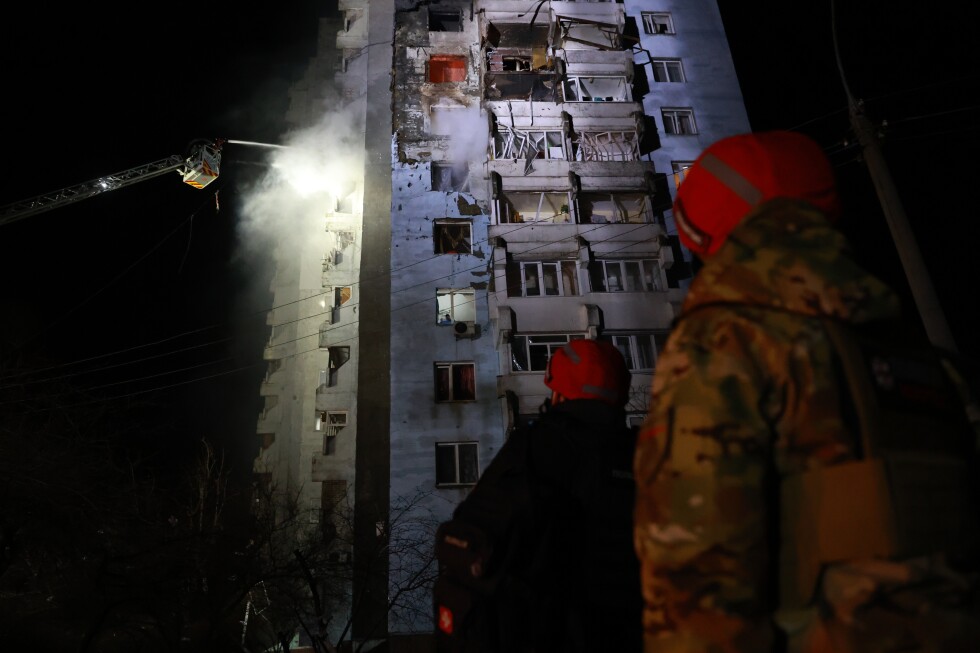
Ukrainian officials reported that Russia unleashed nearly 400 long-range drones overnight in its largest attack in weeks. The onslaught extended into daylight hours as dozens of Iranian-designed Shahed drones targeted Kyiv. Beyond drones, the assault included 23 cruise missiles and seven ballistic missiles striking at least 10 locations across Ukraine.
The widespread attack hit at least seven Ukrainian cities, according to Foreign Minister Andrii Sybiha. In Dnipro, a central Ukrainian industrial hub, daylight strikes injured 13 people, including three children. Another attack struck an apartment block in Lviv, a western city near the Polish border that had previously experienced relatively fewer bombardments, leaving 13 injured.
The Lviv strike damaged St. Andrew’s Church, a 17th-century structure designated as part of a UNESCO World Heritage site, Prime Minister Yulia Svyrydenko confirmed. In Ivano-Frankivsk, a city in western Ukraine, the attack damaged maternity hospitals and approximately 10 apartment buildings, killing two people and injuring four, including a six-year-old child.
Ukrainian civilians have endured these relentless barrages since Russia launched its full-scale invasion more than four years ago. Despite U.S.-brokered negotiations between Moscow and Kyiv over the past year, no relief has materialized, with Russia rejecting Ukraine’s ceasefire proposals. Recent conflicts in the Middle East have also diverted international attention from Ukraine’s ongoing crisis.
Along the approximately 1,250-kilometer (750-mile) front line stretching across eastern and southern Ukraine, Ukrainian forces have been preparing for an anticipated Russian offensive as spring weather conditions improve. General Oleksandr Syrskyi, commander-in-chief of Ukraine’s armed forces, reported that Russian troops have recently launched simultaneous attempts to break through defensive positions in several strategic areas.
“Fierce fighting unfolded along the entire line of contact,” Syrskyi noted on Telegram, revealing that Russia launched 619 attacks over just four days. “The occupiers are attempting to bring up new units and are preparing to continue attacks,” he added, confirming that Ukraine had deployed reinforcements to counter these assaults.
The Institute for the Study of War, a Washington-based think tank, corroborated Syrskyi’s assessment, concluding that Russia’s spring-summer offensive is now underway. Their analysis indicates Russia escalated its strikes from March 17 and has moved heavy equipment and additional troops to front-line positions.
Russia has historically intensified its military operations as weather conditions improve each year. However, despite these seasonal pushes, Russian forces have struggled to capture major urban centers, making only incremental territorial gains in rural areas. Currently, Russia occupies approximately 20% of Ukraine’s territory, including the Crimean Peninsula seized in 2014.
A Ukrainian soldier fighting near Lyman in the eastern Donetsk region—an area whose complete capture remains one of Russian President Vladimir Putin’s primary invasion goals—reported that Russian forces have intensified their assaults in recent days without achieving a breakthrough. According to the soldier, who gave only his call sign “King,” Russian troops initially targeted logistics routes before escalating their offensive operations.
Ukrainian units have reportedly repelled initial assaults, destroying advancing Russian columns and inflicting significant losses in armored vehicles and personnel. In response, Russian forces have increased airstrikes, including the use of powerful glide bombs. Despite this escalation, the soldier characterized the situation as “tense but not critical.”
Ukraine has increasingly relied on advanced drone technology to compensate for its infantry shortages. The country has developed sophisticated drone defenses that it now offers to U.S. and Gulf partners, hoping to exchange this expertise for much-needed Patriot air defense missiles crucial for countering Russian aerial attacks.
Ukraine has also deployed domestically produced long-range drones to strike areas within Russia that support Moscow’s war effort. According to the Russian Defense Ministry, Russian air defenses intercepted 55 Ukrainian drones overnight over Russian regions, annexed Crimea, and the Black Sea.
Fact Checker
Verify the accuracy of this article using The Disinformation Commission analysis and real-time sources.

9 Comments
The sheer scale of this latest assault, with nearly 400 drones used, demonstrates Russia’s determination to put pressure on Ukraine. It will be crucial for Ukraine to bolster its air defenses in the coming weeks.
The attacks on Dnipro and Lviv, including damage to a UNESCO heritage site, show the broad geographic reach and indiscriminate nature of these strikes. Civilians continue to bear the brunt of this conflict.
Agreed, the targeting of civilian infrastructure is deeply troubling. Russia seems intent on terrorizing the Ukrainian population.
This escalation suggests Russia is gearing up for a major push, likely aiming to regain the initiative before Ukraine can launch its own counteroffensive. The situation remains extremely volatile.
The damage to historic sites like St. Andrew’s Church is a tragic loss. Russia seems willing to disregard international norms and cultural heritage in its pursuit of military objectives.
Absolutely, the disregard for Ukraine’s cultural treasures is deeply disturbing. This conflict continues to exact a heavy toll on the country’s people and heritage.
Given the scale and coordination of these strikes, it’s clear Russia has not abandoned its war aims in Ukraine. Ukraine and its allies will need to respond decisively to blunt this offensive.
Concerning news about the increased Russian attacks on Ukraine. This latest wave of drones and missiles suggests the start of a major spring offensive. The damage to historical and civilian sites is worrying.
While the details are still emerging, this barrage of attacks appears to be a clear escalation by Russia. Ukraine and its allies will need to respond robustly to halt this offensive.