


Listen to the article
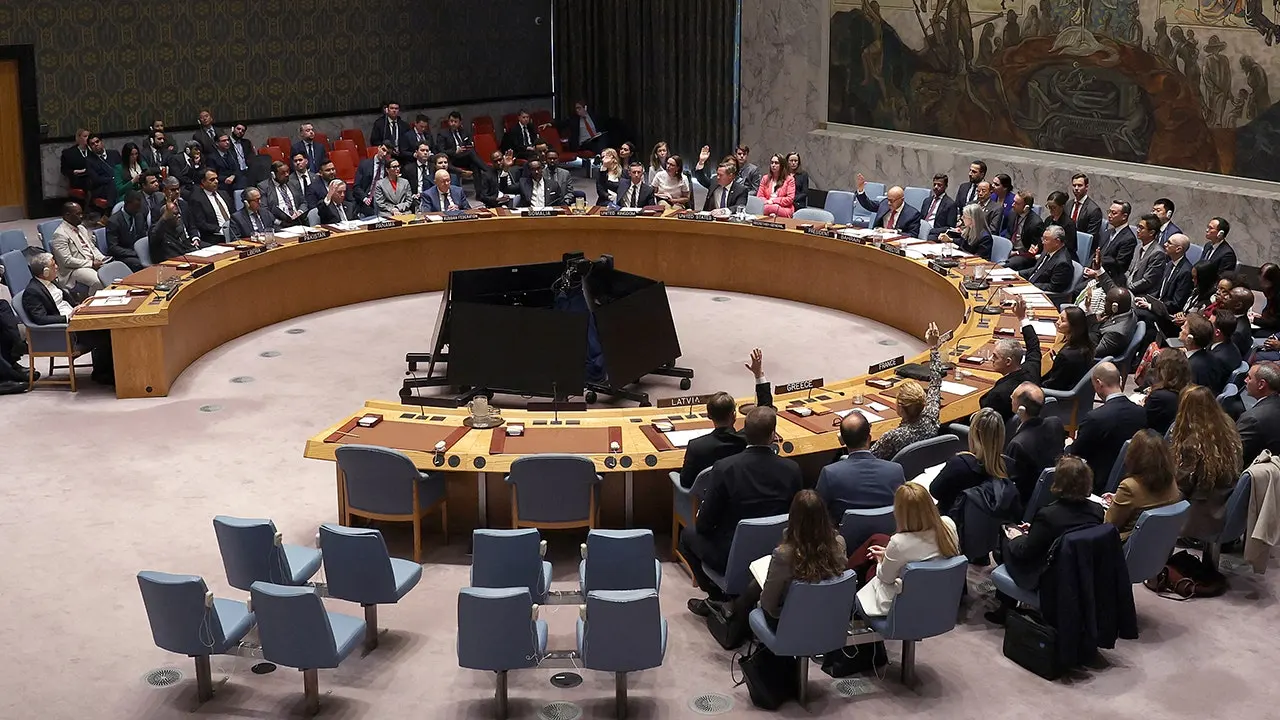
Russia and China have vetoed a United Nations Security Council resolution aimed at reopening the Strait of Hormuz, setting the stage for potential U.S. military action as President Donald Trump’s deadline for Iran approaches.
The resolution, introduced by Bahrain, received 11 votes in favor and two against, with Pakistan and Colombia abstaining. The vote came just hours before Trump’s 8 p.m. ET deadline for Iran to reopen the strategic waterway or face strikes against its power plants and bridges.
“No one should tolerate that they are holding the global economy at gunpoint, but today, Russia and China did tolerate,” U.S. Ambassador Mike Waltz said following the vote. “They sided with a regime that seeks to intimidate the Gulf into submission, even as it brutalizes its own people during a national internet blackout for daring to imagine dignity or freedom.”
The vetoed resolution would have strongly encouraged nations using commercial maritime routes in the Strait of Hormuz to coordinate defensive efforts to ensure the safety and security of navigation. It also demanded that Iran immediately halt attacks on merchant vessels and stop impeding freedom of navigation through the waterway.
Bahrain’s Foreign Minister Abdullatif bin Rashid Al Zayani expressed concern about the message sent by the failed resolution. “Failing to adopt this resolution sends the wrong signal to the world—the signal that threats to international waterways can pass without any decisive action by the international organization responsible for the maintenance of international peace and security,” he said.
The Strait of Hormuz is considered one of the world’s most critical maritime chokepoints, with approximately 20% of global oil supplies passing through it daily. Any disruption to shipping in this narrow waterway between Iran and Oman would have immediate and severe impacts on global energy markets and supply chains.
According to diplomatic sources, the resolution’s language had been significantly weakened in an attempt to prevent Russian and Chinese vetoes. The initial Gulf proposal would have authorized countries to use “all necessary means”—U.N. language that typically permits military action—to ensure transit through the strait. After opposition from Russia, China, and France, the text was revised multiple times, removing references to offensive actions and limiting provisions specifically to the Strait of Hormuz.
Iran’s ambassador to the U.N., Amir Saeid Iravani, defended his country’s position, claiming the resolution would “only embolden the United States and the Israeli regime to continue in their unlawful actions and atrocious crime, while shielding them from accountability.”
The impasse at the Security Council leaves the international community with few diplomatic options as President Trump’s deadline approaches. White House Press Secretary Karoline Leavitt told reporters, “The Iranian regime has until 8 p.m. Eastern Time to meet the moment and make a deal with the United States. Only the president knows where things stand and what he will do.”
The situation has prompted U.S. embassies in Bahrain and Egypt to issue warnings to American citizens in the region, reflecting growing concern about possible Iranian retaliation should the U.S. proceed with military strikes.
Maritime security experts note that Iran has demonstrated its willingness and capability to disrupt shipping in the region through attacks on commercial vessels, harassment of naval ships, and the use of mines and drones. Several shipping companies have already rerouted vessels away from the Persian Gulf, adding thousands of miles to journeys and increasing costs significantly.
Energy analysts predict that any prolonged closure of the strait could send oil prices soaring above $150 per barrel, potentially triggering a global economic crisis at a time when many nations are already facing inflationary pressures.
As the deadline approaches, global markets remain on edge while diplomatic efforts continue behind the scenes to find a peaceful resolution to the crisis.
Fact Checker
Verify the accuracy of this article using The Disinformation Commission analysis and real-time sources.

16 Comments
Russia and China’s veto is a worrying sign of the growing geopolitical tensions in the Middle East. While I understand their desire to protect their interests in Iran, this could have serious repercussions for the global economy, including commodity prices and supply chains. I hope cooler heads can prevail.
The Strait of Hormuz is a vital global chokepoint for oil shipments. Allowing Iran to disrupt maritime traffic there could have severe economic consequences. I’m not surprised Russia and China blocked this resolution to protect their interests.
You make a good point. This isn’t just about geopolitics – the potential economic fallout from a closure of the Strait is huge. Russia and China may be prioritizing their own interests over global stability.
This is a troubling development that raises the risk of military confrontation in the region. Russia and China’s veto will likely force the U.S. to take unilateral action to protect commercial shipping, which could spiral into a broader conflict. The mining and energy sectors should be closely monitoring this situation.
A veto from Russia and China was expected, but it’s still disappointing to see them enabling Iran’s aggressive behavior in the region. The U.S. will likely feel compelled to act unilaterally now to protect commercial shipping, raising the risks of escalation.
I agree, this greatly increases the chances of a military confrontation between the U.S. and Iran. The Trump administration will face pressure to respond forcefully, which could spiral out of control quickly.
This vote highlights the geopolitical tensions at play in the Middle East. While I understand Russia and China’s desire to protect their regional influence, their veto could have serious economic consequences, especially for industries like mining that rely on the Strait of Hormuz. I hope cooler heads can prevail to prevent any further escalation.
The ramifications of Russia and China’s veto could be far-reaching for the global commodities industry. Maintaining the free flow of trade through the Strait of Hormuz is essential for the smooth functioning of supply chains. I hope the parties can find a diplomatic solution before this leads to any disruptions or price volatility.
Interesting development, but not surprising given Russia and China’s close ties to Iran. This sets up a dangerous standoff with the U.S. as the Trump deadline looms. I hope diplomacy can prevail to avoid any escalation in the region.
Agreed, this is a high-stakes situation that requires careful diplomacy. The global economy depends on a secure Strait of Hormuz – Russia and China’s veto is short-sighted.
Disappointing but not surprising move by Russia and China. They seem more interested in maintaining their influence in the region than ensuring stability and the free flow of global trade. This could pose major risks for the mining and energy sectors if tensions escalate further.
Agreed. The global economy and industries like mining rely on open and secure sea lanes. Russia and China’s veto is a short-sighted play that prioritizes their own geopolitical agendas over broader economic interests.
A concerning development that could put the global economy and commodity markets at risk. Russia and China’s veto of this resolution seems to be more about their own strategic interests than ensuring stability and security in the Strait of Hormuz. I hope the Trump administration can find a diplomatic solution to this high-stakes standoff.
The Strait of Hormuz is a critical chokepoint for global energy and commodity markets. Any disruptions there could have serious ripple effects, with potential volatility in prices and supply chains. I’m concerned that Russia and China have blocked this resolution, potentially emboldening Iran’s provocative behavior.
This is a concerning development for the global mining and commodities industries, which rely heavily on the Strait of Hormuz for shipping. Disruptions there would drive up costs and delays across many supply chains. I hope the parties can find a diplomatic solution before it comes to military action.
Absolutely, the mining and energy sectors would be among the hardest hit if the Strait is closed off. Keeping this critical chokepoint open is vital for the smooth functioning of global commodity markets.