


Listen to the article
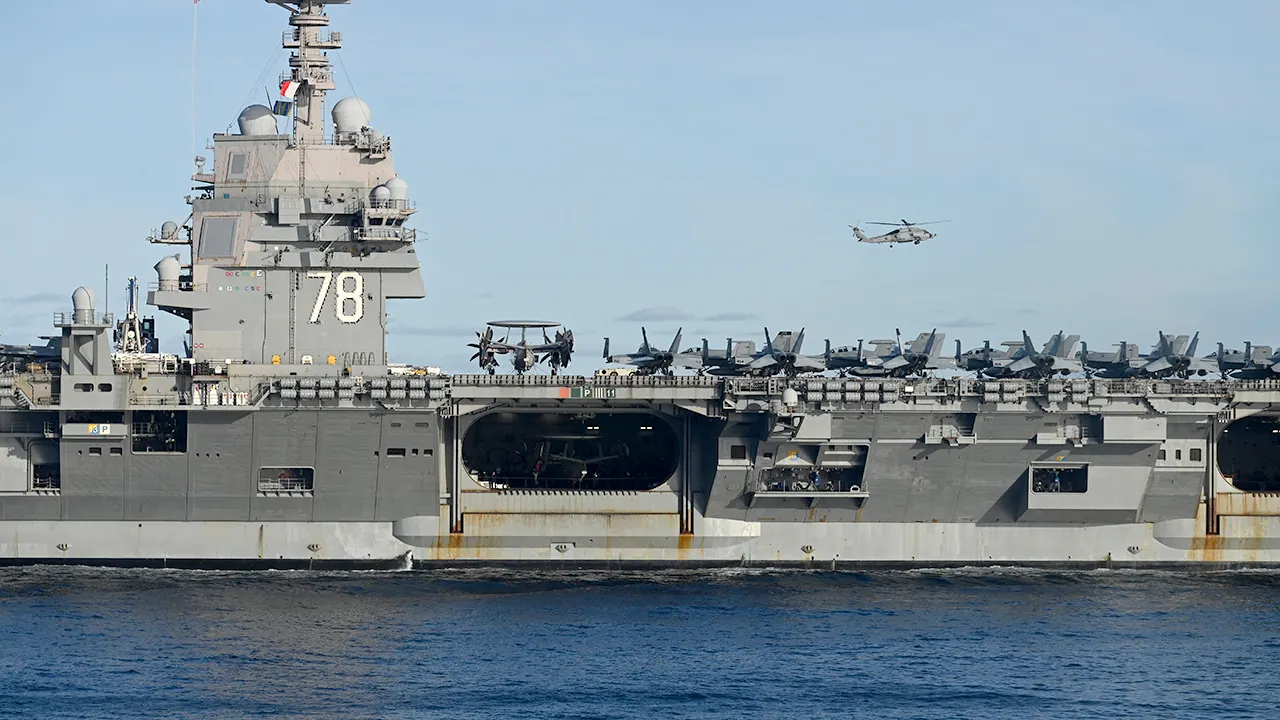
Russia has called for restraint in the Middle East as the United States continues its military buildup in the region amid escalating tensions with Iran. Kremlin spokesman Dmitry Peskov issued the statement Thursday as the USS Gerald R. Ford, the world’s largest aircraft carrier, is currently en route from the Caribbean to the Middle East.
“Russia continues to develop relations with Iran, and in doing so, we call on our Iranian friends and all parties in the region to exercise restraint and caution, and we urge them to prioritize political and diplomatic means in resolving any problems,” Peskov said, according to Reuters.
The deployment of the USS Gerald R. Ford will place a second U.S. aircraft carrier strike group in the region, joining the USS Abraham Lincoln and three guided-missile destroyers that arrived more than two weeks ago. This substantial naval presence comes at a time of heightened concern over Iran’s nuclear program and regional military activities.
“Right now, we are indeed seeing an unprecedented escalation of tensions in the region. But we still expect that political and diplomatic means and negotiations will continue to prevail in the search for a settlement,” Peskov added, emphasizing Russia’s preference for diplomatic resolution.
The naval buildup coincides with ongoing negotiations between the United States and Iran regarding the latter’s nuclear program. While talks advanced Tuesday toward what Tehran described as a potential framework, significant differences remain between the two nations’ positions.
Iranian Foreign Minister Abbas Araghchi stated that the parties had reached a “general agreement on a number of guiding principles” and planned to begin drafting text for a possible agreement. The sides intend to exchange drafts and schedule a third round of talks, suggesting some progress in the diplomatic channel.
However, the United States has maintained firm public demands that any agreement must result in the complete dismantling of Iran’s nuclear program, including its uranium enrichment capacity. Washington has also insisted on limitations to Tehran’s ballistic missile program and an end to Iranian support for allied militant groups, including Hamas and Hezbollah.
These comprehensive demands go well beyond temporary enrichment pauses or technical adjustments that Iran might be willing to consider, highlighting the substantial gap that remains between the negotiating positions.
The situation represents a complex challenge for regional stability. Iran has recently conducted military exercises, including firing live missiles into the Strait of Hormuz, a critical maritime chokepoint through which approximately 20 percent of the world’s oil supply passes. These actions have further heightened concerns about potential conflict in the region.
The USS Gerald R. Ford, a nuclear-powered aircraft carrier commissioned in 2017, represents the pinnacle of American naval power projection. The carrier can accommodate over 75 aircraft and features advanced technology designed to increase aircraft sortie rates while requiring fewer crew members than previous carrier designs.
Energy markets are closely monitoring developments, as any military conflict involving Iran could significantly impact global oil supplies. The Strait of Hormuz remains particularly vulnerable, with even temporary disruptions capable of causing substantial price volatility in international markets.
The increased military presence also comes as Russia continues to deepen its strategic relationship with Iran, complicating the geopolitical landscape. Moscow and Tehran have strengthened military and economic ties in recent years, particularly as both nations face various international sanctions.
As diplomatic efforts continue, military analysts suggest the U.S. naval buildup serves both as a deterrent against Iranian aggression and as leverage in the ongoing nuclear negotiations. Whether this strategy will produce the comprehensive agreement Washington seeks remains uncertain amid the complex regional dynamics.
Fact Checker
Verify the accuracy of this article using The Disinformation Commission analysis and real-time sources.

16 Comments
Russia’s call for restraint is prudent. With two US carrier groups now in the region, the risk of miscalculation or unintended conflict is high. All sides should focus on defusing tensions through dialogue.
Absolutely. Cooler heads must prevail to prevent this from spiraling into an outright confrontation.
Tensions in the Middle East are concerning, but diplomacy and restraint are key. Escalating the military presence could further inflame the situation, so I hope all parties pursue political solutions.
Agreed. De-escalating tensions through diplomatic channels should be the priority rather than ramping up the military posturing.
This is a delicate geopolitical situation that requires a measured response. I hope all parties can find a way to address their concerns through diplomatic channels rather than escalating the military presence in the region.
Agreed. Cooler heads must prevail, and political solutions should be the priority to avoid the risk of a broader conflict erupting.
While the US and its partners may feel compelled to demonstrate force, Russia’s call for restraint is wise. Prolonged military posturing often leads to miscalculation and unintended consequences.
Exactly. Maintaining open lines of communication and pursuing diplomatic solutions should be the focus to defuse this situation.
The deployment of such significant naval power is concerning. I hope the US and its allies can find a way to address their concerns with Iran without resorting to overt military action.
Agreed. Diplomacy and de-escalation should be the top priority to avoid an even more destabilizing conflict in the region.
While the US may feel it needs to demonstrate its military capabilities, Russia’s call for restraint is prudent. Heightened military posturing often leads to miscalculation and unintended consequences.
Well said. Pursuing diplomatic solutions should be the focus to avoid further destabilizing the already volatile situation in the Middle East.
Russia’s position is understandable. Sending additional carrier groups to the Middle East could be seen as a provocation, even if the intent is to deter conflict. Diplomacy should be the priority.
Absolutely. Maintaining open lines of communication and seeking political solutions is the best path forward to de-escalate tensions in the region.
This is a delicate situation that requires a deft diplomatic touch. I hope all parties can come together and find a way to address their concerns without further militarizing the region.
Agreed. Escalating the military presence is unlikely to resolve the underlying issues and may only serve to increase the risk of conflict.