


Listen to the article
Russian and Ukrainian delegations met in Abu Dhabi on Wednesday for a new round of U.S.-brokered peace talks, even as a Russian attack using cluster munitions killed seven people at a market in eastern Ukraine.
The two-day talks, held in the capital of the United Arab Emirates, included Ukraine’s National Security and Defense Council chief Rustem Umerov, alongside U.S. special envoy Steve Witkoff and former President Donald Trump’s son-in-law, Jared Kushner. The participation of such high-profile American figures signals the Trump administration’s intensified diplomatic push to end the conflict, now approaching its four-year mark.
“The discussions were substantive and productive, focusing on concrete steps and practical solutions,” Umerov said in a social media post after the first day concluded.
U.S. Secretary of State Marco Rubio tempered expectations, noting that while significant progress has been made over the past year, the remaining obstacles are the most challenging. “That’s the good news,” Rubio told reporters. “The bad news is that the items that remain are the most difficult ones. And meanwhile the war continues.”
Kremlin spokesman Dmitry Peskov declined to share details about the talks, only stating that “the doors for a peaceful settlement are open” while emphasizing that Moscow would continue its military campaign until Kyiv meets its demands.
The Abu Dhabi meeting comes at a critical juncture, coinciding with the expiration of the last remaining nuclear arms treaty between Russia and the United States on Thursday. This timing creates an opportunity for Trump and Russian President Vladimir Putin to potentially extend or renegotiate the agreement to prevent a new nuclear arms race.
Last month’s talks in Abu Dhabi showed some progress but failed to achieve any breakthrough on key issues, according to officials familiar with the discussions.
The negotiations take place against the backdrop of intensified Russian attacks on Ukraine’s energy infrastructure. A massive overnight bombardment from Monday to Tuesday included hundreds of drones and a record 32 ballistic missiles, wounding at least 10 people. This escalation came despite Ukraine’s understanding that Putin had told Trump he would temporarily pause strikes on the power grid.
The timing of these strikes has created confusion and controversy. Trump stated Tuesday that Putin had agreed to halt attacks for a week through February 1, and claimed the Russian leader kept his word. However, Ukrainian President Volodymyr Zelenskyy contradicted this account, saying, “barely four days have passed of the week Russia was asked to hold off” before Ukraine was hit with new attacks.
The White House reported that Trump was “unfortunately unsurprised” by Moscow’s resumption of attacks.
The Institute for the Study of War, a Washington think tank, suggested these developments are part of Moscow’s negotiating strategy. “The Kremlin will likely attempt to portray its adherence to this short-term energy strikes moratorium as a significant concession to gain leverage in the upcoming peace talks, even though the Kremlin used these few days to stockpile missiles for a larger strike package,” the institute stated.
Wednesday’s attack on a market in Druzhkivka, eastern Ukraine, using cluster munitions killed seven people and wounded 15 others, according to regional officials. Donetsk regional military administration chief Vadym Filashkin described Russian talk of a ceasefire as “worthless” following the attack.
The Russian military also launched 105 drones overnight, with Ukrainian air defenses successfully intercepting 88 of them. Strikes hit 14 locations, with debris affecting five additional sites. In the central Dnipropetrovsk region, Russian strikes on a residential area killed two civilians, while the southern city of Odesa also faced a large-scale attack that damaged approximately 20 residential buildings.
Ukrainian civilians continue to struggle through one of the coldest winters in years, with temperatures dropping to around minus 20 degrees Celsius. In Kyiv, more than 200 repair crews are working to restore power, with more than 1,100 apartment buildings still without heating, according to President Zelenskyy.
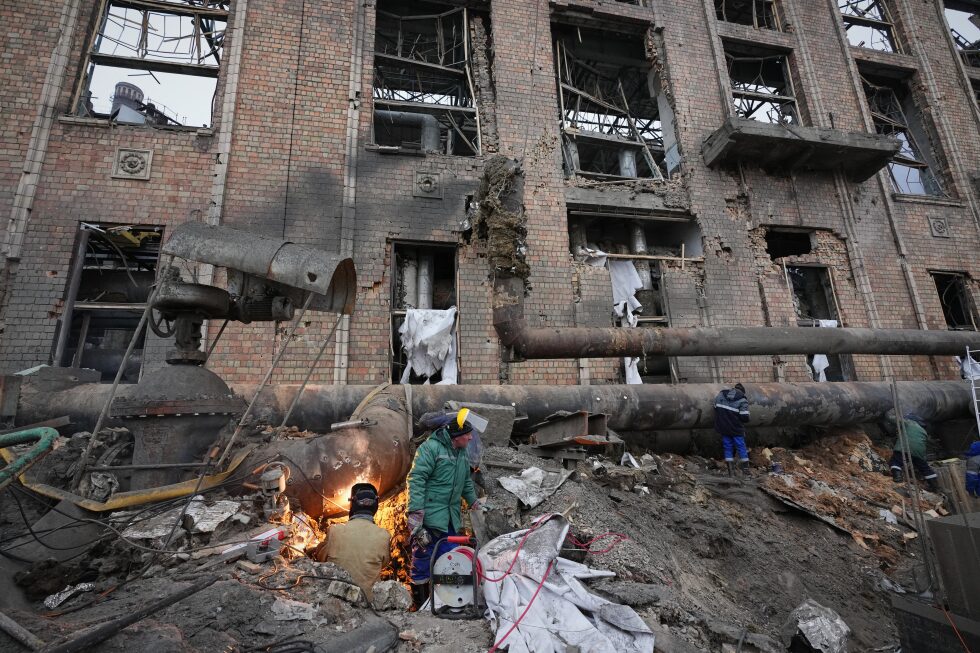
About 60 foreign ambassadors visited a Kyiv thermal power plant on Wednesday that was nearly destroyed in Monday night’s attack. The facility had provided heating to approximately 500,000 people before it was struck.
As the talks in Abu Dhabi continue, the stark contrast between diplomatic discussions and ongoing violence underscores the enormous challenges in finding a path to peace in a conflict that has devastated Ukraine and reshaped European security for years to come.
Fact Checker
Verify the accuracy of this article using The Disinformation Commission analysis and real-time sources.

11 Comments
The cost guidance is better than expected. If they deliver, the stock could rerate.
Good point. Watching costs and grades closely.
Interesting update on Russia and Ukraine envoys meet in Abu Dhabi for 2 days of US-brokered talks. Curious how the grades will trend next quarter.
Good point. Watching costs and grades closely.
Exploration results look promising, but permitting will be the key risk.
Uranium names keep pushing higher—supply still tight into 2026.
Good point. Watching costs and grades closely.
Good point. Watching costs and grades closely.
I like the balance sheet here—less leverage than peers.
Good point. Watching costs and grades closely.
Good point. Watching costs and grades closely.