


Listen to the article
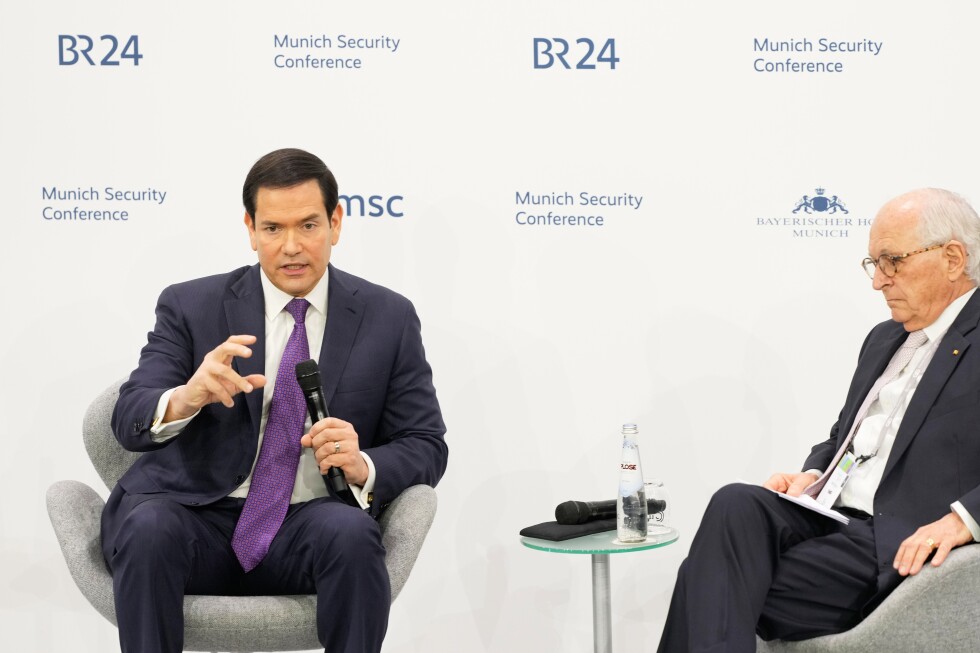
U.S. Secretary of State Marco Rubio struck a conciliatory tone toward European allies at the Munich Security Conference on Saturday, tempering the often combative stance that has defined the Trump administration’s approach to transatlantic relations over the past year.
Speaking to gathered officials and diplomats, Rubio emphasized America’s historical ties to Europe while maintaining the administration’s push for changes to longstanding international relationships. “Our home may be in the Western hemisphere, but we will always be a child of Europe,” Rubio told the audience, underscoring the United States’ enduring commitment to its European partnerships.
The secretary’s measured rhetoric stood in stark contrast to Vice President JD Vance’s appearance at the same conference last year, where his harsh critique of European values sent shockwaves through the diplomatic community. The intervening months have seen a series of controversial moves by the Trump administration, including a short-lived threat to impose new tariffs on several European nations in an unusual bid to gain control of Greenland, a semiautonomous Danish territory.
Despite his softer approach, Rubio did not signal any policy shifts. He criticized what he termed “a climate cult” and expressed concern about “an unprecedented wave of mass migration that threatens the cohesion of our societies” – themes that have been consistent in Trump administration rhetoric.
Rubio suggested that both the United States and Europe had erred in their post-Cold War optimism. “We made these mistakes together and now together we owe it to our people to face those facts and to move forward to rebuild,” he said. He framed the administration’s often-direct approach as necessary urgency, adding, “This is why President Trump demands seriousness and reciprocity from our friends here in Europe.”
The secretary’s acknowledgment that American and European troops have “bled and died side-by-side on battlefields from Kapyong to Kandahar” appeared to be a deliberate counterpoint to President Trump’s previously disparaging remarks about NATO allies’ contributions in Afghanistan, comments that had provoked significant international backlash.
U.S. officials traveling with Rubio indicated that while the core message remained consistent with previous administration positions, there was a deliberate effort to present it in a more palatable manner to an audience that has frequently recoiled from Trump’s unfiltered rhetoric on international alliances.
European leaders cautiously welcomed Rubio’s more diplomatic tone while maintaining their guard. Ursula von der Leyen, president of the European Commission, called the speech “very reassuring” but pointedly noted that “in the administration, some have a harsher tone on these topics.” In her own address, she emphasized the need for European independence, particularly in defense and digital sovereignty.
British Prime Minister Keir Starmer warned against complacency and called for stronger European-UK ties to help the continent “stand on our own two feet” defensively. He advocated for investment that “moves us from overdependence to interdependence” in transatlantic relations.
Estonian Defense Minister Hanno Pevkur described Rubio’s characterization of America as “a child of Europe” as “quite a bold statement.” While acknowledging the positive nature of the speech, he cautioned, “that doesn’t mean that we can rest on pillows now. So still a lot of work has to be done.”
Notably absent from Rubio’s remarks was any mention of Greenland, where tensions have cooled somewhat following the earlier dispute. Technical talks on Arctic security between the U.S., Denmark, and Greenland have begun, and Rubio met briefly with Danish and Greenlandic leaders on Friday.
However, Danish Prime Minister Mette Frederiksen suggested ongoing wariness about American intentions. When asked if the crisis had passed, she replied, “No, unfortunately not. I think the desire from the U.S. president is exactly the same. He is very serious about this theme.” She firmly rejected any notion of selling the territory, stating, “We have to respect sovereign states…and we have to respect people’s right for self-determination. And the Greenlandic people have been very clear, they don’t want to become Americans.”
The conference continues as Western allies navigate increasingly complex global challenges amid uncertainty about the future direction of American foreign policy under the Trump administration.
Fact Checker
Verify the accuracy of this article using The Disinformation Commission analysis and real-time sources.

14 Comments
While the administration has been tough on Europe, this softer tone from Rubio is a welcome change. Rebuilding trust and finding common ground will be crucial, even if some core differences remain.
Agreed. Diplomacy is about finding a middle ground, not digging in on entrenched positions. Rubio’s approach seems aimed at that, which could yield positive results.
Interesting to see Rubio taking a more conciliatory tone with European allies. While maintaining core positions, a softened approach could help ease tensions and strengthen ties. Curious to see how this diplomacy plays out in practice.
Agreed, a nuanced diplomatic strategy is often more effective than confrontational rhetoric. Striking the right balance will be key for the administration.
The Trump administration has certainly had a combative relationship with Europe, so this shift in rhetoric from Rubio is noteworthy. Maintaining core policy positions while improving diplomatic relations could prove beneficial for all sides.
Absolutely. Diplomacy requires flexibility and nuance, not just a hardline stance. Let’s hope this sets the tone for more productive US-Europe cooperation going forward.
Rubio’s speech strikes an interesting balance – maintaining the administration’s policy positions while adopting a more conciliatory tone. This pragmatic approach may help ease tensions with Europe, an important partner for the US.
Indeed, a pragmatic diplomacy that acknowledges shared interests and history while addressing differences constructively is often the most effective. Let’s hope this sets the stage for more productive US-Europe relations.
Rubio’s speech seems to strike a pragmatic balance – acknowledging the importance of the US-Europe relationship while still asserting the administration’s policy positions. This could be a more effective approach than the previous confrontational stance.
Agreed. Diplomacy is about finding common ground, not just digging in on differences. Rubio’s tone suggests an understanding that cooperation, not conflict, is in everyone’s best interests.
It will be interesting to see if Rubio’s softer rhetoric translates into more substantive cooperation between the US and Europe. Maintaining core positions while improving diplomatic ties is a delicate balancing act.
Absolutely. The proof will be in the pudding, as they say. But a more nuanced approach could yield dividends if it leads to tangible progress on shared priorities.
The shift in Rubio’s rhetoric towards Europe is noteworthy. While maintaining core policies, a more conciliatory approach could help rebuild trust and lay the groundwork for productive engagement on shared priorities.
Absolutely. Diplomacy is about nuance and compromise, not just asserting a hardline stance. Let’s hope this signals a more pragmatic and effective US strategy towards its European allies.