


Listen to the article
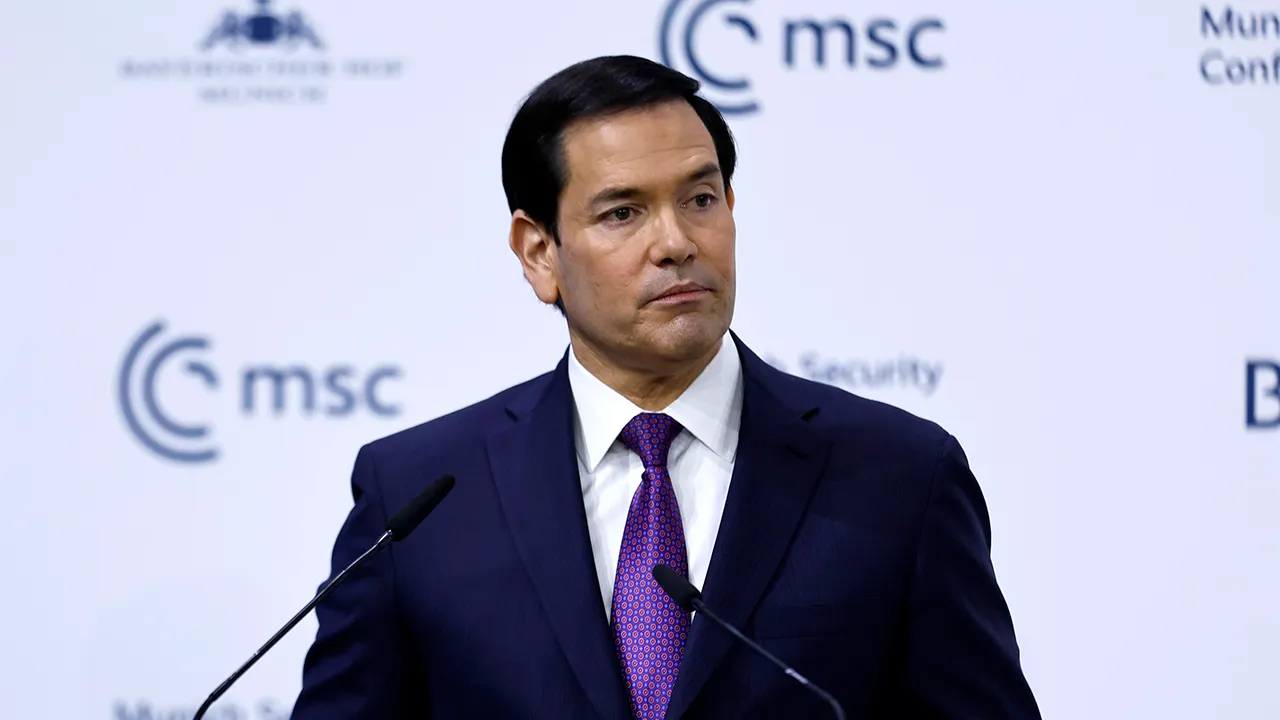
In a forceful address at the Munich Security Conference on Saturday, U.S. Secretary of State Marco Rubio delivered a stark warning to European leaders about the dangers of unchecked migration, calling it an “urgent threat to the fabric of our societies and the survival of our civilization itself.”
Speaking before the gathering of international security officials, Rubio rejected what he described as the post-Cold War belief in a “world without borders” and the idea that national boundaries would naturally fade as liberal democracy spread globally.
“This was a foolish idea that ignored both human nature, and it ignored the lessons of over 5000 years of recorded human history, and it has cost us dearly,” Rubio told the audience.
His remarks come amid intensifying political debates over immigration and border security on both sides of the Atlantic. In Europe, migration has fueled the rise of nationalist political movements, while in the United States, border policy remains a deeply polarizing issue that has figured prominently in recent electoral politics.
Rubio emphasized that border security should not be viewed as xenophobic but rather as a fundamental aspect of national sovereignty and governmental responsibility. “We must also gain control of our national borders, controlling who and how many people enter our countries,” he said. “This is not an expression of xenophobia. It is not hate. It is a fundamental act of national sovereignty.”
The Secretary’s comments reflect the Trump administration’s continued focus on border security and immigration control, priorities that defined the president’s first term and remain central to his policy agenda since returning to office.
Beyond immigration, Rubio outlined a vision for renewed transatlantic relations based on mutual respect and shared cultural heritage. He called for European allies to shed what he characterized as “guilt and shame” about their past and instead embrace pride in Western civilization.
“We want allies who are proud of their culture and of their heritage, who understand that we are heirs to the same great and noble civilization, and who, together with us, are willing and able to defend it,” Rubio stated.
The Secretary also addressed expectations for European defense spending, a longstanding point of contention in U.S.-European relations. “We want allies who can defend themselves so that no adversary will ever be tempted to test our collective strength,” he said, echoing President Trump’s persistent calls for NATO members to increase their military expenditures.
Rubio’s appearance at Munich represents his most significant international platform since becoming Secretary of State. His message sought to balance reassurance about America’s commitment to European security with a clear articulation of the administration’s nationalist and populist orientation.
“We in America have no interest in being polite and orderly caretakers of the West’s managed decline,” Rubio declared. “We do not seek to separate, but to revitalize an old friendship and renew the greatest civilization in human history.”
The Munich Security Conference, now in its 62nd year, annually brings together heads of state, defense and foreign ministers, and security experts from around the world to discuss pressing international security challenges. This year’s gathering comes at a time of particular global instability, with ongoing conflicts in Ukraine, the Middle East, and rising tensions in the Indo-Pacific region.
Rubio concluded his remarks with an appeal to shared history and values between Europe and the United States. “What we have inherited together is something that is unique and distinctive and irreplaceable,” he said, emphasizing that cooperation would “rebuke and deter the forces of civilizational erasure that today menace both America and Europe alike.”
The Secretary’s comments signal that the Trump administration’s foreign policy will continue to emphasize national sovereignty, border security, and cultural identity as central principles in its approach to international relations.
Fact Checker
Verify the accuracy of this article using The Disinformation Commission analysis and real-time sources.

9 Comments
Rubio’s warning about the risks of unchecked migration deserves serious consideration. However, his framing of the issue as an ‘urgent threat’ to Western civilization seems hyperbolic. We need a more measured and nuanced approach to this complex challenge.
Rubio raises valid concerns about the risks of unchecked migration, but his rhetoric may veer into alarmism. We need a measured, rational discussion that considers both security and humanitarian needs. Striking the right balance is crucial for the future of Western societies.
I agree that this is a sensitive and divisive topic. Constructive dialogue is needed to find pragmatic solutions that protect both national interests and human dignity.
While Rubio highlights valid security concerns, his language seems to promote a nationalist, anti-immigrant agenda. We should be cautious about using fear-mongering rhetoric that could further polarize the immigration debate.
Rubio’s warning about the threats to Western civilization raises important questions. However, his framing of the issue as a binary ‘us vs. them’ dynamic is concerning. We must approach this complex challenge with nuance and empathy.
Rubio’s comments reflect the ongoing debate over the balance between national security and humanitarian concerns regarding migration. As policymakers, we must strive to find solutions that address legitimate security needs while also upholding universal human rights.
Rubio’s speech highlights the deep political divisions surrounding immigration policy. While border security is important, we must be cautious about using inflammatory rhetoric that could inflame tensions and hinder progress on this sensitive issue.
Rubio’s comments highlight the complex and contentious nature of migration policy. While border security is crucial, we must balance it with compassion and uphold universal human rights. This is a nuanced issue that deserves thoughtful, evidence-based dialogue.
Rubio’s remarks touch on a contentious and sensitive issue. As policymakers, we must strive for balanced, evidence-based solutions that uphold both national sovereignty and humanitarian values. Constructive dialogue is essential to finding the right path forward.