


Listen to the article
Croatian Fishermen Face Perfect Storm as Fuel Costs Soar Amid Global Conflicts
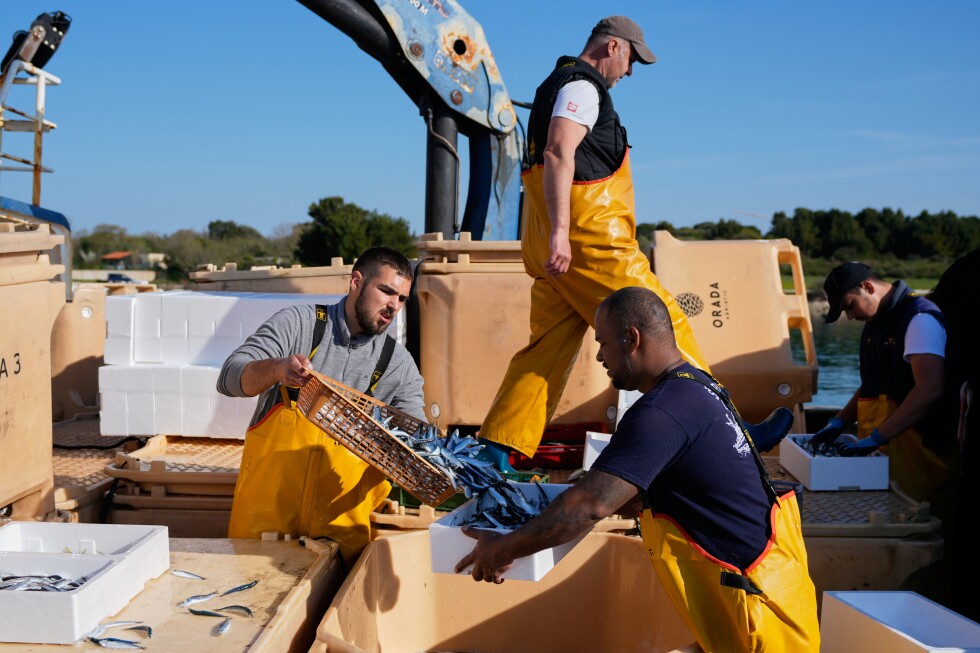
As the sun sets over the Adriatic Sea, Marijan Jakopovic prepares his boat and nets to sail out as he has done for the past 30 years. But the 55-year-old fisherman from Croatia says times have never been so tough for many in his line of work.
“This is turning into an almost hopeless situation,” said Jakopovic, who hails from the small village of Lanisce on the northern Croatian peninsula of Istria.
Rising fuel prices driven by the war in Iran have dealt a severe blow to Croatia’s fishing industry, compounding existing challenges that include limited fish stocks, strict fishing restrictions, and competition from imported frozen seafood.
The price of blue diesel – a specialized fuel used exclusively by farmers and fishermen – has skyrocketed by approximately 70% in just one month. According to official data, prices jumped from 0.80 euros per liter on March 8 to 1.36 euros per liter by April 7. While Croatia’s government has implemented temporary price caps, these measures have not fully shielded fishermen from the financial impact.
Croatia’s fishing community, which plays a crucial role in providing fresh seafood during the country’s bustling tourism season, warns that if the ceasefire in Iran fails to hold and fuel prices surge again, their livelihoods could become unsustainable.
Vedran Spehar, a senior official in Croatia’s Ministry of Economy, acknowledged the severity of the situation during a recent radio broadcast. He noted that without government intervention, blue diesel prices would have likely reached at least 2 euros per liter, while emphasizing that current policies have at least prevented fuel shortages.
The timing of these challenges is particularly unfortunate for Croatia, which joined the European Union in 2013 and adopted the euro currency just last year in 2023. This currency transition coincided with price increases across numerous sectors of the Croatian economy. Prior to the Iran conflict, the economic repercussions of the war in Ukraine had already driven up energy and food prices significantly.
These compounding factors have contributed to Croatia currently experiencing the highest inflation rate in the European Union at 4.8% annually, further squeezing profit margins for small businesses like local fisheries.
Jakopovic revealed that accumulated costs have forced some fishermen to spend up to 70% of their earnings on fuel alone, depending on their vessel type. This is in addition to crew wages, maintenance expenses, and equipment costs, creating an increasingly precarious financial situation.
The difficulties facing commercial fishing in Croatia aren’t entirely new. The industry has struggled for years even as tourism along Croatia’s stunning coastline and islands has flourished tremendously. Last year, the country welcomed more than 20 million tourists – a stark contrast to the declining fortunes of traditional industries like fishing.
Market vendors are already anticipating the ripple effects. Almira Raimovic, who sells fish at a market in the northern town of Pula, predicts that fishermen will have no choice but to raise prices to offset fuel costs, affecting both retail and wholesale prices.
“The focus will likely shift to cheaper fish, sardines and anchovies, which are still more affordable than other varieties,” Raimovic explained. “Rising fuel prices will affect everyone, inflating the cost of living and food across all sectors, not just fishing.”
Raimovic herself exemplifies the industry’s transformation – having previously worked as a fisher, she now uses her former fishing boat to take tourists on sightseeing trips, a more profitable venture in Croatia’s tourism-dominated economy.
Beyond economic pressures, Croatian fishermen must navigate a complex web of regulatory challenges. As an EU member, Croatia has adopted the bloc’s strict rules on sustainable fishing, which include seasonal bans on certain fish species, catch limits, and protected marine zones designed to preserve endangered species.
These environmental regulations, while necessary for long-term sustainability, force fishermen to venture further from shore and spend more time at sea – inevitably increasing fuel consumption and operational costs. This creates what many in the industry describe as a vicious cycle threatening their very existence.
“We don’t know how much longer we will be able to keep working,” Jakopovic said, giving voice to the uncertainty felt throughout Croatia’s fishing communities as they navigate this perfect storm of economic challenges, regulatory pressures, and geopolitical instability.
Fact Checker
Verify the accuracy of this article using The Disinformation Commission analysis and real-time sources.

7 Comments
Wow, a 70% jump in diesel prices in just one month – that must be crippling for small fishing boat operators. With limited fish stocks and competition from imports, these higher fuel costs could really put many fishermen out of business. I wonder what other steps the government is exploring to help sustain this industry.
Rising fuel costs are a perfect storm for Croatia’s fishing industry, compounding existing challenges. While temporary price caps may offer some relief, more comprehensive support measures seem necessary to help these small businesses weather this crisis. The government should look at all options to support this critical domestic food source.
This is a tough situation for Croatia’s fishing community. Soaring fuel prices on top of limited fish stocks and competition from imports is really putting small boat operators in a bind. I hope the government can find ways to provide meaningful, long-term support to ensure the sustainability of this industry.
It’s concerning to hear about the dire situation facing Croatia’s fishing industry due to spiking fuel prices. This is a critical domestic food source, so maintaining a viable fishing sector should be a priority. I hope the government can provide more substantial relief and long-term support.
The global conflicts and disruptions driving up fuel prices are really taking a toll on Croatia’s fishing community. Smaller boat operators are in a tough spot, with limited options to offset these soaring costs. I wonder what other policy solutions might be considered to help stabilize this industry.
This is a difficult situation for Croatia’s fishing industry. Rising fuel costs are hitting them hard, on top of other challenges like limited fish stocks and competition from imports. It’s critical that government support measures are sufficient to help sustain this important sector.
Fuel costs have skyrocketed, up 70% in just a month. That’s a huge hit for small fishing operations. While price caps may provide some relief, the industry still faces an uncertain future. I hope the government can find ways to further support these hardworking fishermen.