


Listen to the article
Rising Temperatures Force Antarctic Penguins to Breed Earlier, Threatening Survival
Antarctic penguins are adjusting their breeding schedules at an unprecedented rate due to rapidly warming temperatures, placing two species at risk of extinction by the end of the century, according to new research published in the Journal of Animal Ecology.
Scientists documented a dramatic shift in reproductive timing among three brush-tailed penguin species—the Adelie, chinstrap, and gentoo—that now begin breeding approximately two weeks earlier than they did a decade ago. This acceleration coincides with a 5.4 degrees Fahrenheit (3 degrees Celsius) temperature increase in their breeding grounds between 2012 and 2022.
“Penguins are changing the time at which they’re breeding at a record speed, faster than any other vertebrate,” said lead author Ignacio Juarez Martinez, a biologist at Oxford University. “This is important because the time at which you breed needs to coincide with the time with most resources in the environment, and this is mostly food for your chicks so they have enough to grow.”
The research team used remote cameras to photograph penguin colonies over a decade, collecting millions of images that revealed the fastest shift in life cycle timing ever observed in vertebrate animals. For perspective, co-author Fiona Suttle noted that European great tits showed a similar two-week shift in breeding time, but that change occurred over 75 years rather than just 10.
Climate change is creating clear winners and losers among Antarctic penguin species. The Adelie and chinstrap penguins primarily eat krill and are considered dietary specialists, while gentoos have a more varied diet. Traditionally, these species bred at different times, avoiding direct competition for resources.
However, gentoo penguins have adjusted their breeding schedules more rapidly than the other species, creating new competitive pressures. Gentoos, which don’t migrate as far as the other species and are more aggressive when establishing nesting areas and finding food, are now thriving at the expense of their counterparts.
“Chinstraps are declining globally,” Martinez explained. “Models show that they might get extinct before the end of the century at this rate. Adelies are doing very poorly in the Antarctic Peninsula, and it’s very likely that they go extinct from the Antarctic Peninsula before the end of the century.”
Suttle has witnessed this change firsthand, returning to colony areas where she previously documented Adelies only to find their nesting sites now occupied by gentoos. The shift is backed by extensive data collection across dozens of colonies.
The Western Antarctic Peninsula is warming at a rate second only to the Arctic North Atlantic, resulting in diminished sea ice. Martinez theorizes that reduced sea ice leads to earlier blooms of phytoplankton each spring, altering the entire marine food chain that sustains penguin populations.
Adding to the pressure, commercial fishing operations have begun arriving earlier in the Antarctic season, further reducing the food supply available to penguin populations already struggling with increased competition and shifting schedules.
Michelle LaRue, a professor of Antarctic marine science at the University of Canterbury in New Zealand who wasn’t involved in the study, called the breeding time shift “an interesting signal of change” and emphasized the importance of continued monitoring to assess long-term population impacts.
The research was made possible in part through citizen science. The team enlisted public help through the Penguin Watch website to analyze hourly photographs taken by 77 cameras over ten years. “We’ve had over 9 million of our images annotated via Penguin Watch,” Suttle said. “A lot of that comes down to the fact that people just love penguins so much. They’re very cute.”
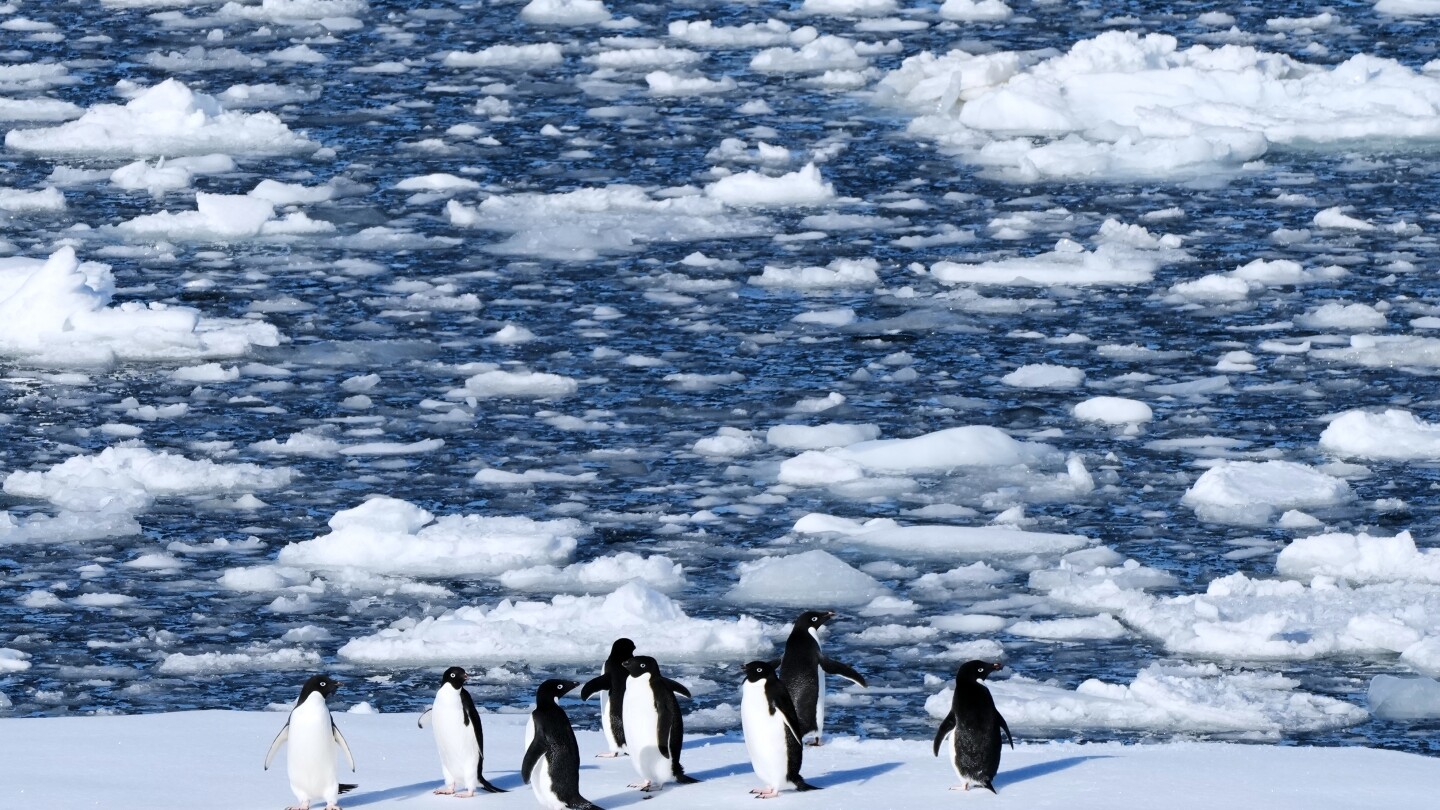
The charismatic Adelie penguins, with their distinctive cartoon-like eyes, have been particularly popular among volunteers. Unfortunately, their charm may not be enough to ensure their survival in rapidly warming Antarctic waters as the climate continues to change.
Fact Checker
Verify the accuracy of this article using The Disinformation Commission analysis and real-time sources.

8 Comments
This research underscores the fragility of ecosystems in the Antarctic and the urgent need to address the root causes of global warming. Protecting these penguin populations will require a multi-pronged approach focused on emissions reduction and habitat conservation.
This research highlights the importance of long-term ecological monitoring in sensitive environments like the Antarctic. Tracking changes in breeding patterns and population dynamics over time is crucial for understanding the impacts of climate change and informing conservation efforts.
The accelerated breeding cycles of these penguin species are a clear signal that the Antarctic ecosystem is undergoing major disruptions due to climate change. We must heed these warnings and take swift action to address the root causes before it’s too late.
While it’s impressive that the penguins are able to adapt their breeding cycles, the fact that their survival is now at risk is deeply concerning. We must redouble our efforts to mitigate climate change and safeguard these important Antarctic species.
Agreed. The ability of these penguins to adapt is remarkable, but the long-term prognosis is troubling. Protecting their habitat and food sources will be critical to ensuring their survival in the face of rising temperatures.
Fascinating to see how quickly these penguin species are adapting their breeding habits in response to warming temperatures. I wonder what other adaptations we might observe as they try to survive in this rapidly changing environment.
Yes, the speed at which they are adjusting is really quite remarkable. It will be important to closely monitor how these penguins continue to cope with the effects of climate change in the years ahead.
This is concerning news about the impact of climate change on Antarctic penguin populations. It’s critical that we understand how rising temperatures are disrupting their breeding cycles and food sources, which could lead to devastating consequences for these species.