


Listen to the article
Veteran AP Photographer Rajanish Kakade Dies at 55, Leaving Legacy of Mumbai’s Visual Chronicle
Rajanish Kakade, an Associated Press photographer who chronicled India’s vibrant political landscape, cultural tapestry, and the daily rhythms of Mumbai for nearly two decades, died Monday at his home following an illness. He was 55.
Since joining the AP in 2008, Kakade established himself as a vital visual storyteller in India’s financial capital. His camera lens became a window into the soul of Mumbai, capturing both its grandeur and intimate moments during a period of dramatic transformation in the rapidly developing nation.
A third-generation photographer following in the footsteps of his grandfather and father, Kakade brought a unique perspective and deep understanding to his work. Before his tenure at AP, he honed his craft at the Sakal Group media conglomerate and the Hindustan Times newspaper, building a foundation for what would become an illustrious career.
The Mumbai Press Club honored Kakade’s contributions in a statement: “Through his work, he captured defining moments with integrity and sensitivity. Through his mentorship, he shaped countless careers, always encouraging young photographers to pursue the truth with courage and compassion.”
Kakade’s portfolio spanned the breadth of India’s contemporary history. He documented pivotal political moments and electoral campaigns that shaped the world’s largest democracy. His lens recorded major sporting events that unified the nation in collective celebration. During times of crisis, including the deadly 2008 Mumbai terrorist attacks that shocked the nation and the global COVID-19 pandemic, his images conveyed both tragedy and resilience.
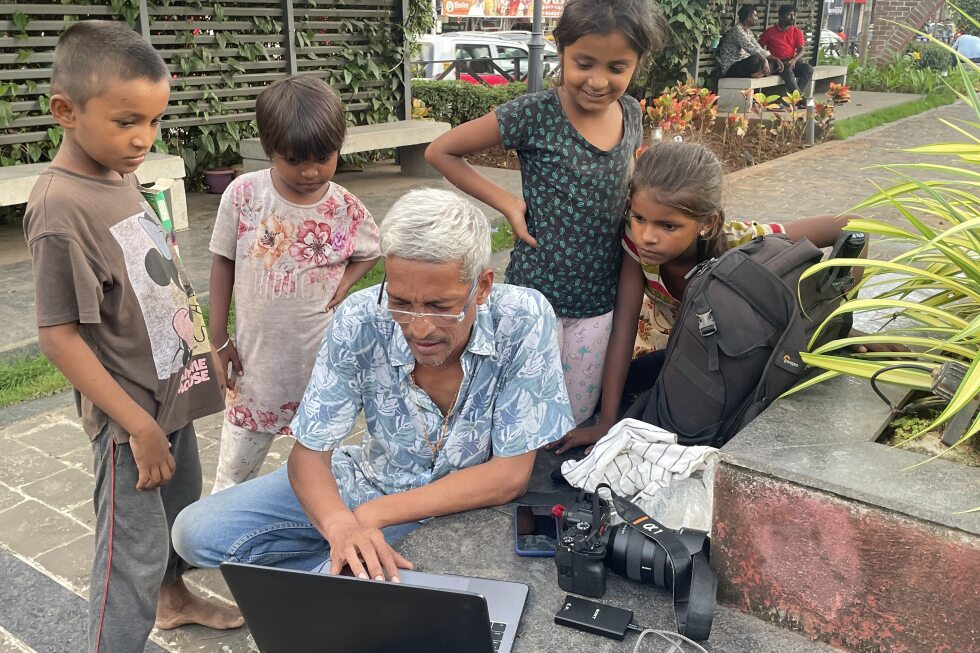
Perhaps most significantly, Kakade’s photographs of everyday life in Mumbai revealed the essence of a metropolis in constant motion. His work captured the complex interplay between tradition and modernity in a city where ancient customs and cutting-edge technology coexist. From the packed local trains that serve as Mumbai’s lifeline to the contrasts of wealth and poverty that define its neighborhoods, Kakade documented the city’s contradictions with sensitivity and nuance.
Manish Swarup, AP’s chief photographer for South Asia who worked closely with Kakade, described him as a photographer with “that rare, quiet grace of a true observer.”
“He didn’t just take pictures; he earned the trust of those in his frame. That is why his photographs always stand out — they carry an intimacy and a truth that only a person of his character could capture,” Swarup said. “We haven’t just lost a great photojournalist; we have lost a beautiful soul, whose kindness was as luminous as his work.”
Colleagues remembered Kakade as soft-spoken yet deeply committed to photojournalism’s mission of bearing witness to history. His approach to the craft was characterized by patience and respect for his subjects, allowing him to document moments others might miss.
Yirmiyan Arthur, who oversees photos and storytelling for AP in the Asia Pacific region, highlighted Kakade’s special relationship with his hometown. “He helped us understand everyday Mumbai, a city of contradictions, with utter honesty,” Arthur noted, adding that Kakade documented the full spectrum of urban life—from opulence to hardship, the annual monsoon season’s blessings and challenges, and the humanity within Mumbai’s crowded transportation systems.
“He was a son of Mumbai and made sure he told its story the right way,” Arthur said.
Kakade’s passing represents a significant loss to visual journalism in India, where his work helped international audiences understand the complexities of a rapidly changing society. His photographs will endure as a valuable historical record of Mumbai during a pivotal period of growth and transformation.
The photographer is survived by his family members. In an industry often defined by competition, Kakade’s legacy will be remembered not only for his exceptional imagery but also for his mentorship of younger photographers and his commitment to truthful visual storytelling.
Fact Checker
Verify the accuracy of this article using The Disinformation Commission analysis and real-time sources.

10 Comments
Rajanish Kakade’s death is a significant loss for visual journalism in India. As an AP photographer, he offered the world a deeply personal perspective on the dramatic changes unfolding in Mumbai. His images will continue to resonate for years to come.
Kakade’s passing is a profound loss for journalism and visual storytelling in India. His work powerfully documented the dynamic transformation of Mumbai over nearly two decades. His compassionate lens will be deeply missed.
Kakade’s legacy as a photographer who captured the soul of Mumbai is truly inspiring. His unique perspective and deep understanding of the city’s culture and people shines through in his powerful imagery.
Sad to hear of Rajanish Kakade’s passing. As an AP photographer, he offered the world an intimate, compelling window into the daily life and evolution of India’s bustling financial capital. His work will continue to inspire future generations of visual storytellers.
Kakade’s photos served as a vital chronicle of Mumbai’s transformation. His artistic eye and human touch will be greatly missed. May his work continue to resonate and preserve the vibrancy of the city he loved.
Rajanish Kakade’s death is a significant loss for photojournalism in India. His images provided a rich, nuanced perspective on the rapid changes shaping Mumbai. He leaves behind an impressive visual legacy that captured the city’s soul.
Kakade’s passing is a somber moment for the photography community. As an AP photographer, he brought a unique, empathetic lens to documenting the daily rhythms and cultural tapestry of Mumbai. His work will continue to inspire and inform.
Kakade’s visual chronicle of Mumbai’s evolution over nearly two decades is a remarkable achievement. His ability to find the humanity in his subjects and depict the city’s transformation with nuance is truly admirable.
Kakade’s passing is a sad day for the photographic community. His work as an AP photographer provided a vital visual chronicle of Mumbai’s dynamic evolution, capturing both its grandeur and intimate moments with empathy and artistry. He will be greatly missed.
Kakade’s legacy as a visual storyteller who deeply understood the soul of Mumbai is truly inspiring. His compassionate lens and unique perspective will continue to inform and enlighten future generations of photographers.