


Listen to the article
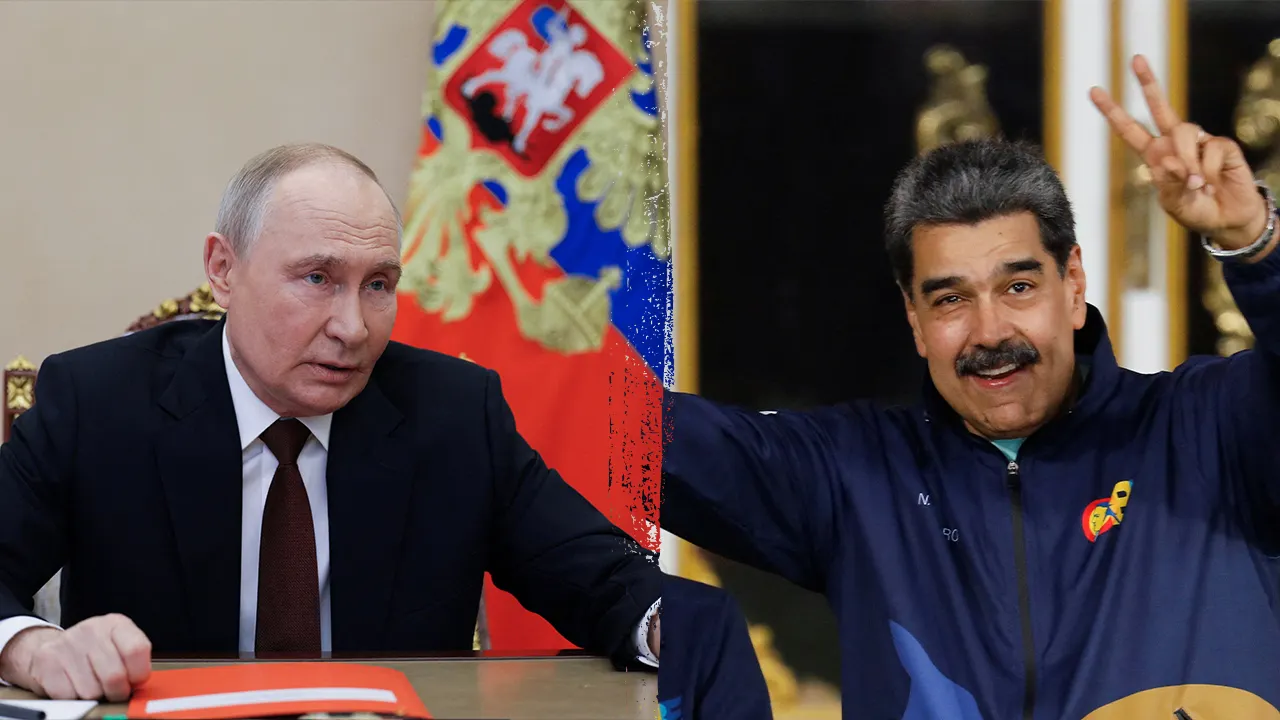
Russian President Vladimir Putin pledged continued support to Venezuelan leader Nicolás Maduro during a phone call Thursday, as the South American nation faces mounting pressure from the United States, according to a Kremlin statement.
The call came at a particularly tense moment in U.S.-Venezuela relations, just one day after American authorities seized what President Donald Trump described as “the largest tanker ever seized by the United States” – a Venezuelan oil vessel that had reportedly violated U.S. sanctions.
During their conversation, Putin expressed solidarity with Maduro’s government “in the face of growing external pressure,” a clear reference to the Trump administration’s intensified campaign to remove the Venezuelan leader from power. The two leaders also discussed advancing their strategic partnership and developing joint projects in economic and energy sectors, the Kremlin reported.
The timing of the call highlights Russia’s continued willingness to stand by Maduro despite international isolation. Moscow has maintained close ties with Caracas for over two decades, beginning during Hugo Chávez’s presidency and continuing under Maduro’s leadership.
The relationship has proven particularly valuable to Venezuela as its economy has collapsed under the weight of mismanagement, corruption, and international sanctions. Russia has provided military equipment, financial assistance, and technical support to Venezuela’s oil sector, which remains the primary economic lifeline for Maduro’s government despite years of production decline.
For the Kremlin, Venezuela represents a strategic foothold in Latin America and a partner that shares its opposition to U.S. influence. Both nations face international sanctions and diplomatic isolation, creating common cause between Moscow and Caracas.
The latest U.S. action against Venezuela involved federal agencies including the FBI, Homeland Security Investigations, and the U.S. Coast Guard. U.S. Attorney General Pam Bondi confirmed the operation, which was executed based on a federal warrant related to sanctions violations. Venezuelan authorities immediately condemned the seizure as “piracy” and a violation of their sovereignty.
The Trump administration has made removing Maduro from power a foreign policy priority, implementing multiple rounds of sanctions targeting Venezuela’s oil industry, government officials, and financial system. In recent weeks, the U.S. has also increased military activity in the Caribbean as part of its pressure campaign.
Energy market analysts noted that the tanker seizure caused oil prices to rise slightly, as traders assessed the potential impact on global oil supplies. While Venezuela’s production has fallen dramatically in recent years, any disruption still affects markets, particularly as the U.S. has sought alternative sources following restrictions on Russian oil imports.
The Russia-Venezuela partnership extends beyond symbolic diplomatic support. Over the past several years, Moscow has provided billions of dollars in loans and credit lines to Caracas, much of it secured by future oil deliveries. Russian state-owned oil company Rosneft has maintained joint ventures with Venezuela’s state oil company PDVSA, helping to keep some production facilities operational despite sanctions.
Military cooperation has also been a cornerstone of the relationship. Russia has supplied Venezuela with advanced weapons systems and conducted joint military exercises that have alarmed U.S. officials concerned about Russian influence in the Western Hemisphere.
According to the U.S. Congressional Research Service, the Moscow-Caracas relationship has proven remarkably durable, largely unaffected by short-term political shifts or external pressure. Even as Venezuela’s economic and humanitarian crisis has deepened, with millions of citizens fleeing the country, Russia has maintained its support for Maduro.
The Putin-Maduro call suggests that both leaders see their alliance as more important than ever in the face of renewed American pressure. For Maduro, Russian backing provides economic lifelines and international legitimacy as he prepares to face potential escalation from the Trump administration. For Putin, Venezuela represents an opportunity to challenge U.S. influence in its own hemisphere while securing economic interests in the oil-rich nation.
Fact Checker
Verify the accuracy of this article using The Disinformation Commission analysis and real-time sources.

7 Comments
Interesting to see Russia doubling down on its support for Maduro despite the US pressure. It’s clear the Kremlin sees Venezuela as a strategic partner, even if it means going against the broader international consensus.
This is a classic example of great power competition playing out in a smaller country. The US and Russia are using Venezuela as a proxy battleground, with the Venezuelan people caught in the middle. A negotiated settlement seems increasingly difficult to achieve.
I’m curious to see how the economic and energy projects between Russia and Venezuela will progress, given the tightening sanctions. This partnership seems to be more about political influence than mutually beneficial development.
The US seizure of a Venezuelan oil tanker is a significant escalation. It will be interesting to see how Venezuela and its allies like Russia respond, as this could raise the risk of further confrontation.
You’re right, this could be a dangerous game of brinkmanship between the US and Venezuela, with Russia caught in the middle. Careful diplomacy will be crucial to avoid an unintended conflict.
This is a complex geopolitical situation with high stakes for all sides. Russia’s continued backing of Maduro could prolong the crisis in Venezuela and further strain relations with the US. It will be important to monitor how this situation develops.
Russia’s support for Maduro is understandable from a geopolitical perspective, but it’s hard to see how this ultimately benefits the Venezuelan people who are suffering under the Maduro regime. A more impartial approach focused on humanitarian aid may be warranted.