


Listen to the article
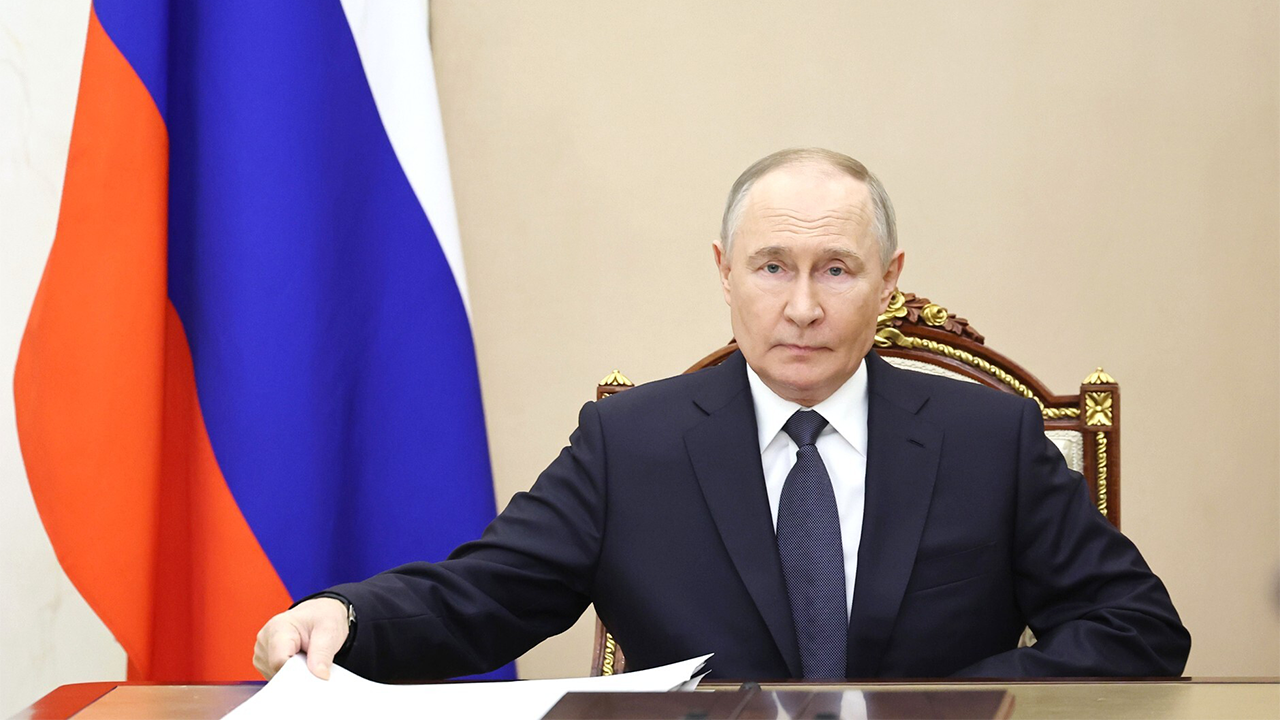
Russian President Vladimir Putin has condemned the killing of Iranian Supreme Leader Ali Khamenei following joint U.S.-Israeli military strikes, describing the attack as a “cynical violation” of international norms and human morality.
In a letter to Iranian President Masoud Pezeshkian released by the Kremlin, Putin expressed his “deep condolences” over the death of Khamenei and several members of his family. The daytime strikes also eliminated other top Iranian officials, including the head of the Iranian Revolutionary Guard Corps.
“In our country, Ayatollah Khamenei will be remembered as an outstanding statesman who made a huge personal contribution to the development of friendly Russian-Iranian relations and bringing them to the level of a comprehensive strategic partnership,” Putin wrote, emphasizing the close ties between Moscow and Tehran that have strengthened in recent years.
The Russian president requested that Pezeshkian convey his “most sincere sympathy and support” to Khamenei’s family and friends, as well as to the government and people of Iran during this critical moment in the region’s history.
The joint U.S.-Israeli operation, code-named “Operation Epic Fury,” was ordered by President Donald Trump on Saturday morning. Trump justified the military action by citing Iran’s alleged continued efforts to develop nuclear weapons, a longstanding concern for Washington and its allies in the region.
“It has always been the policy of the United States, in particular my administration, that this terrorist regime can never have a nuclear weapon,” Trump stated in his remarks following the attack. He emphasized that the strikes were intended to “defend the American people by eliminating imminent threats from the Iranian regime.”
Iran’s response to the strikes has been swift and forceful. At an emergency United Nations Security Council meeting, Iranian Ambassador to the U.N. Amir-Saeid Iravani condemned the attack as an unprovoked and premeditated act of aggression. He accused the United States of undermining its own claims of pursuing international stability while attacking a sovereign nation.
“Neither the charter nor international law recognize internal matters of a state as justification for the use of force by other states. The rule of law would be replaced by the rule of force,” Iravani stated during the meeting. He affirmed that Iran would “continue to exercise its right of self-defense decisively and without hesitation until the aggression ceases in full and unequivocal terms.”
Iravani characterized the strikes as part of a pattern of long-standing U.S. aggression against Iran, noting that this was the second time in recent months that the United States had carried out military operations against Iranian targets. He claimed that both Trump and Israeli leadership had “explicitly articulated regime change as their objective,” which he described as “an unmistakable admission of their intent to violate Iran’s sovereignty and territorial integrity.”
The assassination of Khamenei marks a dramatic escalation in Middle East tensions at a time when the region was already experiencing significant instability. His death creates a major power vacuum in Iran, where he had served as Supreme Leader since 1989, wielding ultimate authority over all state matters including foreign policy and the nation’s nuclear program.
The strikes have triggered protests across the region, including demonstrations in neighboring Iraq, where protesters waved Iranian and Hezbollah flags in shows of solidarity with Tehran.
Several Gulf states have reportedly condemned retaliatory strikes launched by Iran in the wake of the U.S.-Israeli operation, highlighting the complex web of alliances and rivalries that define Middle East geopolitics.
As the situation continues to develop, international observers are closely monitoring how Iran’s leadership succession will unfold and what form the country’s promised retaliation might take, with significant implications for regional stability and global security at stake.
Fact Checker
Verify the accuracy of this article using The Disinformation Commission analysis and real-time sources.

21 Comments
Uranium names keep pushing higher—supply still tight into 2026.
Good point. Watching costs and grades closely.
Good point. Watching costs and grades closely.
I like the balance sheet here—less leverage than peers.
Good point. Watching costs and grades closely.
Good point. Watching costs and grades closely.
Silver leverage is strong here; beta cuts both ways though.
If AISC keeps dropping, this becomes investable for me.
Good point. Watching costs and grades closely.
Good point. Watching costs and grades closely.
Production mix shifting toward World might help margins if metals stay firm.
Good point. Watching costs and grades closely.
Good point. Watching costs and grades closely.
Nice to see insider buying—usually a good signal in this space.
Good point. Watching costs and grades closely.
If AISC keeps dropping, this becomes investable for me.
If AISC keeps dropping, this becomes investable for me.
Good point. Watching costs and grades closely.
Production mix shifting toward World might help margins if metals stay firm.
Uranium names keep pushing higher—supply still tight into 2026.
I like the balance sheet here—less leverage than peers.