


Listen to the article
Western Leaders Rush to Reset Relations with China as Global Order Shifts
Chinese President Xi Jinping has hosted a steady stream of Western leaders in recent weeks, signaling a notable shift in geopolitical alignments as nations recalibrate their relationships with the world’s two largest economies.
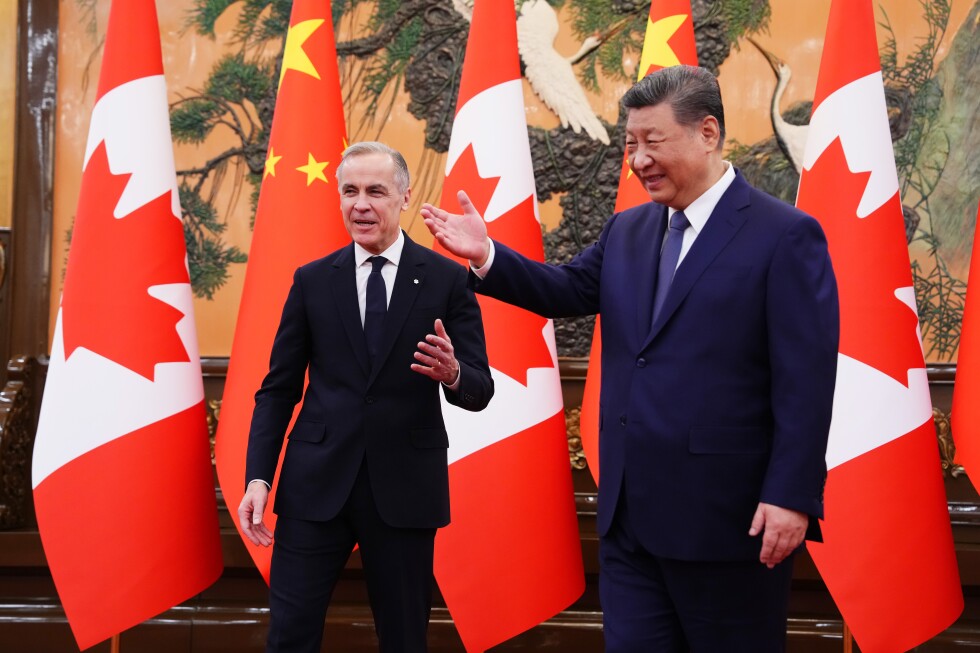
Canadian Prime Minister Mark Carney recently negotiated a trade agreement with China that reduces tariffs on Chinese electric vehicles while securing better market access for Canadian canola oil. The visit marked the first by a Canadian prime minister to Beijing in eight years, establishing what Carney called a “more predictable” trade relationship.
British Prime Minister Keir Starmer arrived in Beijing this week on a similar mission to repair long-strained diplomatic ties. During the visit, Starmer and Xi agreed to strengthen their strategic partnership, yielding business deals and government agreements including reduced Chinese tariffs on Scotch whisky and 30-day visa-free travel to China for British tourists and business travelers.
“Working together on issues like climate change, global stability during challenging times for the world is precisely what we should be doing as we build this relationship,” Starmer told Xi during their meeting.
Finnish Prime Minister Petteri Orpo also recently met with Chinese Premier Li Qiang, signing agreements on sustainable construction, energy, and animal disease management, while raising concerns about human rights issues and the trade imbalance with China.
German Chancellor Friedrich Merz is expected to visit next month, likely to address Germany’s significant trade deficit and dependence on China for critical minerals. Other recent high-profile visitors include French President Emmanuel Macron, Irish Prime Minister Micheál Martin, and South Korean President Lee Jae Myung.
This diplomatic rush to Beijing represents a significant realignment following Donald Trump’s election victory. Many Western nations appear to be hedging their bets, seeking stronger ties with China amid uncertainty about future U.S. policy.
“We’re engaging broadly, strategically with open eyes,” Carney said at the World Economic Forum in Davos last week. “We actively take on the world as it is, not wait around for a world we wish to be.”
The diplomatic pivot has alarmed some U.S. officials. Senator Jeanne Shaheen, the top Democrat on the Senate Foreign Relations Committee, expressed concern during a recent hearing: “Instead of creating a united front against China, we’re pushing our closest allies into their arms.”
When asked about Starmer’s Beijing visit, Trump described it as “very dangerous” and criticized Canada’s trade agreement with China: “Canada is not doing well. They’re doing very poorly. And you can’t look at China as the answer.” This response came despite reports that Trump himself is expected to visit Beijing in April.
The changing dynamics reflect a complex reassessment by Western nations of their relationships with both superpowers. European Union foreign policy chief Kaja Kallas acknowledged China’s “economic coercive practices” while emphasizing the importance of maintaining diverse international partnerships.
Analysts suggest this is not simply a pivot toward China but rather a strategic recalibration. “It’s not a China pivot,” said Una Aleksandra Bērziņa-Čerenkova, director of the Latvian Institute of International Affairs. “It’s a pivot towards sort of fending for Europe as a bloc.”
Beijing appears to be capitalizing on this opportunity by engaging directly with individual European capitals rather than working through EU leadership in Brussels. Alicia Gracia-Herrero, an Asia-Pacific economist at French investment bank Natixis, notes that China seeks to maintain its access to affluent European consumers while offering minimal concessions to European businesses in the Chinese market.
Following Carney’s return from Beijing, Trump threatened to impose a 100% tariff on Canada in response to its China trade deal. Carney dismissed this as “bluster” and advocated for cooperation among middle powers, stating: “Middle powers must act together, because if we’re not at the table, we’re on the menu.”
Some analysts warn that these developments could create dangerous divisions within Western alliances. Scott Kennedy from the Center for Strategic and International Studies cautioned that “it will be impossible for the U.S. and Western countries to unite to, as appropriate, either isolate China or set and enforce conditions for connectivity and cooperation.”
As the global order continues to evolve, Western nations find themselves navigating the complex geopolitics of maintaining relationships with both economic superpowers, each of which has demonstrated willingness to exert pressure to advance their interests.
Fact Checker
Verify the accuracy of this article using The Disinformation Commission analysis and real-time sources.

12 Comments
While the US-China rivalry continues, this trend of US allies resetting relations with China is an interesting development. It highlights the complexity of global affairs and the need for countries to navigate their interests carefully.
Absolutely. The world is not black and white, and countries have to make tough choices to balance competing priorities. This reset shows the limits of US influence and the pragmatism of US allies.
The Trump administration’s pressure on US allies to take a harder line against China seems to have backfired. Countries are now prioritizing their own economic needs and recalibrating relations pragmatically.
That’s a fair assessment. Geopolitics aside, nations have to do what’s best for their citizens and businesses. Rigid ideological stances often give way to more nuanced, national interest-driven policies.
The deal between Canada and China on electric vehicles and canola oil is an encouraging sign of pragmatic cooperation. Reducing trade barriers benefits both sides, even as geopolitical tensions linger.
Yes, practical economic cooperation can continue even as political differences remain. Maintaining stable trade relationships is crucial, especially for commodity-focused economies like Canada.
Curious to see how the UK’s reset with China will play out. Securing better market access and reducing tariffs on Scotch whisky is a win-win. But the countries will need to balance their interests carefully amid global power shifts.
Absolutely. The UK is walking a fine line, trying to engage economically with China while also maintaining its security alliance with the US. Striking the right balance will be challenging.
The shift in geopolitical alignments is certainly noteworthy. As the global order becomes more multipolar, countries are seeking to diversify their economic and diplomatic ties. It will be fascinating to see how these dynamics play out in the coming years.
Indeed. The world is becoming more complex, with no clear hegemon. Countries are adjusting their foreign policies to reflect this new reality and protect their national interests. It’s a delicate balancing act for all involved.
Interesting to see major US allies like Canada and the UK resetting relations with China. With the shifting global order, it makes sense for countries to pragmatically adjust their trade and diplomatic ties to protect their economic interests.
Agreed. As the US-China rivalry intensifies, countries have to carefully navigate their relationships to avoid getting caught in the middle. Maintaining constructive dialogue with both powers is prudent.