


Listen to the article
Iranian Student Protests Persist Despite Government Crackdown
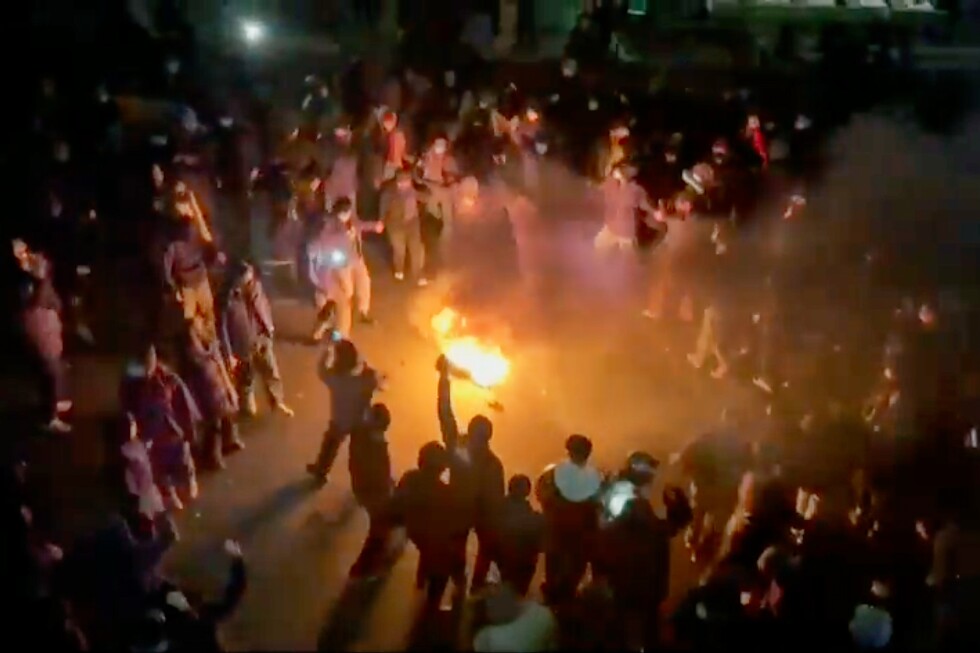
Seven weeks after Iranian authorities violently suppressed nationwide protests, resistance continues to smolder across university campuses throughout the country. At least ten campuses witnessed anti-government demonstrations last week alone, according to reports from exiled Iranian activists, student witnesses, and verified social media footage.
The ongoing campus unrest unfolds against a backdrop of escalating international tensions, as Iran faces potential military action from the United States over its controversial nuclear program. This external pressure compounds the domestic crisis that has been building since late last year.
Students speaking on condition of anonymity described an atmosphere of growing anger toward Iran’s leadership and uncertainty about the nation’s future. The Supreme Leader Ayatollah Ali Khamenei’s theocratic government has responded by intensifying threats against students and university administrators.
One government official this week warned students not to cross a “red line,” while Gholamhossein Mohseni Ejehi, the hard-line cleric heading Iran’s judiciary, threatened to intervene if educational authorities failed to control campus “crimes.” Ejehi has become synonymous with Iran’s recent crackdown, advocating for expedited punishment of protesters.
Many universities have closed their physical campuses and shifted to remote learning, mirroring tactics used during protests in early January when authorities also shut down internet access and launched a deadly crackdown on demonstrators.
The true scale of casualties from January’s suppression remains difficult to verify due to government-imposed internet restrictions. The Human Rights Activists News Agency has confirmed more than 7,000 deaths and is investigating thousands more cases. Iranian authorities have acknowledged only 3,000 fatalities, though they have historically underreported casualties from civil unrest.
Ali Taghipour, an exiled activist monitoring the student movement, claims at least 128 university students died in the nationwide protests, describing it as “the biggest massacre of university students” in the Islamic Republic’s history. The traditional 40-day memorial ceremonies for those killed have themselves sparked new protests on campuses.
Last weekend, demonstrations erupted at both Sharif University of Technology and Amir Kabir University. Video footage verified by AP showed confrontations between apparent government supporters and protesters chanting “Shameless!” — a taunt typically directed at security forces and plainclothes Basij militiamen who maintain a presence on campuses through student organizations.
Female students at Al Zahra University in northern Tehran joined the protests on Monday, while students at the University of Tehran’s College of Foreign Languages held a demonstration that began as a memorial for a student killed in January.
The government’s response has been increasingly punitive. Universities across Iran have barred some students from campus and conducted disciplinary hearings that historically have resulted in expulsions or even permanent bans from higher education.
Iranian university students have long been at the forefront of political resistance. From the 1999 protests in Tehran to the reform movement of 2008-2009 and the anti-government demonstrations of 2022, campus activism has consistently challenged the Islamic Republic’s authority.
A doctoral student at the University of Tehran noted that the regime’s inflexibility and decades of economic mismanagement have led many to conclude that Iran’s theocratic system cannot be reformed. This disillusionment has created an opening for exiled figures like Reza Pahlavi, son of the shah ousted in 1979, to gain support despite mixed memories of his father’s autocratic rule.
Years of repression have decimated organized opposition within Iran and severely restricted political activity on campuses. “After 2022, around 70% of student associations were closed,” said a social sciences student at Tehran University, including progressive groups.
The threat of war has further complicated the situation. A student in the northern city of Babol described rising fear about what armed conflict might mean for Iran. While personally hoping for a “democratic secular republic,” he worries that war could lead to further suffering and potential national disintegration in a country already struggling with basic services like electricity and water.
Many universities continue to operate remotely, preventing students from gathering on campus. Some students have boycotted online courses as a form of protest.
As tensions continue to rise both domestically and internationally, Iran’s student movement stands at a precarious crossroads, caught between a government willing to use deadly force against its own citizens and the looming threat of foreign military intervention.
Fact Checker
Verify the accuracy of this article using The Disinformation Commission analysis and real-time sources.

10 Comments
The continued student protests in Iran demonstrate the deep-seated discontent and desire for change within Iranian society. However, the government’s heavy-handed crackdown and the specter of potential US military action are only exacerbating the crisis. A peaceful, Iranian-led resolution that addresses the root causes of the unrest is crucial.
The persistence of these protests, despite the government’s crackdown, suggests the depth of public anger and desire for change in Iran. But the specter of foreign military intervention could undermine the protesters’ cause and rally support for the regime. A peaceful, Iranian-led resolution is crucial.
Absolutely. Any outside military action would likely backfire and empower the hardliners in Iran. The best path forward is for the international community to support the protesters’ right to peaceful dissent while pressuring the regime to engage in real dialogue and reforms.
While I’m sympathetic to the students’ grievances, I worry that the ongoing protests could provoke a harsh crackdown or even foreign intervention. De-escalation and a willingness to engage in dialogue on all sides is crucial to avoid further instability and violence.
The continued student protests in Iran are very concerning. The government’s violent crackdown and threats against universities are only serving to further inflame tensions. It’s a complex geopolitical situation with high stakes for the region.
The tensions between Iran and the West over the nuclear program are certainly complicating the domestic unrest. But the core issue seems to be growing public discontent with the Iranian government’s authoritarian rule and lack of accountability. A political solution addressing those root causes is needed.
It’s a complex and concerning situation. The Iranian government’s brutal response to the protests is deeply troubling, but the potential for US military action is also very risky. All sides need to exercise restraint and focus on diplomatic solutions that address the legitimate grievances of the Iranian people.
This is a delicate and dangerous situation that requires careful diplomacy. The Iranian government must show restraint and address the legitimate concerns of its citizens, while the US and its allies need to avoid actions that could provoke further conflict and destabilization in the region.
These protests reflect deep-seated discontent with the Iranian regime, which is struggling to maintain control. The potential for military action by the US only adds to the uncertainty and risk of further unrest. A peaceful resolution seems elusive at the moment.
You’re right, the situation is extremely volatile. Both the Iranian government and the US need to exercise restraint and focus on diplomatic solutions rather than escalating military threats.