


Listen to the article
Violent Clashes Erupt in Coastal Syria Following Deadly Mosque Bombing
Violent clashes broke out Sunday between Alawite protesters and counterdemonstrators in Syria’s coastal cities, escalating tensions two days after a deadly bombing at an Alawite mosque in Homs killed eight people and wounded 18 others during Friday prayers.
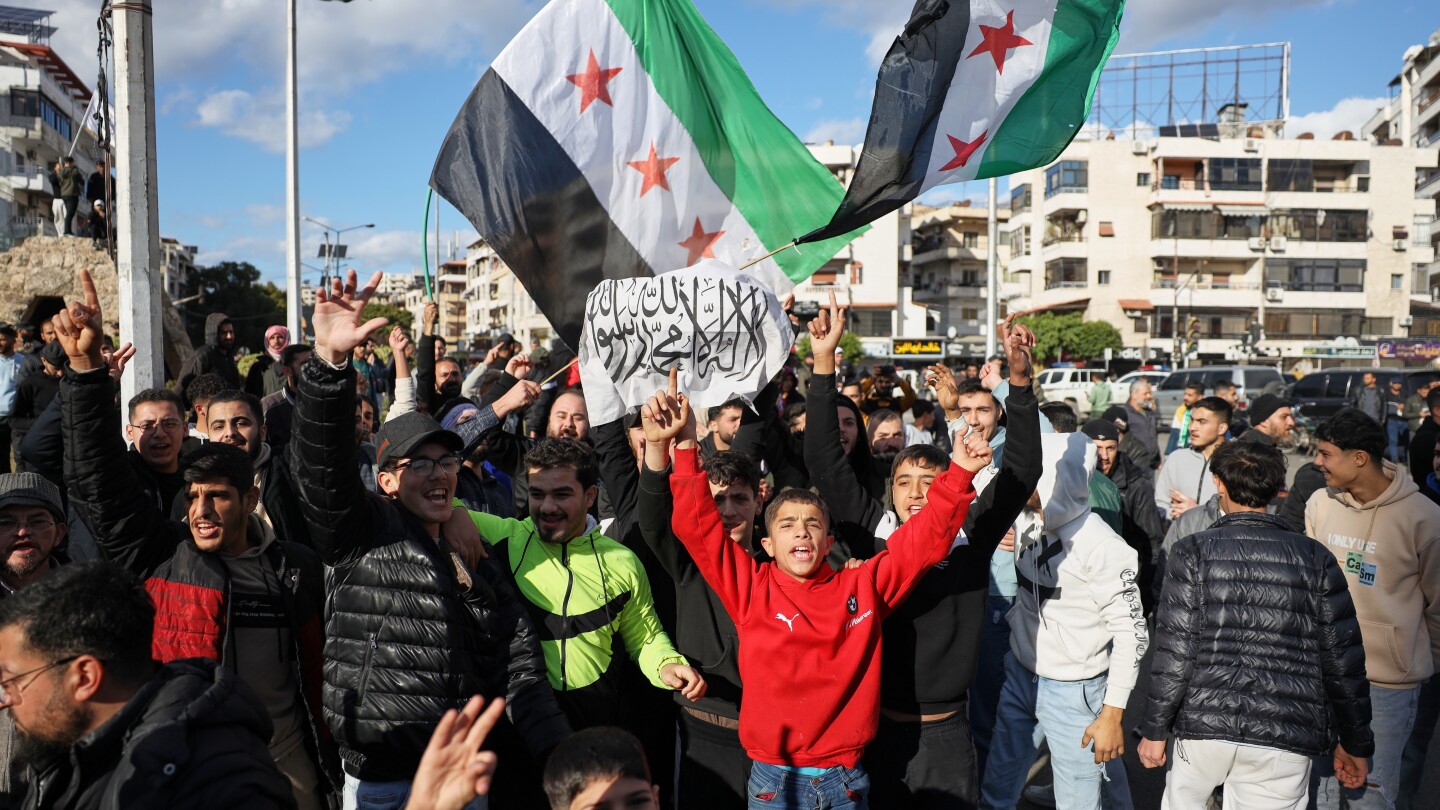
Thousands of protesters from the Alawite minority gathered in Latakia and Tartous, responding to calls from Ghazal Ghazal, an Alawite sheikh living abroad who heads the Supreme Alawite Islamic Council in Syria and the Diaspora. The demonstrations quickly turned violent when pro-government counterprotesters began throwing rocks at the Alawite demonstrators.
In Latakia, witnesses reported protesters beating a counterdemonstrator who crossed to their side. Security forces attempted to separate the groups, firing into the air to disperse the crowds. Multiple demonstrators were injured in the ensuing scuffles, though exact numbers remain unclear.
Syria’s state television reported that two security force members were wounded in Tartous after someone threw a hand grenade at a police station. In Latakia, vehicles belonging to security forces were set on fire, further indicating the intensity of the unrest.
Friday’s bombing, which targeted worshippers during prayers at an Alawite mosque in Homs, has heightened sectarian tensions across Syria. Preliminary investigations indicate explosive devices were planted inside the mosque, though authorities have yet to publicly identify suspects. Funerals for the victims were held Saturday, drawing large crowds of mourners.
A previously little-known group calling itself Saraya Ansar al-Sunna claimed responsibility for the attack through its Telegram channel. The group’s statement suggested the bombing deliberately targeted members of the Alawite sect, an offshoot of Shiite Islam that hardline Sunni Islamists consider apostates.
This latest violence occurs against the backdrop of significant political upheaval in Syria. The country has experienced several waves of sectarian violence since former President Bashar Assad fell from power in December 2024, when a lightning rebel offensive ended nearly 14 years of civil war. Assad, an Alawite himself, fled to Russia following the collapse of his regime.
The Alawite community, which represents about 11 percent of Syria’s population, has faced increasing challenges since Assad’s departure. Once overrepresented in government positions and security forces during the Assad dynasty’s rule, Alawites now report discrimination in public employment and arbitrary detention of young Alawite men.
Tensions reached a peak in March when an ambush by Assad supporters against security forces triggered days of violence that left hundreds dead, most of them Alawites. While the situation had somewhat stabilized in recent months, Alawites continue to be targeted in sporadic sectarian attacks across the country.
The sectarian dimensions of Syria’s conflict have deep roots. During the decades-long rule of the Assad family, Alawites held disproportionate power in the government, military, and security apparatus, creating resentment among the country’s Sunni majority. The current violence highlights the ongoing struggle to establish a stable political order that can accommodate Syria’s complex religious and ethnic mosaic.
Government officials have condemned Friday’s mosque attack and promised to hold perpetrators accountable, though no arrests have been announced yet. As security forces struggle to maintain order in coastal cities, there are growing concerns that Syria could be sliding back toward widespread sectarian conflict.
International observers warn that without meaningful reconciliation efforts and power-sharing arrangements, Syria risks remaining trapped in cycles of retributive violence between its various religious and ethnic communities, potentially destabilizing the wider region.
Fact Checker
Verify the accuracy of this article using The Disinformation Commission analysis and real-time sources.

10 Comments
This is a deeply concerning development. The bombing of the Alawite mosque is a heinous act, but the violent clashes that have erupted risk exacerbating the conflict. I hope all sides can come together to find a peaceful solution and prevent further bloodshed.
Well said. Resorting to violence will only perpetuate the cycle of conflict. Dialogue and compromise are essential to resolving this crisis.
The bombing of the Alawite mosque is a tragic and unacceptable act of violence. However, the ensuing clashes between protesters and security forces risk further destabilizing the already fragile situation in Syria. I hope community leaders can work to ease tensions and restore calm.
This is a complex and volatile situation. The bombing of the Alawite mosque is an act of terrorism that deserves strong condemnation. However, the violent clashes between protesters risk further destabilizing the region.
The clashes between Alawite protesters and counter-demonstrators are deeply concerning. I hope the security forces can maintain order without excessive force and that community leaders work to ease tensions through open communication.
Agreed. Escalating the confrontation is unlikely to resolve the underlying grievances. A measured, inclusive approach is needed to find a peaceful solution.
I’m concerned about the potential for this incident to spark wider unrest in Syria. While the Alawite community has a right to peacefully protest, the involvement of counter-demonstrators and security forces is worrying. De-escalation should be the priority.
Agreed. At this critical juncture, all parties need to exercise restraint and focus on finding a political resolution rather than resorting to violence.
Tragic events unfolding in Syria. The bombing of an Alawite mosque is a concerning escalation of tensions between communities. I hope the situation can be de-escalated through dialogue and peaceful means to prevent further violence.
You’re right, this is a very delicate situation that requires restraint and diplomacy from all sides. Further violence will only breed more division.