


Listen to the article
Renowned North Korea Expert Expelled from Latvia During Academic Lecture
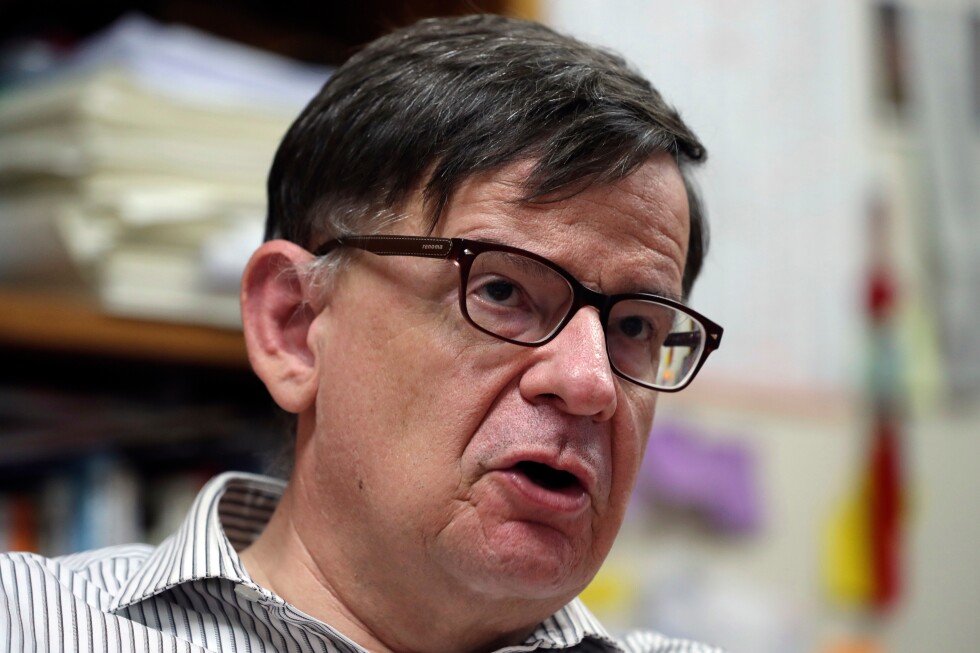
Russian-Australian scholar Andrei Lankov, a leading authority on North Korean affairs, was detained and expelled from Latvia while delivering an academic lecture in Riga, according to statements from the professor and his university.
Lankov, who teaches history at South Korea’s Kookmin University, confirmed that Latvian police detained him late Tuesday without providing a specific reason for the action. Following his detention, he was transferred to immigration authorities who escorted him to the Estonian border.
“They basically expelled me from the country, and it was all,” Lankov stated in a text message on Wednesday, offering no additional details about the incident.
Officials at Kookmin University verified that Lankov had been released from custody and was en route to Estonia. The Russian business news outlet RBK had earlier reported that Latvian authorities had placed the scholar on an official blacklist, though the reasons for this designation remain unclear.
The expulsion comes amid heightened tensions between Russia and Baltic states, which have taken strong positions against Russian influence following the invasion of Ukraine. Latvia, a NATO and European Union member, has been particularly vigilant about Russian interests within its borders since 2022.
Lankov represents an unusual intersection of academic expertise. Born in Leningrad (now St. Petersburg), he studied in North Korea as an exchange student during the 1980s, giving him rare firsthand experience in the isolated nation during a formative period. Throughout his career, Lankov has devoted himself to studying North Korean politics, society, and history.
After working in South Korea and Australia during the 1990s, Lankov settled in Seoul in 2004, where he has established himself as one of the most respected voices on North Korean affairs. He holds dual Russian and Australian citizenship, which has allowed him to maintain an international academic presence.
In academic and policy circles, Lankov is known for his pragmatic assessment of North Korea’s regime. He frequently characterizes Pyongyang as a calculating government that skillfully leverages limited resources and manipulates major powers to ensure its survival. This realist perspective has made him a valued commentator for international media and policy organizations seeking to understand North Korean motivations.
The timing of Lankov’s expulsion is particularly notable given recent developments in Russia-North Korea relations. He has publicly expressed criticism of Russia’s war in Ukraine and specifically Moscow’s reported use of North Korean troops to support its military campaign. These statements may have complicated his standing with Russian authorities.
Indeed, Lankov has faced challenges from his native country as well. In April 2025, according to reports, a Moscow court fined him 10,000 rubles (approximately $130) for allegedly participating in activities connected to an organization designated as “undesirable” under Russian law. Lankov told RBK at that time that he had only learned about the legal case through journalists.
The scholar’s detention in Latvia represents the latest challenge for academics working on sensitive geopolitical topics, especially those connected to Russia, Ukraine, and North Korea. International academic organizations have increasingly expressed concern about restrictions on scholarly exchange amid growing global tensions.
Neither Latvian authorities nor the Russian or Australian embassies have issued official statements regarding Lankov’s detention and expulsion as of Wednesday evening. The incident highlights the increasingly complicated landscape for international scholars navigating research on sensitive geopolitical subjects during a period of heightened global tensions.
Fact Checker
Verify the accuracy of this article using The Disinformation Commission analysis and real-time sources.

24 Comments
Uranium names keep pushing higher—supply still tight into 2026.
Good point. Watching costs and grades closely.
Nice to see insider buying—usually a good signal in this space.
If AISC keeps dropping, this becomes investable for me.
Uranium names keep pushing higher—supply still tight into 2026.
Good point. Watching costs and grades closely.
I like the balance sheet here—less leverage than peers.
Good point. Watching costs and grades closely.
If AISC keeps dropping, this becomes investable for me.
I like the balance sheet here—less leverage than peers.
Exploration results look promising, but permitting will be the key risk.
Uranium names keep pushing higher—supply still tight into 2026.
Good point. Watching costs and grades closely.
If AISC keeps dropping, this becomes investable for me.
The cost guidance is better than expected. If they deliver, the stock could rerate.
Good point. Watching costs and grades closely.
Good point. Watching costs and grades closely.
I like the balance sheet here—less leverage than peers.
Good point. Watching costs and grades closely.
Good point. Watching costs and grades closely.
Silver leverage is strong here; beta cuts both ways though.
Good point. Watching costs and grades closely.
Good point. Watching costs and grades closely.
Uranium names keep pushing higher—supply still tight into 2026.