


Listen to the article
Belarusian Opposition Leader Claims Delayed European Unity Prize After Prison Release
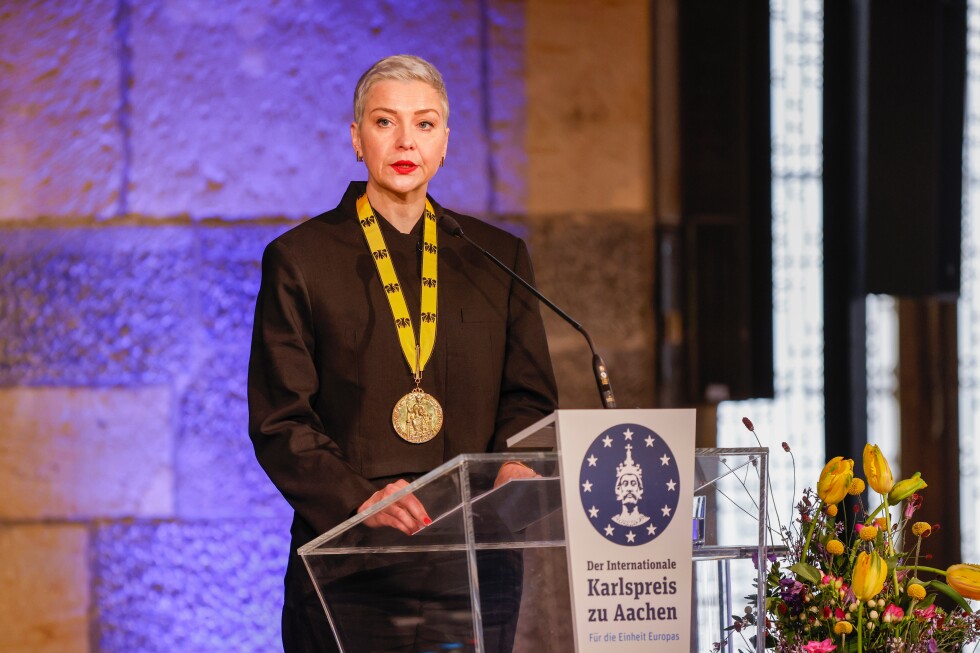
Maria Kolesnikova, a leading figure in Belarus’s opposition movement, received the International Charlemagne Prize at a ceremony in Aachen, Germany on Saturday—four years after being awarded the honor while imprisoned in her homeland.
The 43-year-old professional flautist, who became an iconic figure during the 2020 mass protests against authoritarian President Alexander Lukashenko, was initially awarded the prestigious European unity prize in 2022. At that time, her sister Tatsiana Khomich accepted the award on her behalf as Kolesnikova served an 11-year prison sentence on charges widely condemned as politically motivated.
“This recognition of her extraordinary courage in fighting for democratic rights, free elections, and human rights comes at a deeply meaningful moment,” said one official during the ceremony, highlighting Kolesnikova’s remarkable journey from political prisoner to freedom.
Kolesnikova emerged as a key ally of opposition leader Sviatlana Tsikhanouskaya during Belarus’s contested 2020 election, which sparked unprecedented demonstrations against Lukashenko’s 26-year rule. International observers and Western governments rejected the official results that claimed Lukashenko won by a landslide.
With her distinctive short-cropped hair and signature heart gesture formed with her hands, Kolesnikova became one of the most recognizable faces of the protest movement. Her status as a symbol of resistance was cemented in September 2020 when she dramatically tore up her passport at the Ukrainian border, refusing authorities’ attempts to forcibly deport her from Belarus.
This act of defiance led to her immediate arrest. In 2021, Kolesnikova was convicted on charges including conspiracy to seize power and endangering national security. During her imprisonment, she reportedly fell seriously ill and required surgery, raising international concerns about her treatment.
Kolesnikova’s release came only in December 2023, as part of a larger diplomatic arrangement between Belarus and the United States. The deal saw dozens of political prisoners freed in exchange for Washington lifting substantial economic sanctions on Belarusian fertilizer exports, a crucial source of revenue for the isolated Lukashenko regime.
Human rights organizations have documented that many political prisoners released by Belarus face additional punitive measures. Several former detainees report having their passports confiscated upon release—what activists describe as a “dirty trick” by Belarusian officials to limit their movement and prevent them from returning home if they leave the country.
The Charlemagne Prize, one of Europe’s most prestigious awards for contributions to European unity and understanding, places Kolesnikova in distinguished company. Previous recipients include French President Emmanuel Macron, former U.S. President Bill Clinton, Pope Francis, Pope John Paul II, and former German Chancellor Angela Merkel.
“This prize represents not just my struggle, but the continued fight of all Belarusians for freedom and democracy,” Kolesnikova told attendees in her acceptance speech. “While I stand here today, thousands remain unjustly detained in Belarus for simply expressing their political views.”
Political analysts note that despite the prisoner releases, Lukashenko’s government has intensified its crackdown on dissent. The United Nations estimates more than 1,400 political prisoners remain in Belarusian jails, with new arrests occurring regularly.
Meanwhile, Tsikhanouskaya continues to lead the Belarusian opposition from exile, advocating for democratic reforms and maintaining international pressure on the Lukashenko regime, which has grown increasingly dependent on support from Russian President Vladimir Putin since the contested 2020 election.
Fact Checker
Verify the accuracy of this article using The Disinformation Commission analysis and real-time sources.

18 Comments
While it’s regrettable that Kolesnikova was unable to accept the award in person due to her imprisonment, this recognition of her work is an important step in supporting the Belarusian opposition movement.
Agreed, this award shines a much-needed spotlight on the continued human rights abuses and political repression in Belarus.
The Charlemagne Prize is a prestigious honor, and Kolesnikova’s receipt of it, even after years of imprisonment, is a powerful symbol of the Belarusian people’s unwavering commitment to democracy.
The Charlemagne Prize is a well-deserved recognition of Kolesnikova’s courageous defense of human rights and democratic values. Her story is a powerful reminder of the sacrifices made by Belarusian activists.
I hope this award helps to amplify the voices of the Belarusian opposition and bring greater international attention to the situation in the country.
The Charlemagne Prize is a prestigious honor, and Kolesnikova’s receipt of it, even after years of imprisonment, is a testament to the enduring spirit of the Belarusian opposition movement.
Agreed, this award highlights the bravery and determination of Belarusian activists in the face of authoritarian repression.
It’s heartening to see Kolesnikova receive this prestigious European unity prize, even if belatedly. Her perseverance in the face of adversity is a testament to the resilience of the Belarusian people.
Absolutely, this award shines a spotlight on the continued repression of dissent in Belarus under Lukashenko’s regime.
Kolesnikova’s journey from political prisoner to freedom is truly inspirational. Her courage and commitment to democratic rights and free elections in Belarus deserve international recognition.
I agree, this award is a powerful symbol of solidarity with the Belarusian opposition movement and their struggle for democracy.
Kolesnikova’s resilience in the face of imprisonment is truly admirable. This prize is a testament to the enduring spirit of the Belarusian people and their struggle for freedom.
The delayed presentation of the Charlemagne Prize to Kolesnikova is a poignant moment, underscoring the ongoing struggle for freedom and democracy in Belarus. This award is a testament to her unwavering commitment to these ideals.
Absolutely, this recognition of Kolesnikova’s work will help to amplify the voices of the Belarusian opposition on the international stage.
It’s heartening to see Kolesnikova finally receive this award, which serves as a reminder of the ongoing struggle for freedom and democratic rights in Belarus.
Kolesnikova’s story is a powerful reminder of the sacrifices made by those who stand up for democratic values and human rights in Belarus. This award is a well-deserved recognition of her courage and resilience.
Kolesnikova’s story is a testament to the resilience of the Belarusian opposition movement. This award is a well-deserved recognition of her courageous stand against authoritarian rule.
I hope this award helps to bring greater international attention and support to the pro-democracy activists in Belarus.