


Listen to the article
Emergency Blackouts Hit Ukraine and Moldova as Trump Claims Putin Agreed to Pause Attacks
Widespread emergency power cuts swept across several Ukrainian cities and neighboring Moldova on Saturday, officials reported, amid plummeting temperatures and claims that Russian President Vladimir Putin had agreed to temporarily halt strikes on Kyiv.
Ukraine’s Energy Minister Denys Shmyhal attributed the outages to a technical malfunction affecting power lines connecting Ukraine and Moldova. “The failure caused a cascading outage in Ukraine’s power grid,” triggering automatic protection systems, he said.
Blackouts were reported in Kyiv, as well as the Zhytomyr and Kharkiv regions in central and northeastern Ukraine. In the capital, the outage disrupted water supplies and temporarily suspended subway service due to low voltage.
Moldova also experienced significant power disruptions, including in its capital Chisinau. Energy Minister Dorin Junghihu urged residents to “stay calm until electricity is restored,” explaining that automatic protection systems were triggered after power lines in Ukraine failed.
The large-scale outage comes after weeks of Russian strikes targeting Ukraine’s already vulnerable energy infrastructure. Moscow has consistently targeted civilian utilities throughout the nearly four-year war, in what Ukrainian officials describe as “weaponizing winter” – deliberately denying civilians heat, light, and running water during the coldest months.
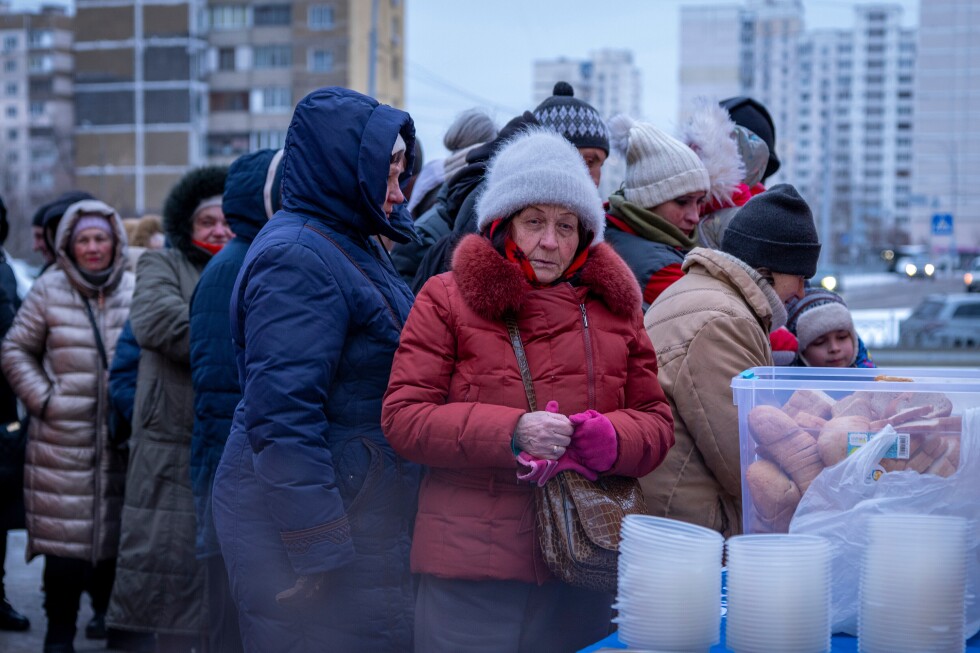
This winter has been particularly harsh, with forecasters predicting a brutally cold period stretching into next week. Ukraine’s State Emergency Service warned that temperatures in some areas could plunge to minus 30 degrees Celsius (minus 22 Fahrenheit), creating life-threatening conditions for civilians already struggling with unreliable utilities.
On Thursday, U.S. President Donald Trump claimed that Putin had agreed to temporarily halt attacks on Kyiv and other Ukrainian population centers amid the extreme weather. “I personally asked President Putin not to fire on Kyiv and the cities and towns for a week during this extraordinary cold,” Trump stated during a White House Cabinet meeting, adding that Putin had “agreed to that.”
Kremlin spokesperson Dmitry Peskov confirmed on Friday that Trump “made a personal request” to Putin to stop targeting Kyiv until Sunday “in order to create favorable conditions for negotiations.” These negotiations are expected to take place between U.S., Russian, and Ukrainian officials on February 1 in Abu Dhabi, following previous meetings in late January.
However, significant obstacles to peace remain, with Ukrainian President Volodymyr Zelenskyy citing disagreements over occupied territories as a key issue preventing a peace deal. Russia continues to demand possession of Ukrainian territory it hasn’t even captured militarily.
While Russia did strike Ukrainian energy facilities on Thursday, Zelenskyy confirmed there were no strikes on those assets overnight Friday. However, he noted that Russia had shifted focus to targeting Ukrainian logistics networks, and Russian drones and missiles continued to hit residential areas.
Despite Trump framing Putin’s acceptance of the pause as a concession, Zelenskyy remained skeptical about Russia’s intentions. “I do not believe that Russia wants to end the war. There is a great deal of evidence to the contrary,” he stated on Thursday.
Many Ukrainians share this skepticism. In Kyiv, where hundreds gathered by the frozen Dnipro River for recreation despite their homes lacking heat, electricity, and water, residents expressed doubt about diplomatic solutions. Serhii Kupov, 57, told The Associated Press he did not believe peace could be achieved through negotiations, saying Russia was “putting forward unrealistic demands.”
Albina Sokur, a 35-year-old mother from Donetsk, a city Russia occupied in 2014, has been without heating for nearly three weeks. While hoping for peace through negotiations, she doubted she would ever return home. “I think there could just be a freezing of the front line, like it was before 2022… It would only give the other side time to build up strength. This needs to be finished once and for all,” she said.
As the war approaches its fourth anniversary on February 24, diplomatic efforts continue despite widespread skepticism among Ukrainians that Moscow genuinely seeks a just peace settlement.
Fact Checker
Verify the accuracy of this article using The Disinformation Commission analysis and real-time sources.

8 Comments
The cascading power failures across the region highlight Ukraine’s continued vulnerability to Russian strikes targeting its energy systems. Hardening critical infrastructure against such attacks will be crucial as the conflict drags on.
Agreed. Ukraine will likely need significant international support and expertise to make its grid more resilient. Protecting civilians from losing heat and power as temperatures drop is a pressing priority.
This is a concerning development, especially with winter setting in. I wonder what technical issues caused the power line failures in Ukraine that then impacted Moldova’s grid. Restoring reliable electricity will be essential to support the population.
The energy minister’s explanation of automatic protection systems kicking in suggests there may have been a larger grid stability issue, rather than just localized damage. Managing the complex interconnections between Ukraine and Moldova’s power systems must be extremely challenging in wartime.
Yes, the cascading nature of these outages highlights the fragility of the regional energy infrastructure. Strengthening cross-border coordination and resilience will be crucial to mitigate future disruptions.
Concerning to hear about the widespread power outages in Ukraine and Moldova. Maintaining critical infrastructure during wartime must be a huge challenge. I hope the technical issues can be resolved quickly to restore service and protect civilians from the winter cold.
Yes, these blackouts could worsen the humanitarian situation this winter. Reliable energy access is essential, so I hope the governments and utility providers can work together to stabilize the grid.
These blackouts come at a difficult time, with cold winter weather settling in. Ensuring adequate heating and electricity for citizens is a critical priority. I hope the technical problems can be resolved quickly to restore service and avoid further hardship.