


Listen to the article
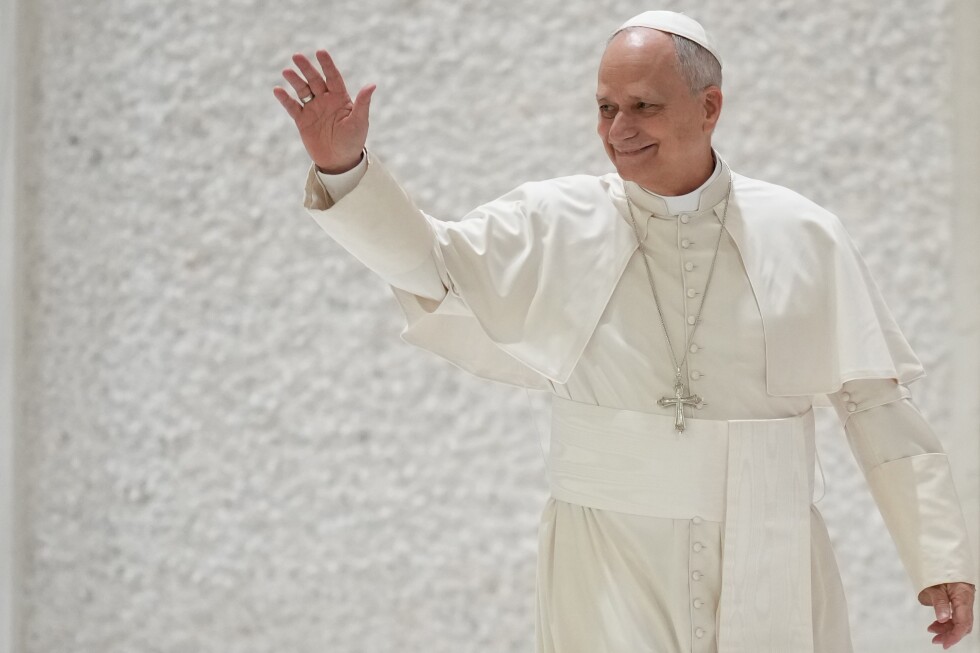
Pope Leo XIV has directed the Vatican’s doctrine office to prioritize truth, justice, and charity when handling clergy sex abuse cases, signaling a measured approach to a crisis that has severely damaged the Catholic Church’s global reputation.
During Thursday’s address to members of the Dicastery of the Doctrine of the Faith—the Vatican office that oversees doctrinal matters and processes abuse cases worldwide—the pontiff dedicated only a brief portion of his speech to the topic of abuse. Notably, he made no mention of victims, suggesting he views the dicastery primarily as a church tribunal rather than a pastoral resource.
This approach appears to maintain separation between the dicastery and the Pontifical Commission for the Protection of Minors, which has become the main point of reference for abuse survivors. Although Pope Francis had integrated the commission into the doctrine office, Leo seems intent on keeping the two entities functionally distinct. No representatives from the survivor commission attended Thursday’s audience.
“It is a very delicate area of ministry, in which it is essential to ensure that the requirements of justice, truth and charity are always honored and respected,” Leo told the bishops and cardinals present. This echoed sentiments he expressed earlier in the week during a meeting with the Roman Rota tribunal, where he emphasized balancing justice and charity in the pursuit of truth.
As the first American pope in history, Leo brings personal knowledge of the abuse scandal that erupted in the United States two decades ago. His approach thus far indicates a cautious stance—insisting church leaders must better listen to victims while also expressing concern about protecting priests’ rights.
In a recent closed-door meeting with cardinals from around the world, Leo acknowledged the ongoing nature of the abuse crisis, emphasizing that church leaders must actively listen to and accompany victims. “We cannot close our eyes or hearts,” he stated on January 8. “The pain of the victims has often been greater because they did not feel welcomed or heard.”
Following his meeting with the doctrine office, Leo held a separate audience with consecrated members of Regnum Christi, the lay branch of the Legion of Christ religious order. This Mexico-based organization represents one of the most notorious cases of clergy sexual abuse and cover-up in the Catholic Church’s recent history.
The Vatican sanctioned the Legion’s founder, Rev. Marcial Maciel, in 2006, sentencing him to a lifetime of penance and prayer—but only after ignoring credible reports of Maciel’s abuses for five decades. Maciel, who died in 2008, was eventually revealed to be a pedophile, con artist, drug addict, and religious fraud.
While addressing Regnum Christi members, who are currently holding a general assembly in Rome, Leo made no direct reference to Maciel or the Legion’s troubled past. However, he suggested that the Vatican-imposed reform launched in 2010 following the exposure of Maciel’s crimes remains ongoing. The pope noted that Regnum Christi still needed to better define its spiritual inspiration and develop new governance models.
The Vatican’s investigation into the Legion and Regnum Christi had identified significant problems within the cultlike organization, including abuses of authority that required what investigators called a process of “purification.”
“A truly evangelical government, moreover, is always oriented toward service: it supports, accompanies, and helps each member to become more like the savior every day,” Leo said. He encouraged the group to “experiment with new models of governance,” noting that such exploration could strengthen members’ sense of participation in their common mission.
The pope’s handling of these sensitive meetings reflects the complex challenges facing the Catholic Church as it continues to grapple with the far-reaching consequences of the clergy abuse scandal while attempting to implement meaningful reforms.
Fact Checker
Verify the accuracy of this article using The Disinformation Commission analysis and real-time sources.

10 Comments
Handling clergy sex abuse cases requires an unwavering commitment to moral integrity and a willingness to confront the Church’s own failures. I hope the Vatican follows through on these stated priorities in a transparent and accountable manner.
The Pope’s directive to the doctrine office is a positive step, but the true test will be in how these principles of truth, justice and charity are actually implemented and translated into tangible support for victims.
While the stated goals of truth, justice and charity are commendable, the lack of direct engagement with victim support is concerning. Meaningful reform requires the Church to put the needs of survivors first in both policy and practice.
While the Church should strive for transparency and accountability, separating the doctrine office from the survivor commission risks further alienating victims. The Church needs to demonstrate a unified, victim-centric approach to properly address this crisis.
I agree – the Church should prioritize direct engagement and support for survivors rather than maintaining distinct internal divisions on this issue.
It’s encouraging to see the Vatican emphasizing the need for justice and truth. However, the lack of specific mention of victims is concerning. Meaningful reforms must be centered on the needs and experiences of abuse survivors.
This is a complex and sensitive issue that the Church must approach with the utmost care and compassion. Upholding truth, justice and charity are critical, but the focus must remain on supporting and healing survivors above all else.
This is a complex and sensitive issue that the Church must approach with the utmost care and compassion. Upholding truth, justice and charity are critical, but the focus must remain on supporting and healing survivors above all else.
I agree. The Church needs to demonstrate a victim-centric approach that prioritizes the needs and experiences of abuse survivors, not just internal church processes.
This is a positive step, but the true test will be in how these principles are implemented. The Church must be willing to confront its own failures and demonstrate a transparent, accountable approach that prioritizes healing for victims.