


Listen to the article
Pope Leo XIV Calls for Global Compassion in First Christmas Message
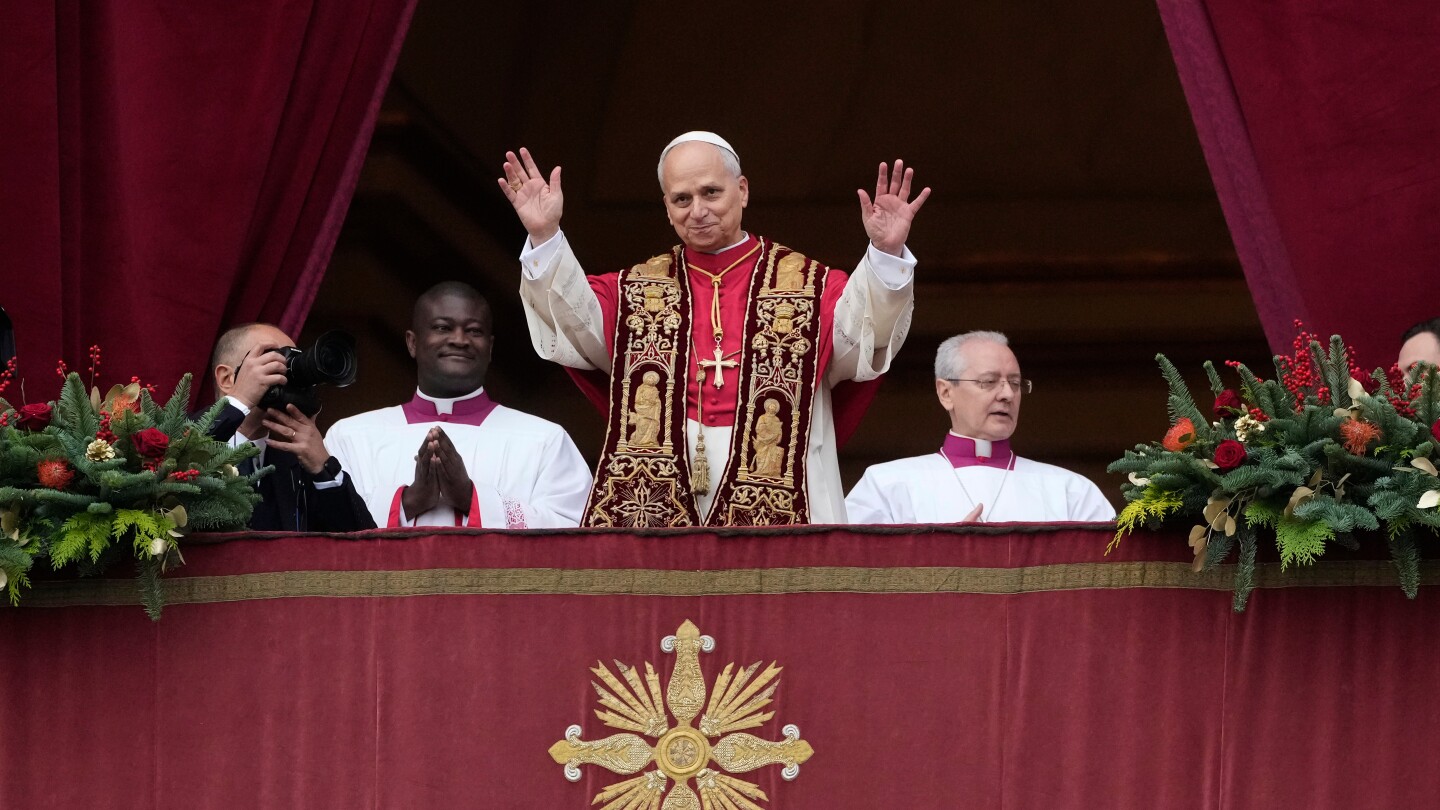
Pope Leo XIV delivered his first Christmas Day message as pontiff on Thursday, urging the faithful worldwide to embrace compassion for those suffering from conflict, poverty, and displacement. Speaking from the loggia of St. Peter’s Basilica to approximately 26,000 people gathered in the square below, the first American pope addressed pressing global concerns in the traditional “Urbi et Orbi” (To the City and to the World) address.
“In becoming man, Jesus took upon himself our fragility, identifying with each one of us: with those who have nothing left and have lost everything, like the inhabitants of Gaza; with those who are prey to hunger and poverty, like the Yemeni people; with those who are fleeing their homeland to seek a future elsewhere, like the many refugees and migrants who cross the Mediterranean or traverse the American continent,” the pontiff said.
The pope’s message resonated deeply as he called attention to humanitarian crises across multiple continents. He emphasized that everyone could contribute to peace through humble action and personal responsibility. “If he would truly enter into the suffering of others and stand in solidarity with the weak and the oppressed, then the world would change,” he stated.
After celebrating Mass inside St. Peter’s Basilica under steady rainfall, Leo emerged to clearer skies, briefly touring the square in the popemobile before delivering his address. In a departure from his predecessor Pope Francis, Leo revived the tradition of offering Christmas greetings in multiple languages. His remarks in English and Spanish—reflecting both his American heritage and his years of service in Peru—drew particularly enthusiastic responses from the crowd.
During his address, the pontiff made specific appeals for “justice, peace and stability” throughout the Middle East, naming Lebanon, the Palestinian territories, Israel, and Syria. He called for prayers for “the tormented people of Ukraine” and sought “peace and consolation” for victims of conflicts in African nations including Sudan, South Sudan, Mali, Burkina Faso, and Congo.
The pope’s global focus extended to Latin America, where he urged dialogue to address “numerous challenges,” and to Asia, where he called for reconciliation in Myanmar and the restoration of “the ancient friendship between Thailand and Cambodia.” He also highlighted the plight of those affected by natural disasters throughout South Asia and Oceania.
Beyond geopolitical concerns, Leo showed particular attention to economic hardship, remembering “those who have lost their jobs or are seeking work, especially young people, underpaid workers and those in prison.”
Earlier in the day, the pope led Christmas Mass from beneath the ornate balustrade of St. Peter’s Basilica, which was adorned with floral garlands and clusters of red poinsettias. White flowers were placed at the feet of a statue of Mary, mother of Jesus. The basilica was filled to capacity, with attendees raising smartphones to capture images of the solemn procession.
In his homily, Leo emphasized dialogue as the path to peace. “There will be peace when our monologues are interrupted and, enriched by listening, we fall to our knees before the humanity of the other,” he said. He spoke movingly of people in Gaza “exposed for weeks to rain, wind and cold” and the vulnerability of “defenseless populations, tried by so many wars.”
The pontiff also addressed the human cost of armed conflict, lamenting “young people forced to take up arms, who on the front lines feel the senselessness of what is asked of them, and the falsehoods that fill the pompous speeches of those who send them to their deaths.”
This Christmas season marks the conclusion of the Holy Year celebrations, which will officially close on January 6, the Catholic feast of Epiphany commemorating the visit of the three wise men to the infant Jesus in Bethlehem.
Fact Checker
Verify the accuracy of this article using The Disinformation Commission analysis and real-time sources.

10 Comments
This is a powerful and sobering address from the Pope. Highlighting the plight of those in Gaza, Yemen, and migrant communities is crucial. Indifference cannot be the response.
Absolutely. The Pope is right to challenge the faithful to take personal responsibility and contribute to peace through humble action.
The Pope’s message of compassion for the suffering is timely and important. It’s heartening to see the Church taking a strong stance on global humanitarian crises.
I agree, his call to action is much needed. Embracing compassion for the less fortunate should be a priority for all.
As someone who follows energy and mining news, I’m curious how this message might impact industries that contribute to conflicts and displacement. Will the Pope’s call for compassion lead to change in those sectors?
That’s an interesting perspective. The Pope’s message could certainly have implications for resource extraction industries and their role in global conflicts and displacement.
It’s refreshing to see the Church taking such a strong stance on global humanitarian issues. This type of moral leadership is essential.
Agreed. The Pope’s words carry weight, and I hope this message resonates and drives action from both the faithful and policymakers.
While the Pope’s message is admirable, I’m curious to see if it will spur concrete policy changes or initiatives to address the crises he mentioned.
That’s a fair question. The Church has significant influence, so I hope this leads to tangible efforts to provide aid and support to those in need.