


Listen to the article
Pope Francis Intensifies Criticism of U.S.-Israeli War with Iran, Calls for Peace
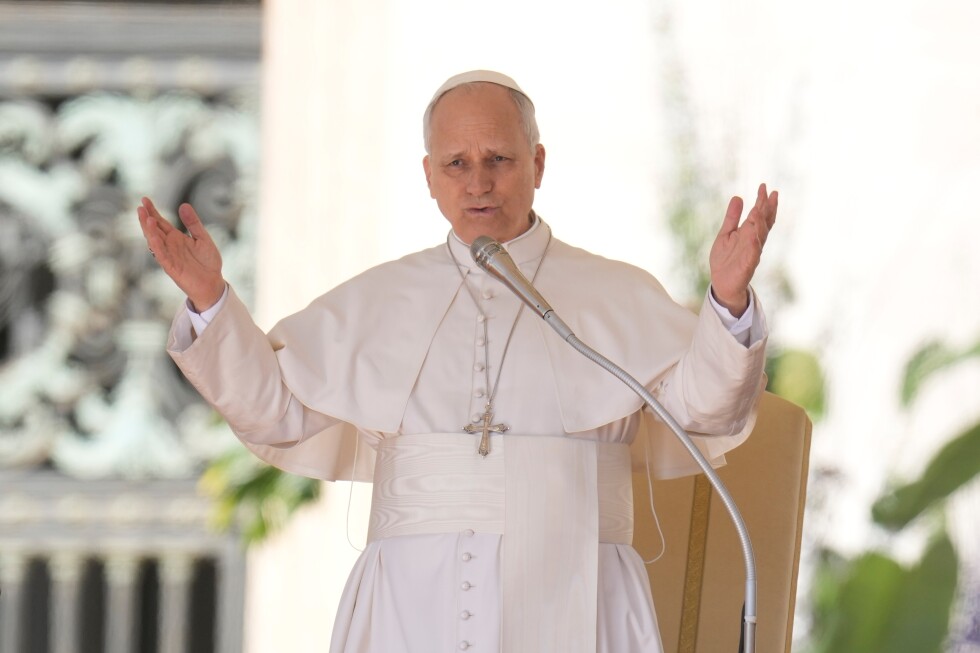
Pope Leo XIV has escalated his criticism of the ongoing U.S.-Israeli war with Iran, declaring that “God does not bless any conflict” during a gathering of top bishops of the Chaldean Catholic Church in Rome on Friday. The Pope specifically condemned those who “drop bombs” in conflict zones, a statement that was later amplified through his official social media channels.
Speaking to Chaldean Catholic leaders who are in Rome to elect a new patriarch, the Pope characterized the current global situation as one marked by “senseless and inhuman violence.” He particularly highlighted regions associated with early Christianity that have been “desecrated by the blasphemy of war and the brutality of business, with no regard for people’s lives.”
The Pope’s comments represent a significant escalation in his criticism of the war. After initially offering more measured calls for peace in the early weeks of the conflict, Leo has become increasingly vocal in his opposition to U.S. military actions. His Palm Sunday statement that God “doesn’t listen to the prayers of those who make war” marked a turning point in his rhetoric.
This week, Leo directly addressed President Donald Trump’s threats to “annihilate Iranian civilization,” calling such language “truly unacceptable” and urging diplomatic dialogue instead. His stance comes as religious justifications for the conflict have become increasingly prominent, with U.S. officials, particularly Defense Secretary Pete Hegseth, frequently invoking Christian faith to frame American military actions.
The Vatican has expressed particular concern about the conflict spreading to Lebanon, where Christian communities in the southern regions face growing threats as Israel expands its operations against Hezbollah. To emphasize his commitment to peace, Pope Leo will lead a special prayer vigil in St. Peter’s Basilica on Saturday—notably scheduled before the announcement of high-level peace talks between the U.S. and Iran expected to begin the same day in Pakistan.
Despite the Pope’s critical stance, both the Vatican and U.S. government moved to downplay suggestions of deteriorating diplomatic relations on Friday. This followed media reports of an allegedly contentious January meeting between Pentagon officials and the Vatican’s outgoing ambassador to Washington, Cardinal Christophe Pierre. The Vatican issued a rare official denial, stating that the characterization of the meeting as acrimonious “does not correspond to the truth in any way,” describing it instead as a routine exchange of views on matters of mutual interest. The U.S. Embassy to the Holy See promptly thanked the Vatican for this clarification.
While addressing the international conflict, the Pope also faced internal church matters with the Chaldean leaders. The Chaldean Catholic Church, representing over a million Aramaic-speaking Christians primarily from Iraq, is selecting a new patriarch to replace Iraqi Cardinal Louis Sako, who has led the church since 2013.
The leadership transition comes at a challenging time for the Chaldean Church. On March 11, Pope Leo announced Cardinal Sako’s retirement on the same day he accepted the resignation of U.S.-based Chaldean Bishop Emanuel Shaleta, who had pleaded not guilty to 16 felony counts of embezzlement involving $270,000 from his California parish.
In his address to the Chaldean bishops, the Pope acknowledged these difficulties, thanking Cardinal Sako for his “significant contributions” while emphasizing that now is a time for “spiritual renewal” within the church. Leo urged the leaders to be “attentive and transparent in the administration of goods” and “prudent in public statements,” indicating his desire for improved governance and ethical leadership.
The Pope’s increasingly critical stance on the U.S.-Israeli war with Iran represents a significant development in Vatican diplomacy at a time of heightened global tensions. As both a spiritual leader and head of state, his condemnation of warfare and calls for peaceful dialogue carry weight in international relations, particularly among the world’s estimated 1.3 billion Catholics.
Fact Checker
Verify the accuracy of this article using The Disinformation Commission analysis and real-time sources.

8 Comments
Interesting to see the Pope’s strong stance against the ongoing conflict. While military action is often seen as a necessary evil, it’s good to have religious leaders speak up for peace and human dignity.
I agree, the Pope’s words carry a lot of moral weight. Hopefully his call for peace will encourage diplomacy and de-escalation on all sides.
While I respect the Pope’s pacifist stance, the realities of geopolitics are often more complex. I hope all parties can find a diplomatic solution to de-escalate tensions, but national security interests shouldn’t be ignored either.
That’s a fair point. It’s a delicate balance between moral principles and pragmatic security concerns. Hopefully cooler heads can prevail and find a peaceful path forward.
The Pope is right to condemn the senseless violence and loss of life. As a man of faith, his voice for peace and reconciliation is an important counterpoint to the drums of war.
Absolutely. Religious leaders can play a crucial role in conflicts by appealing to our shared humanity and calling for dialogue over destruction.
The Pope’s condemnation of the war is a powerful moral statement, but I wonder how much influence he can really wield over the decisions of nation-states. Still, his voice adds important weight to calls for peace and human rights.
As a religious leader, the Pope’s words carry symbolic weight, but I’m curious to know if he has any concrete proposals or diplomatic channels to help resolve this conflict. Moral appeals are important, but practical solutions are needed to stop the violence.