


Listen to the article
Pope Leo XIV Declines to Comment on Hong Kong Democracy Activist’s 20-Year Sentence
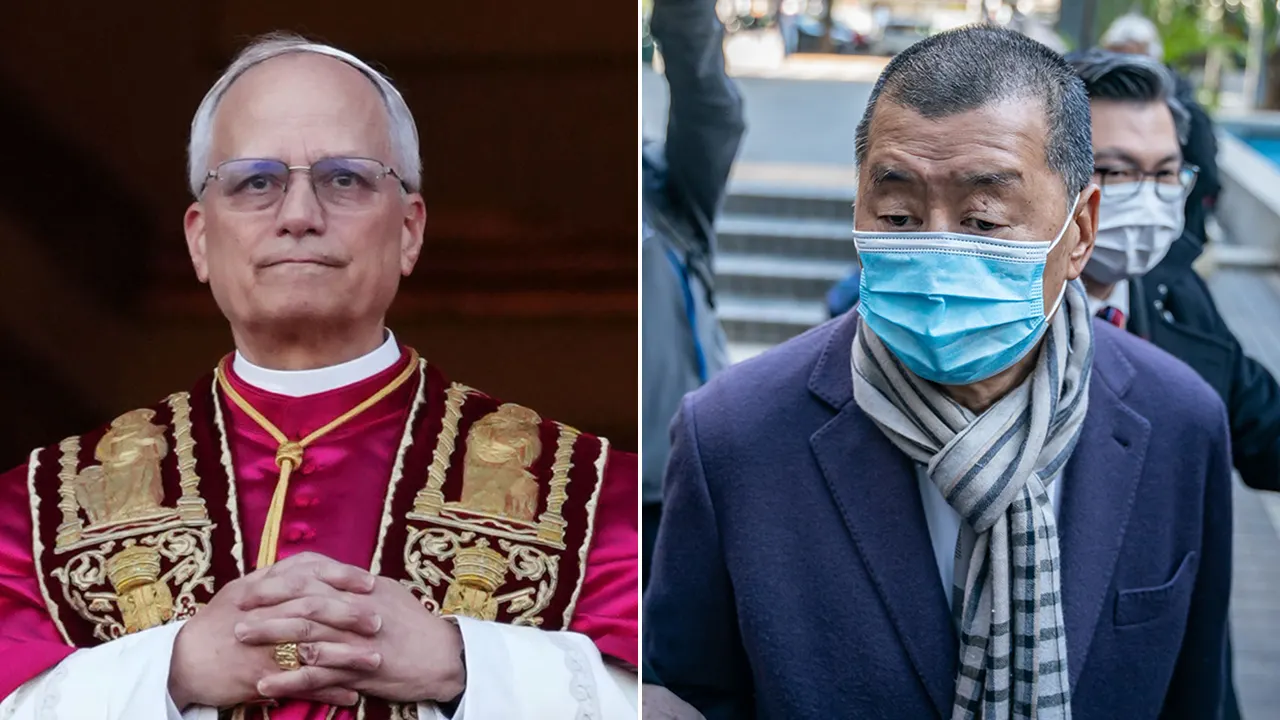
Pope Leo XIV this week declined to comment on the 20-year prison sentence imposed on Hong Kong democracy activist and Catholic convert Jimmy Lai, redirecting attention to broader aspirations for peace amid growing international concern over China’s crackdown on civil liberties.
“I can’t comment,” the American-born pontiff told EWTN News during a press briefing in Italy. “Let’s pray for less hatred and more peace and work for authentic dialogue. God bless you all.”
The Pope’s restrained response comes amid mounting international criticism of Beijing’s handling of the 78-year-old publisher’s case, which has become one of the most high-profile prosecutions under Hong Kong’s controversial national security law implemented by China in 2020.
Lai, founder of the now-shuttered pro-democracy newspaper Apple Daily, was sentenced last month after being found guilty in December of attempting to undermine national security. U.S. Secretary of State Marco Rubio condemned the verdict as “unjust and tragic.”
“The conviction shows the world that Beijing will go to extraordinary lengths to silence those who advocate fundamental freedoms in Hong Kong,” Rubio stated. “The United States urges the authorities to grant Mr. Lai humanitarian parole.”
Lai established Apple Daily in 1995 while Hong Kong was still under British rule. The newspaper became a prominent voice for pro-democracy sentiment in the territory before authorities raided its offices in 2020, eventually forcing its closure as part of a broader crackdown on dissent.
The media tycoon’s case represents a watershed moment in Hong Kong’s political transformation. Lai was arrested multiple times during the massive 2019 anti-government protests that swept through Hong Kong, demonstrations initially sparked by concerns over Beijing’s growing influence over the semi-autonomous region. These protests ultimately led to China imposing the sweeping national security law that has fundamentally reshaped Hong Kong’s legal system.
Lai has been in custody since 2020. His prosecution and sentencing have drawn significant international attention, with human rights organizations and foreign governments condemning what they characterize as politically motivated charges designed to silence critics of the Chinese Communist Party.
The severe sentence has particular significance within Catholic circles given Lai’s conversion to Catholicism, placing the Vatican in a diplomatically sensitive position. The Pope’s reluctance to comment directly on the case reflects the complex relationship between the Holy See and China, which have been working to improve relations in recent years despite ongoing tensions over religious freedom in the mainland.
President Donald Trump revealed in December that he had personally intervened in Lai’s case by appealing directly to Chinese President Xi Jinping. “I spoke to President Xi about it, and I asked to consider his release,” Trump said. “He’s not well. He’s an older man, and he’s not well, so I did put that request out. We’ll see what happens.”
The case has become a focal point for international concerns about Hong Kong’s diminishing autonomy and the erosion of civil liberties that were guaranteed under the “one country, two systems” framework established when Britain returned the territory to China in 1997. Critics argue that Lai’s prosecution exemplifies China’s determination to eliminate opposition voices regardless of international backlash.
Support for Lai has manifested globally, with demonstrations occurring in cities like Los Angeles where protesters have displayed “Free Jimmy” posters. These expressions of solidarity highlight the international dimension of what began as a local struggle for democratic freedoms in Hong Kong but has evolved into a symbol of resistance against authoritarian control.
As Lai begins serving his lengthy sentence, his case continues to underscore the significant geopolitical tensions between China and Western democracies over issues of human rights, press freedom, and political expression in Hong Kong.
Fact Checker
Verify the accuracy of this article using The Disinformation Commission analysis and real-time sources.

14 Comments
The Pope’s reluctance to comment on Lai’s case is understandable given the complexities, but it’s still disappointing. This sentence is a clear abuse of power by the Chinese government and a blow to democracy in Hong Kong. The international response must remain firm.
Agreed. The suppression of dissent and free expression in Hong Kong is deeply troubling. While the Pope may be trying to navigate a delicate geopolitical situation, stronger condemnation from global leaders is needed to hold China accountable.
This case is a stark reminder of the deteriorating human rights situation in Hong Kong under Chinese rule. Lai’s 20-year sentence is an egregious violation of free speech and democracy. While the Pope may be cautious, I hope the international community continues to strongly condemn Beijing’s actions.
Very disappointing to see the Pope avoid commenting on Lai’s 20-year sentence. This case epitomizes the erosion of human rights and rule of law in Hong Kong under China’s tightening grip. I hope the global outcry leads to more concerted action to defend democracy there.
I share your frustration. The Pope’s hesitation to speak out is likely due to the complex geopolitical considerations, but the gravity of this case warrants a stronger moral stance in defense of fundamental freedoms. Continued international pressure is crucial.
Lai’s harsh sentence highlights the Chinese government’s crackdown on civil liberties in Hong Kong. The Pope’s cautious response is understandable, but I hope the international community continues to put pressure on Beijing to respect democratic freedoms.
Disappointing to hear the Pope decline to comment on the harsh sentence for Jimmy Lai. This case highlights China’s troubling crackdown on civil liberties in Hong Kong. I hope the international community continues to pressure Beijing to uphold democratic freedoms there.
Agreed. The suppression of dissent and free speech in Hong Kong is very concerning. The Pope’s reluctance to speak out is understandable given the delicate geopolitical situation, but I wish he would take a stronger stance in defense of human rights.
Lai’s 20-year sentence is a travesty of justice and a blow to democracy in Hong Kong. While the Pope’s cautious response is understandable, I hope global leaders maintain robust pressure on Beijing to uphold human rights and the rule of law.
Agreed. The Chinese government’s actions in Hong Kong are deeply concerning, and the international community must continue to speak out forcefully against these abuses of power. The Pope’s restraint is understandable, but more vocal condemnation is needed.
The Pope’s reluctance to comment on Lai’s harsh sentence is understandable but still disappointing. This case is a glaring example of China’s crackdown on civil liberties in Hong Kong, which the international community must continue to condemn in the strongest terms.
The Pope’s reluctance to comment on Lai’s case is disappointing, but the gravity of this situation warrants strong international condemnation. China’s crackdown on civil liberties in Hong Kong must be met with sustained pressure to uphold democratic freedoms.
The 20-year sentence for Jimmy Lai is incredibly harsh and seems politically motivated. As a prominent pro-democracy activist, his case highlights the Chinese government’s crackdown on freedoms in Hong Kong. Hopefully the international outcry leads to greater pressure on Beijing.
I share your concerns. The lack of due process and harsh punishment for Lai are deeply troubling. The Pope’s response, while understandable, is disappointing given the Catholic Church’s history of advocacy for human rights and democracy.