


Listen to the article
Pope Expresses Disappointment Over Illinois Medically Assisted Suicide Law
Pope Leo XIV has voiced strong disappointment over the recent approval of a medically assisted suicide law in his home state of Illinois, calling for greater respect for human life from conception to natural death.
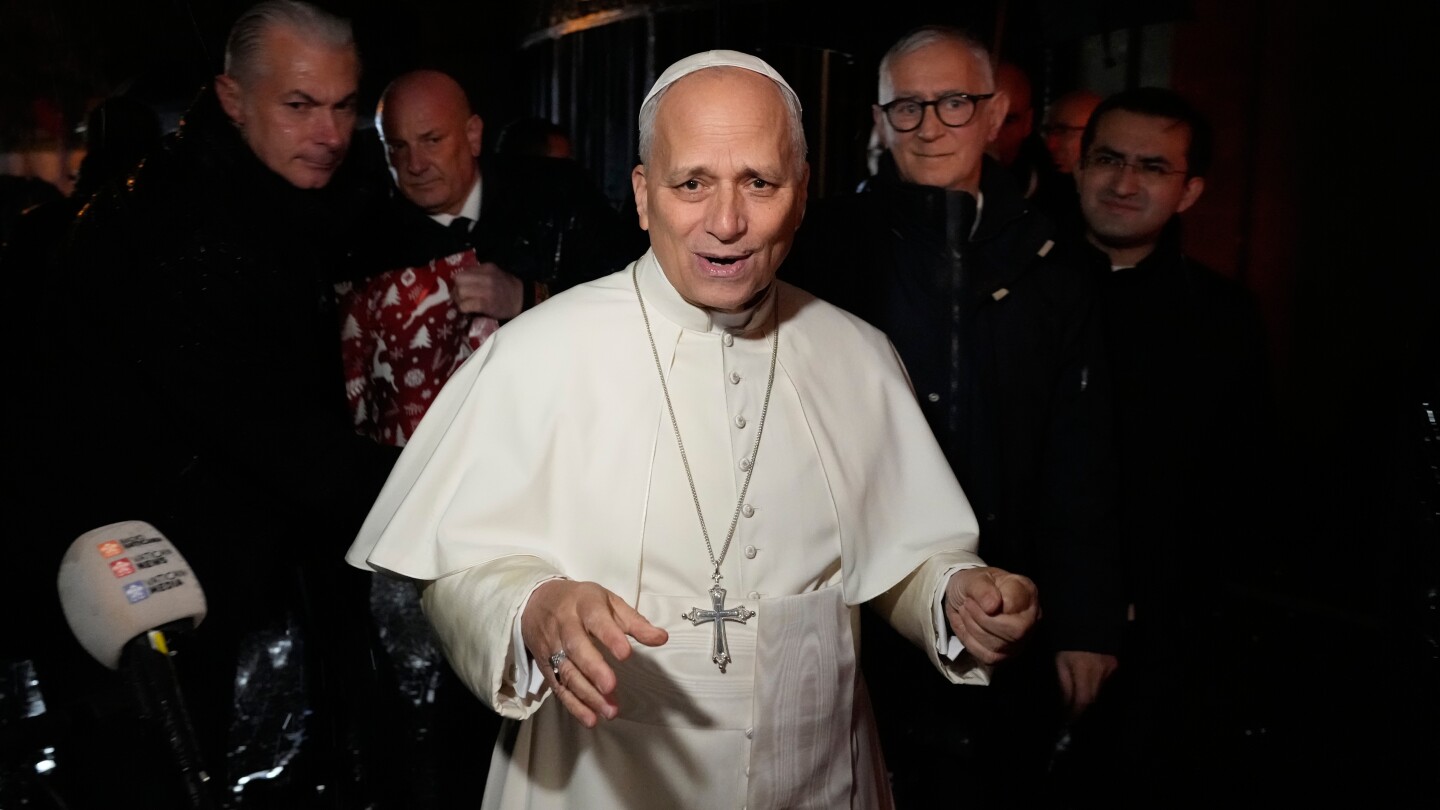
Speaking to reporters on Tuesday as he left his country residence in Castel Gandolfo, south of Rome, the pontiff revealed he had personally urged Illinois Governor JB Pritzker not to sign the controversial legislation.
“We were very clear about the necessity to respect the sacredness of life from the very beginning to the very end, and unfortunately, for different reasons, he decided to sign that bill,” the Pope said. “I am very disappointed about that.”
The measure, formally known as “Deb’s Law,” was signed by Pritzker on December 12. It bears the name of Deb Robertson, an Illinois resident suffering from a rare terminal illness who advocated for the legislation, testifying about the suffering endured by patients and families seeking autonomy over end-of-life decisions.
Pritzker, a Democrat, has stated that his decision to sign the bill was influenced by the moving stories of terminally ill patients and their struggles. The law will provide qualifying individuals with terminal illnesses the option to request medication that would end their lives.
Pope Leo, who was raised in Chicago, emphasized Catholic teaching that mandates protection of life at all stages. “I would invite all people, especially in these Christmas days, to reflect upon the nature of human life, the goodness of human life,” he said. “God became human like us to show us what it means really to live human life, and I hope and pray that the respect for life will once again grow in all moments of human existence.”
The Pope’s concerns echo those of Chicago Cardinal Blase Cupich, who had also appealed to the governor not to sign the legislation. Following the law’s approval, Illinois’ six Catholic dioceses issued a joint statement expressing their opposition, declaring that the legislation puts the state “on a dangerous and heartbreaking path.”
With Illinois joining the ranks, medically assisted suicide is now legal in twelve states plus the District of Columbia, according to the advocacy group Death With Dignity. Delaware recently became the latest state to approve such a measure, with its provisions scheduled to take effect on January 1, 2026. An additional seven states are currently considering similar legislation.
The issue highlights the ongoing tension between religious perspectives emphasizing the sanctity of life and growing public support for end-of-life autonomy. Advocates argue these laws provide compassionate options for those suffering from terminal illnesses, while religious leaders and other opponents worry about potential ethical implications and the message such policies send about the value of human life.
This debate occurs amid broader national discussions about medical ethics, patient autonomy, and the role of religion in public policy. Public opinion polls suggest Americans remain divided on the issue, though support for medically assisted suicide has generally increased over recent decades, particularly for terminally ill patients experiencing significant suffering.
For Pope Leo, who has frequently emphasized traditional Catholic values since assuming the papacy, the approval in his home state represents a particularly personal disappointment in his broader advocacy for what the Church considers a consistent ethic of life.
As the implementation of the Illinois law moves forward, religious leaders, including the Pope, are likely to continue advocating for alternatives like improved palliative and hospice care while emphasizing their moral objections to medically assisted suicide.
Fact Checker
Verify the accuracy of this article using The Disinformation Commission analysis and real-time sources.

10 Comments
The Pope’s disappointment is understandable given his religious convictions. However, the new Illinois law recognizes the autonomy and suffering of terminally ill patients. It’s a complex issue without clear right or wrong answers.
You make a fair point. This legislation reflects an effort to balance competing ethical principles and values. There are merits to both the Pope’s stance and the new law.
As a practicing Catholic, I understand the Pope’s dismay over this legislation. However, I also believe that individuals should have the right to make their own end-of-life choices, especially when facing unbearable suffering. It’s a complex ethical dilemma.
I agree that this is a nuanced issue without easy answers. Reasonable people can disagree on the right balance between preserving life and respecting individual autonomy.
I can appreciate the Pope’s stance, but end-of-life decisions should ultimately be up to the individual and their loved ones. The new Illinois law at least provides another option for those facing terminal illness and unrelenting pain.
That’s a fair perspective. Giving terminally ill patients more autonomy over their final days is a humane consideration, even if it conflicts with certain religious views.
This is a complex and sensitive issue. While the Pope’s perspective on preserving life is understandable, the personal stories and suffering of terminally ill patients must also be considered. It’s a difficult balance to strike.
You raise a good point. Assisted suicide legislation is a contentious topic with valid arguments on both sides. Reasonable people can disagree on the appropriate policy approach.
While I respect the Pope’s perspective, I think the new Illinois law provides an important option for terminally ill patients. Dignity in death is just as important as the sanctity of life. This is a difficult but necessary debate.
That’s a thoughtful take. Assisted suicide legislation is an emotive topic, but giving terminally ill individuals a choice in how they die is a compassionate consideration.