


Listen to the article
Myanmar’s Military-Controlled Election Begins Amid Civil War and International Skepticism
Voters across Myanmar headed to the polls Sunday in the first phase of the country’s general election, held under tight military supervision while civil conflict continues to ravage much of the nation. The election marks the first nationwide polls since the military seized power in February 2021, ousting the democratically elected government of Aung San Suu Kyi.
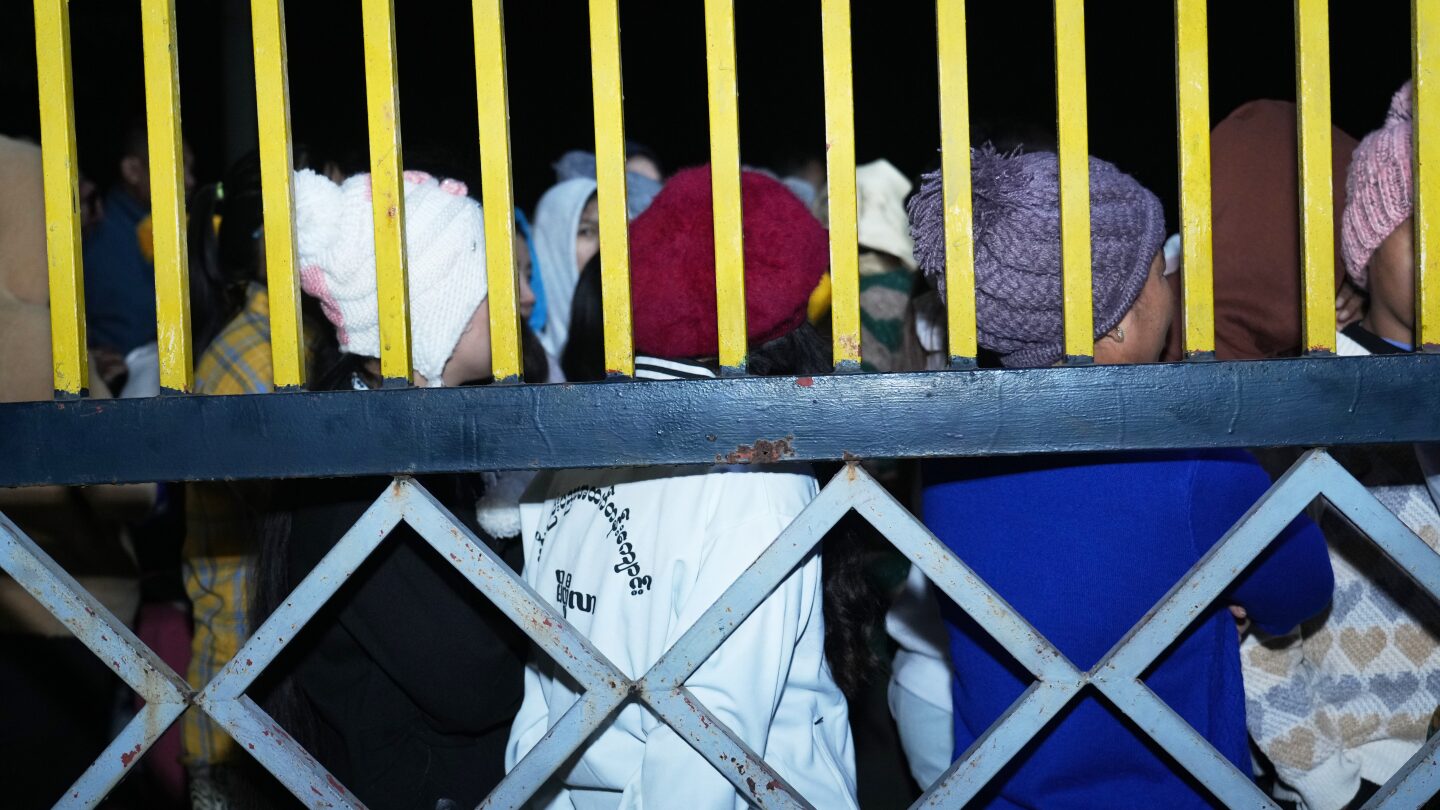
In Yangon, Myanmar’s largest city, and the capital Naypyitaw, citizens cast their ballots at polling stations set up in high schools, government buildings, and religious facilities. Security measures were visibly heightened, with armed guards stationed outside voting locations and military trucks patrolling streets throughout urban centers.
This election introduces electronic voting machines for the first time in Myanmar’s history, a technological shift that comes amid extraordinary political circumstances. The military junta has presented the election as a step toward civilian rule, but analysts and democracy advocates dismiss this characterization.
“What we’re seeing is an attempt to provide a veneer of legitimacy to continued military control,” said Amael Vier, an analyst for the Asian Network for Free Elections, who noted that 73% of voters in the 2020 election cast ballots for parties that no longer exist in the current political landscape.
The country’s most popular political figure, 80-year-old Aung San Suu Kyi, remains imprisoned, serving a 27-year sentence on charges widely condemned as politically motivated. Her National League for Democracy party, which won a landslide victory in 2020, was dissolved in 2023 after refusing to register under new military regulations.
Many other opposition parties have either refused to register or declined to participate in what they consider deeply unfair elections. Pro-democracy groups have called for a widespread voter boycott, though public opposition is difficult to organize under the military’s harsh repression.
The Assistance Association for Political Prisoners reports that more than 22,000 people are currently detained for political offenses in Myanmar, with over 7,600 civilians killed by security forces since the 2021 coup. A recently implemented Election Protection Law has imposed severe penalties for criticizing the electoral process, effectively criminalizing dissent.
“Myanmar is witnessing intensified violence and intimidation,” U.N. Human Rights Chief Volker Türk stated. “There are simply no conditions for the exercise of freedom of expression or peaceful assembly.”
The election’s structure further undermines its credibility. Voting is taking place in three phases, with Sunday’s first round held in 102 of Myanmar’s 330 townships. Subsequent phases will occur on January 11 and January 25, with final results expected by late January.
While more than 4,800 candidates from 57 parties are technically competing for seats in national and regional legislatures, only six parties are competing nationwide with any meaningful chance of gaining political influence. The military-backed Union Solidarity and Development Party is widely expected to dominate the results.
The civil war that erupted after the coup continues to devastate Myanmar. Armed resistance movements formed after the military used lethal force to suppress peaceful protests following the 2021 takeover. According to United Nations data, the resulting conflict has displaced more than 3.6 million people internally.
Despite promises from opposition groups to disrupt the electoral process, no major actions were reported during the first day of voting. However, the election takes place against a backdrop of widespread violence and instability across much of the country.
Regional powers like China, India, and Thailand may use the election as justification to maintain relationships with Myanmar’s government, citing the polls as evidence of progress toward stability. Meanwhile, Western nations have maintained sanctions against the military regime due to its anti-democratic actions and the brutal campaign against opposition forces.
Political analysts widely expect that regardless of the election’s outcome, real power will remain with Senior General Min Aung Hlaing, who led the 2021 seizure of power and has shown little intention of relinquishing control over Myanmar’s government and military apparatus.
Fact Checker
Verify the accuracy of this article using The Disinformation Commission analysis and real-time sources.

13 Comments
This election in Myanmar raises many red flags. The military’s continued dominance and crackdown on dissent make it difficult to view this as a genuine democratic exercise. Meaningful reforms seem unlikely until the military relinquishes power.
Absolutely. The military’s authoritarian grip and the ongoing civil conflict cast a pall of illegitimacy over these elections. True progress toward civilian rule remains elusive as long as the military maintains control.
The introduction of electronic voting machines is an interesting development, but given the military’s track record, I have serious concerns about the integrity and transparency of the process. Rigorous independent monitoring will be essential.
This election in Myanmar raises many concerns. While touted as a step toward civilian rule, the military’s continued dominance and crackdown on dissent make it difficult to see this as a truly democratic process. It will be important to closely monitor the integrity and fairness of the voting.
Agreed, the military’s authoritarian grip on power and the ongoing civil conflict make this a highly questionable election. Meaningful democratic reforms seem unlikely until the military relinquishes control.
The ongoing civil conflict in Myanmar is a major concern that casts a dark shadow over these elections. Free and fair voting is difficult to achieve amidst such widespread violence and instability.
Myanmar’s history of military coups and democratic backsliding casts a long shadow over this election. While the military claims it is a step toward civilian governance, the reality on the ground paints a much more concerning picture of continued authoritarianism.
It will be interesting to see how this election is portrayed by the military junta versus independent observers. The heightened security presence and control over the process raise red flags about the military’s true intentions.
Exactly. The military’s framing of this election as progress toward civilian rule seems highly dubious given their continued crackdown on dissent and the lack of a truly level playing field for opposition voices.
The use of electronic voting machines for the first time is an interesting technological shift, but given the military’s stranglehold, I’m skeptical this will enhance transparency or integrity. Credible international observers will be crucial to assess the legitimacy of the process.
Good point. The introduction of new voting technology alone does not guarantee free and fair elections, especially in a context of military rule and civil unrest. Rigorous independent monitoring will be essential.
While the military claims this election is a step forward, the reality appears to be one of continued authoritarian control. True democratic reforms seem elusive as long as the military maintains its grip on power.
I agree. Until the military relinquishes its stranglehold on power and allows for genuine political pluralism, it’s hard to see these elections as anything more than a facade of democracy.