


Listen to the article
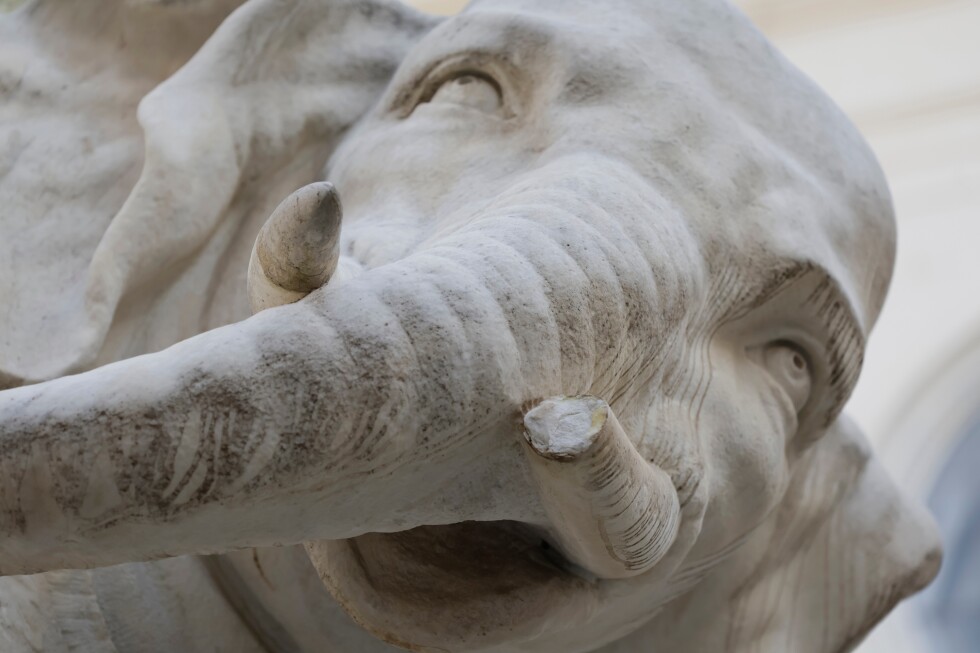
Italian police have launched an investigation after Rome’s iconic elephant statue, a masterpiece designed by renowned Baroque sculptor Gian Lorenzo Bernini, lost the tip of its left tusk for the second time in recent years.
Officials discovered the 11-centimeter (4-inch) marble fragment near the statue over the weekend. After initial examination, police confirmed Wednesday that the broken piece wasn’t part of Bernini’s original 17th-century work but was added during a 1977 restoration project.
This marks the second incident involving the same tusk tip. According to Rome’s city hall, the fragment had previously broken off during an act of vandalism in 2016. Authorities are now reviewing security camera footage from the area to determine if the recent damage was deliberate or accidental.
The elephant statue, affectionately known to locals as “Minerva’s Piglet,” stands in the Piazza della Minerva near the Pantheon, one of Rome’s most visited tourist areas. The monument features a small Egyptian obelisk balanced on the elephant’s back, creating one of the city’s most distinctive and photographed landmarks.
The statue has a rich historical background dating to the papacy of Alexander VII, who commissioned Bernini to design the monument after Dominican friars discovered a small Egyptian obelisk in the grounds of their nearby convent. The convent stands adjacent to the Basilica of Santa Maria Sopra Minerva, which lends its name to the piazza where the elephant resides.
Historical records reveal a fascinating dispute between Bernini and the Dominican friars during the statue’s creation in the mid-17th century. According to Rome’s city hall archives, Bernini believed his design could support the weight of the ancient obelisk using only the elephant’s four legs. However, the friars insisted on adding a stone support under the elephant’s belly for additional stability.
The friars ultimately prevailed in this artistic disagreement, resulting in the elephant’s distinctive stocky appearance. The addition of the central support and the elephant’s somewhat squat proportions led Romans to nickname it “Minerva’s Piglet,” as the creature resembles a pig more than an elephant when viewed from certain angles.
Local legend adds a touch of humor to this artistic compromise, suggesting that Bernini exacted a subtle revenge against the friars who challenged his vision. According to popular stories passed down through generations of Romans, the sculptor deliberately positioned the elephant with its rear end and slightly raised tail facing toward the friars’ convent – a visual joke that continues to amuse visitors today.
The damage to the tusk raises ongoing concerns about the preservation of Rome’s vast outdoor collection of historical monuments. The city’s cultural heritage authorities face significant challenges in protecting thousands of statues, fountains, and architectural treasures exposed to environmental factors, tourism pressure, and occasional vandalism.
This incident comes amid increasing efforts by Italian authorities to enhance protection for the country’s cultural patrimony. Recent years have seen stricter penalties implemented for damaging historical artifacts, alongside technological innovations like enhanced surveillance systems at major monuments.
The Bernini elephant statue, created in 1667, remains one of the most beloved examples of Rome’s baroque public art. While the damaged tusk represents a minor restoration challenge compared to other conservation issues facing the city, the incident highlights the ongoing vulnerability of even the most cherished cultural landmarks.
City officials have not yet announced a timeline for repairing the tusk, though previous restoration efforts suggest the process will likely be carried out under strict heritage preservation guidelines.
Fact Checker
Verify the accuracy of this article using The Disinformation Commission analysis and real-time sources.

33 Comments
Exploration results look promising, but permitting will be the key risk.
Silver leverage is strong here; beta cuts both ways though.
Good point. Watching costs and grades closely.
Interesting update on Police investigate how Rome’s beloved Bernini elephant sculpture lost the tip of its tusk — again. Curious how the grades will trend next quarter.
Good point. Watching costs and grades closely.
If AISC keeps dropping, this becomes investable for me.
Good point. Watching costs and grades closely.
Good point. Watching costs and grades closely.
Uranium names keep pushing higher—supply still tight into 2026.
Good point. Watching costs and grades closely.
Good point. Watching costs and grades closely.
Uranium names keep pushing higher—supply still tight into 2026.
Good point. Watching costs and grades closely.
Good point. Watching costs and grades closely.
Uranium names keep pushing higher—supply still tight into 2026.
Good point. Watching costs and grades closely.
Good point. Watching costs and grades closely.
Exploration results look promising, but permitting will be the key risk.
Good point. Watching costs and grades closely.
Exploration results look promising, but permitting will be the key risk.
Good point. Watching costs and grades closely.
Good point. Watching costs and grades closely.
Production mix shifting toward World might help margins if metals stay firm.
Good point. Watching costs and grades closely.
Nice to see insider buying—usually a good signal in this space.
Good point. Watching costs and grades closely.
Good point. Watching costs and grades closely.
Silver leverage is strong here; beta cuts both ways though.
Interesting update on Police investigate how Rome’s beloved Bernini elephant sculpture lost the tip of its tusk — again. Curious how the grades will trend next quarter.
Good point. Watching costs and grades closely.
Good point. Watching costs and grades closely.
The cost guidance is better than expected. If they deliver, the stock could rerate.
Good point. Watching costs and grades closely.