


Listen to the article
Polish Prime Minister Vows to Secure EU Defense Funds Despite Presidential Veto
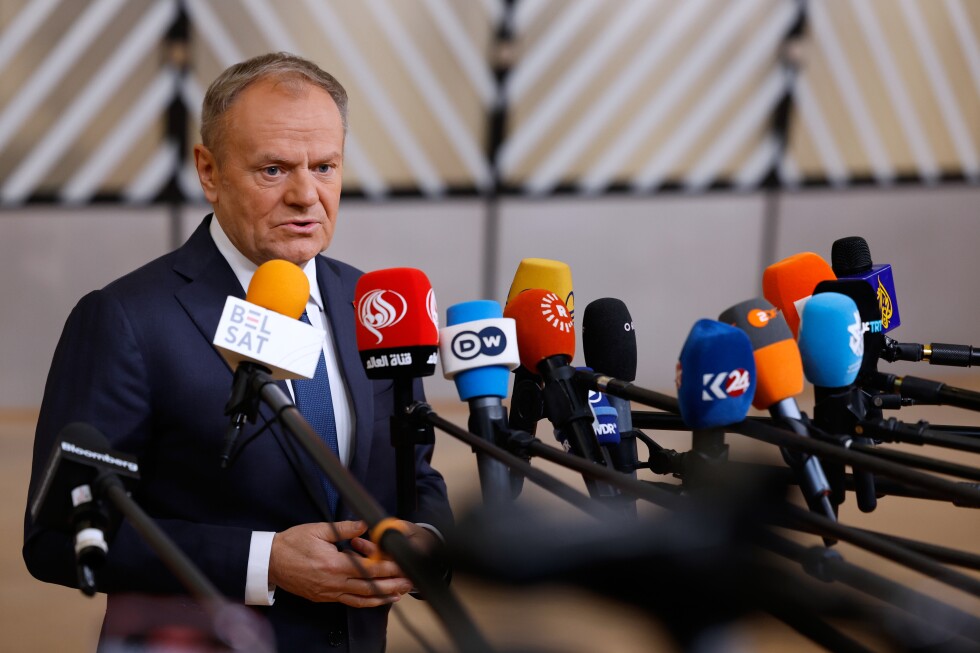
Polish Prime Minister Donald Tusk pledged on Friday to find alternative ways to access €43.7 billion ($50.1 billion) in European Union defense loans after President Karol Nawrocki vetoed legislation that would have facilitated the funding.
“Poland is in shock,” Tusk said during a press conference in Warsaw. “People are wondering if this is treason, the work of lobbyists, or a lack of common sense.”
The funds are part of the EU’s €150 billion Security Action for Europe initiative (SAFE), a program designed to strengthen Europe’s defense capabilities at a time when U.S. commitment to European security has been increasingly questioned. Poland was positioned to be the largest beneficiary of this defense funding package.
Despite the setback, Tusk remained determined to secure the funding, though he acknowledged the process would now be “more difficult, sometimes slower, and it will take much more effort to convince everyone involved in this project.”
The European Commission expressed its commitment to moving forward with the plans it had established with Poland. A Commission spokesperson confirmed on Friday that implementation would continue “without delay,” with an advance payment potentially arriving as early as April.
The confrontation highlights the deepening political divide in Poland between Tusk’s pro-EU liberal government and President Nawrocki, who has emerged as one of the prime minister’s primary political opponents. Nawrocki has positioned himself as more euro-skeptical and has maintained closer ties with the Trump administration in the United States.
In defending his veto, Nawrocki claimed that Poland’s participation in SAFE would unnecessarily burden Polish citizens with debt and increase the country’s dependence on Germany. On Tuesday, the president proposed an alternative draft law suggesting that national resources could be utilized instead of European loans to fund defense investments, a proposal that Tusk quickly dismissed as unrealistic.
Poland has significantly increased its defense spending since Russia launched its full-scale invasion of Ukraine in February 2022. The country, which shares a border with both Russia’s Kaliningrad exclave and Belarus, a close Russian ally, has been one of Europe’s most vocal advocates for strengthening NATO’s eastern flank.
The conflict over defense funding in Poland mirrors broader tensions between European and American approaches to defense cooperation. The United States has publicly criticized the SAFE initiative, with U.S. ambassadors to the EU and NATO expressing concerns in a February opinion piece published by Politico Europe.
“The United States has expressed concerns about how EU defense initiatives like Security Action for Europe and the European Defense Industry Program restrict market access for American companies,” wrote Andrew Puzder and Matthew Whitaker, the U.S. ambassadors to the EU and NATO respectively.
The ambassadors argued that such European programs “undermine collective defense” by limiting competition, inhibiting innovation, and depriving American companies of necessary orders.
The dispute comes at a critical time for European defense, as the continent grapples with the most significant security crisis since the end of the Cold War. Russia’s ongoing war in Ukraine has prompted many European nations to reassess their defense capabilities and spending priorities, with Poland among those most actively building up military strength.
Analysts suggest that the standoff between Tusk and Nawrocki reflects not only domestic political rivalries but also competing visions for Poland’s security future – one that looks westward toward deeper EU integration and another that prioritizes bilateral relationships with the United States.
The outcome of this funding dispute could have significant implications for Poland’s defense modernization efforts and its role in the broader European security architecture.
Fact Checker
Verify the accuracy of this article using The Disinformation Commission analysis and real-time sources.

14 Comments
The EU’s defense initiative is an important step towards greater European strategic autonomy. Poland’s role as a major beneficiary highlights its importance as a regional security anchor, so this dispute is concerning.
I hope the government and president can put aside their differences and work together to ensure Poland can access these critical funds to bolster its military capabilities.
The EU’s defense funding program is a crucial investment in Europe’s security, and Poland’s intended role as a major beneficiary underscores its strategic importance. This political clash is concerning and could undermine the initiative’s progress.
Tusk’s determination to find alternative paths forward is admirable, but he’ll need to tread carefully to avoid further escalating tensions with the president.
This is an interesting development in the ongoing tensions between Poland’s government and president. It’s critical that Poland secures these EU defense funds to bolster its military capabilities, especially given the geopolitical uncertainty in the region.
Tusk seems determined to find a way forward despite the president’s veto. The Commission’s support is reassuring, but the process will likely be more challenging now.
The EU’s security initiative is essential for strengthening Europe’s defense posture. Poland’s position as a major beneficiary underscores its strategic importance, so it’s concerning to see this internal political dispute jeopardize the funding.
I hope the government and president can find a compromise solution that allows Poland to access these critical defense resources without further delays.
This dispute highlights the complex power dynamics within Poland’s government and the challenges of aligning national interests with broader European security initiatives. Securing the EU defense funding should be a top priority, regardless of political differences.
I hope the government and president can find a compromise solution that allows Poland to access these critical resources without jeopardizing the country’s political stability.
This is a high-stakes political battle with significant implications for Poland’s defense posture and the broader European security landscape. Tusk’s defiant stance suggests he’s willing to fight hard to secure the EU funding.
It will be interesting to see how the Commission navigates this dispute and whether it can broker a compromise solution that satisfies both the government and the president.
This is a complex geopolitical issue, and it’s understandable that there would be disagreements within Poland’s government. However, securing the EU defense funding should be a top priority given the security challenges facing the region.
Tusk’s determination to find alternative paths forward is admirable, but I’m curious to see how he plans to navigate the political obstacles and convince all stakeholders.