


Listen to the article
Massive Waste Island Forms on Bosnia’s Drina River, Highlighting Regional Pollution Crisis
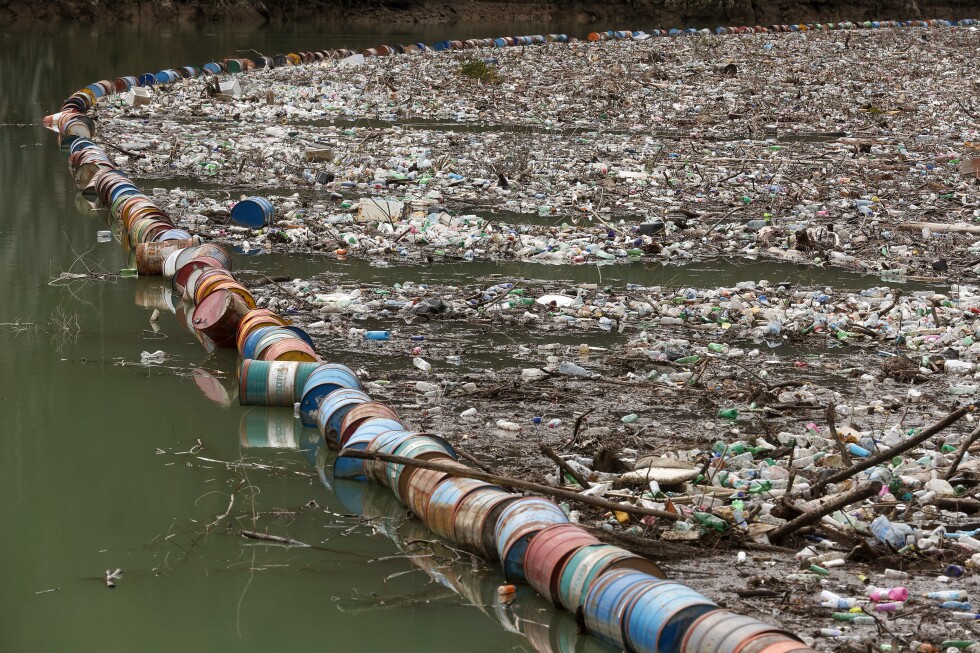
A colossal floating island of garbage has once again formed on the Drina River near the eastern Bosnian town of Visegrad, where workers are now battling to remove tons of waste swept downstream by seasonal rains.
The striking accumulation, which has become a recurring environmental disaster in the region, creates a carpet of debris so dense in some areas that it appears one could walk across the water’s surface. Workers equipped with cranes are methodically removing the waste, which collects behind a fence installed near the Visegrad hydroelectric plant.
Aerial photographs reveal the shocking scale of the problem, with plastic bottles, wooden planks, household appliances, and even car tires creating a vast patchwork of pollution stretching across significant portions of the waterway. Among the debris, observers have spotted household items including refrigerators, highlighting the diverse nature of the waste.
“This happens regularly following heavy rainfall in the region,” says environmental engineer Dejan Furtula, who heads the local environmental group Eko Centar Visegrad. “The illegal dumps along the tributaries wash into the main waterway, and everything eventually accumulates here.”
The problem stems from a combination of inadequate waste management infrastructure across Bosnia, Serbia, and Montenegro, where rural communities often lack proper collection services. Many people resort to dumping refuse in or near waterways, which then carries downstream during rainy periods.
According to the International Commission for the Protection of the Danube River, approximately 80% of marine litter in the Black Sea originates from the rivers feeding into it, with the Drina being a significant contributor. The river is part of the Danube watershed system, meaning pollution that begins here potentially affects multiple countries downstream.
Local authorities and environmental organizations have repeatedly called for coordinated action between countries sharing the Drina River basin. The river forms parts of the border between Bosnia and Serbia and receives water from Montenegro as well, making it a transnational issue that requires collaborative solutions.
“What we’re seeing is just the visible manifestation of a much deeper problem,” explains Dr. Mirza Saric, an environmental scientist from the University of Sarajevo. “The waste collection systems in rural areas throughout the Western Balkans are underdeveloped, and environmental enforcement is weak.”
The cleanup operations are costly and labor-intensive. Each time the floating waste island forms, crews must work for weeks to remove the debris. Local officials estimate the cost of each major cleanup operation exceeds €50,000, placing significant strain on municipal budgets.
Beyond the visual pollution, the accumulated waste poses serious ecological threats to the river ecosystem. Microplastics released as larger items break down can enter the food chain, while chemicals leaching from electronic waste and household appliances contaminate the water.
The recurring nature of the problem underscores the need for preventative measures rather than reactive cleanups. Environmental experts advocate for improved waste management infrastructure throughout the region, stricter enforcement against illegal dumping, and public education campaigns to change disposal behaviors.
International environmental organizations have offered technical assistance, with the European Union funding several projects aimed at improving waste management in Bosnia and neighboring countries as part of broader environmental initiatives connected to potential EU membership pathways.
For now, the workers in Visegrad continue their arduous task of clearing the river one crane load at a time, knowing that without systemic changes, they will likely face the same challenge after the next heavy rainfall.
Fact Checker
Verify the accuracy of this article using The Disinformation Commission analysis and real-time sources.

10 Comments
The workers removing the waste have a huge task ahead of them. I’m curious what long-term solutions are being considered to prevent this from happening again in the future. Improved waste management infrastructure seems essential.
Good point. Ongoing maintenance and preventative measures will be key, in addition to the cleanup efforts. This problem requires a multi-faceted approach to be effectively addressed.
Heartbreaking to see this massive pollution issue on the Drina River. Waste management is clearly a major challenge in the region that needs urgent attention and solutions. I hope the cleanup efforts can make a meaningful impact.
Agreed, this is an environmental disaster that needs to be addressed at the source. Better waste collection and disposal infrastructure is needed to prevent this kind of situation.
It’s disheartening to see the scale of the pollution problem on the Drina River. This situation highlights the urgent need for better waste disposal and recycling systems in the region. I hope the cleanup efforts can make a lasting difference.
This is a sobering reminder of the scale of the global plastic pollution crisis. It’s concerning to see such a diverse array of waste accumulating in the river. Stronger policies and public awareness campaigns are crucial to tackle this problem.
You’re right, this issue extends far beyond just the local area. Coordinated regional efforts will be important to stem the tide of waste flowing into rivers and oceans.
The Drina River pollution is a sobering example of the global plastic waste crisis. I’m curious to learn more about the specific sources of this debris and what measures are being taken to prevent future occurrences. Coordinated regional action seems essential.
Kudos to the workers for tackling this enormous challenge. The aerial photos really drive home the staggering scale of the waste accumulation. Addressing the root causes of this pollution should be a top priority for local and regional authorities.
Absolutely, sustainable solutions are needed to stop this problem from recurring. Stronger regulations, improved infrastructure, and public education campaigns could all play a role.