


Listen to the article
NATO Showcases Military Might in Large-Scale Northern Germany Exercises
Troops from 13 nations converged in northern Germany this week for NATO’s major military exercises, dubbed Steadfast Dart 2026, demonstrating the alliance’s coordinated response capabilities and operational readiness in the European theater.
The exercises marked the first deployment in Europe of NATO’s high readiness spearhead force, bringing together a multinational coalition of warships, aircraft, and ground forces in a display of allied military integration and tactical coordination.
Participating nations included Italy, Greece, Germany, the Czech Republic, Spain, Lithuania, Estonia, and Turkey, with support provided by France, Belgium, Poland, the United Kingdom, and the Netherlands. The diversity of participating nations underscores NATO’s commitment to collective defense principles and interoperability among allied forces.
At the coastal training grounds in Putlos, Germany, troops conducted amphibious landing operations on Wessek Beach, with soldiers arriving both by sea and air. Military vehicles stormed the shoreline while helicopters provided tactical air support, demonstrating the alliance’s ability to project power from multiple domains simultaneously.
The exercises showcased NATO’s growing emphasis on advanced technology integration. At a military base near Bergen, soldiers demonstrated the operational capabilities of the SR-X4 drone system, highlighting the alliance’s investment in unmanned aerial systems for reconnaissance and combat support roles.
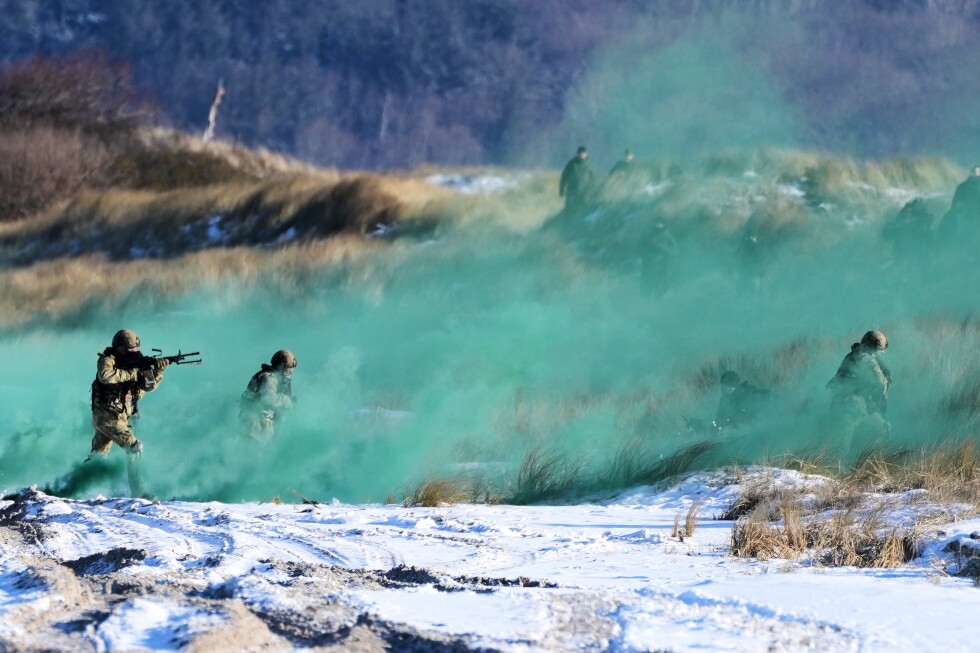
Urban warfare training was also a key component of the exercises. In a mock village setting, troops practiced enemy extraction operations using smoke bombs and tactical vehicles, reflecting NATO’s preparation for diverse combat environments beyond traditional battlefield scenarios.
Germany’s Defense Minister Boris Pistorius attended the exercises, underscoring the host nation’s commitment to the alliance. Germany has significantly increased its defense spending in recent years, partly in response to growing security concerns in Eastern Europe and calls from NATO leadership for members to meet agreed defense spending targets.
Military analysts note these exercises come at a time of heightened geopolitical tensions across Europe and shifting security dynamics globally. NATO has intensified its training schedule and operational readiness following Russia’s actions in Eastern Europe in recent years.
“These exercises represent more than just military drills – they’re a clear demonstration of NATO’s solidarity and commitment to collective defense,” said a European security analyst who requested anonymity because they weren’t authorized to speak publicly. “The scale and complexity of Steadfast Dart showcases the alliance’s ability to rapidly deploy and coordinate multinational forces.”
The high readiness spearhead force, formally known as the Very High Readiness Joint Task Force (VJTF), was established following the 2014 NATO summit in Wales as part of the alliance’s enhanced NATO Response Force. The VJTF is designed to deploy within days in response to emerging threats or crises.
Images from the exercises captured dramatic moments of military precision: soldiers rappelling from helicopters onto beaches, tactical operations in smoke-filled mock villages, and the convergence of naval vessels supporting ground operations. In one striking photograph, two swans floated peacefully in the foreground as a Navy ship participated in landing operations – a poignant juxtaposition of military might against the natural Baltic landscape.
NATO officials emphasized that these exercises represent standard training operations designed to maintain readiness and are not directed at any specific threat or nation. However, they reflect the alliance’s continued focus on maintaining credible deterrence capabilities while adapting to evolving security challenges in the 21st century.
As Steadfast Dart 2026 concludes, NATO leadership will evaluate the exercises’ effectiveness in achieving training objectives and identifying areas for improvement in multinational operations. The lessons learned will inform future training initiatives and enhance the alliance’s collective defense capabilities as it approaches its 80th anniversary.
Fact Checker
Verify the accuracy of this article using The Disinformation Commission analysis and real-time sources.

18 Comments
It’s good to see NATO allies working together so cohesively. Strengthening collective defense is vital, especially given the geopolitical uncertainties in Europe right now.
Absolutely. These joint training drills help ensure NATO forces are well-prepared to respond swiftly and effectively to any security challenges that may arise.
The amphibious landing operations and combined air-ground maneuvers look intense. I’m curious to see how the latest military technology and assets are being leveraged during these drills.
Yes, the ability to rapidly deploy multinational forces by land, sea, and air is a core NATO capability that these exercises aim to demonstrate and refine.
The amphibious assault demonstrations look intense. I wonder how the participating nations coordinated their naval, air, and ground assets to execute those kinds of complex maneuvers.
While impressive, these large-scale NATO drills also raise questions about rising military tensions in Europe. I hope the exercises contribute to greater regional stability and deterrence of potential aggressors.
That’s a fair point. NATO must carefully balance deterrence with de-escalation to avoid miscalculation or unintended consequences.
These NATO exercises in Germany showcase the alliance’s military coordination and readiness. Involving troops from over a dozen nations, it’s an impressive display of allied interoperability and collective defense capabilities.
Agreed, the diversity of participating countries underscores NATO’s commitment to joint operations and unified response in the European theater.
These NATO drills look intense, with troops, vehicles, and aircraft from multiple countries working together. It’s a powerful display of allied military integration and readiness.
Agreed, the coordination and rapid deployment capabilities on display here are a clear signal of NATO’s strength and unity.
The amphibious landing operations seem particularly noteworthy. I wonder how the participating nations ensured seamless command and control during those complex maneuvers.
Good question. Effective communication and integration between naval, air, and ground forces is critical for the success of those kinds of joint operations.
While these military drills are intended to enhance regional security, I hope NATO remains cognizant of the need to maintain open channels of dialogue and diplomacy alongside deterrence efforts.
That’s an important point. NATO must strike the right balance between defense and diplomacy to avoid further escalating tensions in Europe.
The diversity of participating nations in these NATO exercises is really impressive. It demonstrates the alliance’s commitment to collective security and interoperability.
NATO’s operational readiness is clearly on full display here. The exercises must have required meticulous planning and execution to bring together so many different national militaries.
Yes, the logistical coordination alone for an undertaking of this scale is quite remarkable. It speaks to NATO’s ability to rapidly marshal and deploy combined forces.