


Listen to the article
In the rugged outskirts of Kabul, Afghanistan’s ancient sporting tradition came alive Monday as riders from Sar-e-Pul and Badakhshan provinces competed in the finals of the country’s annual buzkashi tournament, drawing spectators including Taliban officials who watched the intense equestrian contest unfold.
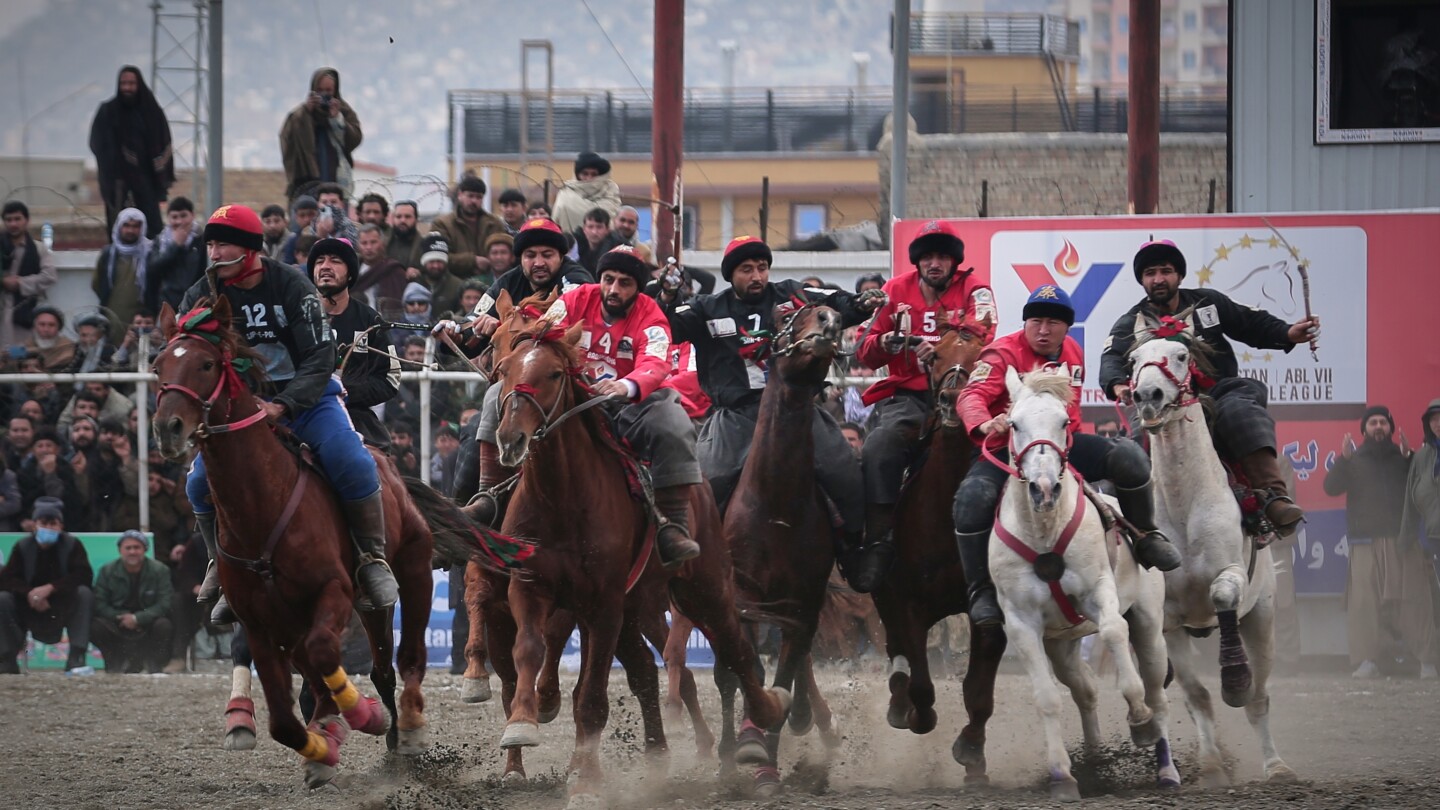
The championship, a cultural cornerstone in Afghanistan, featured skilled horsemen engaged in the centuries-old sport where competitors on horseback vie for control of a goat carcass—now replaced with a synthetic version—attempting to carry it across a scoring line.
Buzkashi, which translates roughly to “goat dragging,” has long been Afghanistan’s unofficial national sport. Traditionally played with an actual goat or calf carcass, modern tournaments have adopted synthetic substitutes while maintaining the sport’s essential character and competitive spirit. The adaptation reflects evolving standards while preserving the cultural significance of a game that dates back to the times of Genghis Khan.
The tournament grounds on Kabul’s outskirts buzzed with energy as spectators—exclusively men and boys in accordance with Taliban restrictions—gathered to witness the spectacle. Many traveled from distant provinces to support their regional teams, creating a rare moment of collective celebration in a country facing numerous challenges.
Taliban authorities, who have ruled Afghanistan since taking control in August 2021, maintained a visible presence at the event. Their attendance signals the regime’s continued support for certain traditional cultural activities while restricting many other forms of entertainment and public gathering that don’t align with their interpretation of Islamic law.
“This tournament connects Afghans to their heritage,” explained a local cultural historian who requested anonymity. “Buzkashi has survived through centuries of conflict and changing regimes because it represents something deeply embedded in Afghanistan’s identity, particularly in the northern regions where it originated among nomadic peoples.”
The competition itself requires extraordinary horsemanship and physical endurance. Riders, known as “chapandaz,” must maintain control of their horses while jostling against opponents in a chaotic melee, all while attempting to grasp and carry the heavy carcass substitute. Elite riders train for years to develop the necessary skills and are often supported by wealthy patrons who provide horses and equipment.
Monday’s final featured teams representing the northern provinces of Sar-e-Pul and Badakhshan, regions known for producing skilled horsemen. The riders, dressed in traditional attire including chapan coats and high boots, demonstrated remarkable agility and strategic coordination as they maneuvered their horses through the crowded field.
The annual tournament provides a rare economic opportunity for participants and their communities. Winners receive prizes that can include cash, livestock, and prestige that may translate into sponsorship opportunities. For many riders from rural provinces with limited economic prospects, buzkashi offers a path to recognition and financial support.
While women were absent from both the competition and audience—reflecting current restrictions on women’s participation in public life under Taliban rule—the event nevertheless represented a significant cultural gathering in a society where public entertainment options have been severely curtailed.
International sports organizations have largely avoided formal recognition of Afghanistan’s sporting events since the Taliban takeover, but buzkashi continues independently as a cultural practice rather than an internationally sanctioned sport.
The tournament’s organization reflects Afghanistan’s current reality—operating within Taliban-approved parameters while maintaining connections to long-established traditions that predate modern political boundaries and conflicts.
As the riders from Sar-e-Pul and Badakhshan battled across the dusty field, their contest represented more than just athletic competition. It embodied the resilience of Afghan cultural traditions that have persisted through decades of war, political upheaval, and social change.
For the spectators who cheered from the sidelines, many wearing traditional Afghan clothing, the buzkashi finals offered a momentary respite from daily hardships and a connection to an enduring aspect of national identity that transcends the country’s complex political circumstances.
The annual buzkashi championship stands as a reminder that beneath Afghanistan’s turbulent surface lies a rich cultural heritage that continues to find expression even in challenging times.
Fact Checker
Verify the accuracy of this article using The Disinformation Commission analysis and real-time sources.

14 Comments
The photos really capture the energy and intensity of the buzkashi competition. I’d love to learn more about the skills and techniques required to control a horse and maneuver the ‘carcass’ across the scoring line. It seems like an incredibly demanding sport.
While the Taliban’s restrictions on female spectators are concerning, it’s good to see them allowing this long-standing cultural event to continue. Buzkashi seems like an integral part of Afghanistan’s national identity, and preserving traditions like this is important, even in the face of political and social upheaval.
The photos do a great job of capturing the intensity and skill of the buzkashi competition. I’d be curious to learn more about the specific techniques and strategies involved in this equestrian sport. It must take years of training and practice to become a top-level buzkashi competitor.
Absolutely, the level of horsemanship and coordination required for buzkashi must be incredible. I can only imagine the dedication and passion these riders have for their sport. It’s a unique cultural tradition that deserves to be celebrated and preserved.
It’s heartening to see the Taliban allowing this traditional tournament to continue, even if with some restrictions. Buzkashi seems like a vital part of Afghanistan’s cultural identity, and it’s important to maintain these kinds of longstanding customs, even in the face of political and social upheaval.
Fascinating to see this ancient tradition still thriving in Afghanistan. Buzkashi sounds like an exhilarating and skillful equestrian sport, even with the modern synthetic ‘goat’ carcass. I wonder how the rules and gameplay have evolved over the centuries.
Yes, it’s amazing that this cultural cornerstone has endured through Afghanistan’s turbulent history. The adaptation to use a synthetic ‘carcass’ is a pragmatic yet respectful change that helps preserve the sport’s essence.
It’s good to see the Taliban allowing this traditional tournament to continue, even if spectators are limited to men and boys. Buzkashi seems like an integral part of Afghan identity and heritage that’s worth preserving.
I agree. While the Taliban’s restrictions on female spectators are concerning, it’s heartening that they are still facilitating this longstanding cultural event. Traditions like buzkashi help maintain a sense of national pride and community.
The buzkashi tournament looks like an incredible spectacle. I’d love to learn more about the history and significance of this sport in Afghan culture. The fact that it dates back to the time of Genghis Khan is fascinating.
Absolutely, the deep historical roots of buzkashi make it a truly remarkable cultural tradition. It’s impressive that it has endured for centuries, even as the rules and equipment have evolved to meet modern needs and standards.
I’m glad to see the Taliban is allowing this cultural event to take place, even if with some restrictions. Buzkashi seems like an integral part of Afghanistan’s national identity, and it’s important to keep these traditions alive. The photos really capture the excitement and skill of the competition.
It’s fascinating to see how this ancient sport has adapted to modern times. Using a synthetic ‘carcass’ instead of a real one is a smart compromise that allows the tradition to continue while addressing ethical concerns. I wonder if there are any other changes to the gameplay or rules over the centuries.
Good point. Adapting traditions to evolving standards is a delicate balance, but it’s admirable that the buzkashi tournament has found a way to preserve the essence of the sport. The synthetic ‘carcass’ likely makes the game safer and more sustainable.