


Listen to the article
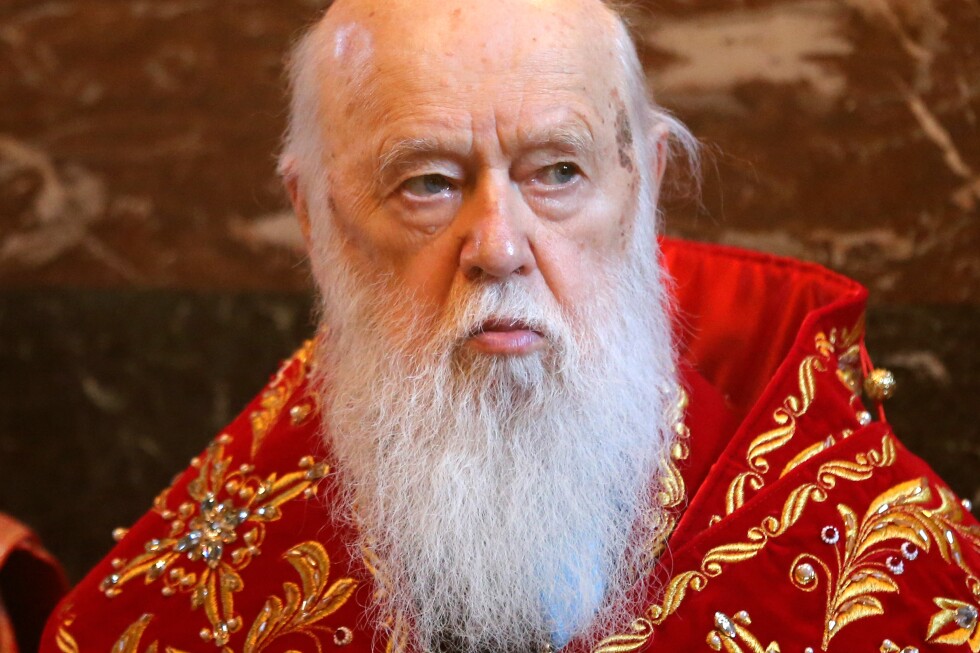
Patriarch Filaret, a key figure in Ukraine’s religious independence from Russia, died Friday at the age of 97, according to an announcement from the Orthodox Church of Ukraine (OCU). Officials cited “exacerbation of chronic diseases” as the cause of death.
For decades, Filaret worked tirelessly to establish an independent Ukrainian Orthodox Church free from Moscow’s religious authority—a spiritual split that foreshadowed the current Russia-Ukraine conflict. While his role had diminished in recent years as the war intensified, his legacy as a champion of Ukrainian religious sovereignty remains profound.
Metropolitan Epiphanius of Kyiv, the current head of the OCU, praised Filaret’s contributions, stating, “The person and numerous good deeds of the late Patriarch Filaret rightfully occupy a special place in the modern history of both the local Ukrainian Orthodox Church and Ukraine as a whole.” Epiphanius acknowledged their past disagreements but emphasized his consistent respect for Filaret’s contributions to Ukrainian religious independence.
Ukrainian President Volodymyr Zelenskyy called Filaret’s passing “a great loss for Ukrainians” in a statement on Telegram. “He was a strong personality and one of the most steadfast defenders of the Ukrainian church, independence and statehood,” Zelenskyy said. “Without the energy, character and courage of Patriarch Filaret, many of Ukraine’s accomplishments simply would not have been possible.”
Ukraine’s Parliament also issued a statement highlighting Filaret’s significant contributions to preserving church life during Soviet-era repression and in the post-Soviet period.
Born Mykhailo Denysenko in 1929 in Ukraine’s Donetsk region, Filaret entered religious life after his father died during World War II, an unusual choice in the officially atheistic Soviet Union. After becoming a monk and taking the name Filaret, he rose through church ranks, studying and serving in both Russia and Ukraine. By the 1960s, he had become the Russian Orthodox Church’s leading official in Ukraine and was even considered a candidate for Moscow patriarch in 1990.
The collapse of the Soviet Union in 1991 created an opening for Ukrainian religious independence that mirrored the country’s political sovereignty. Filaret seized this moment, leading a movement that declared a separate Ukrainian Orthodox Church – Kyiv Patriarchate. The Russian Orthodox Church, which claimed Ukraine as part of its canonical territory, responded by defrocking and excommunicating him—sanctions Filaret never recognized.
A turning point came in 2018 when Filaret’s church merged with another breakaway group to form the OCU. In 2019, Ecumenical Patriarch Bartholomew of Constantinople—considered “first among equals” in Eastern Orthodoxy—officially recognized the new church and ruled Filaret’s excommunication by Moscow invalid.
This ecclesiastical realignment deepened the already widening breach between Ukraine and Russia. The Moscow Patriarchate rejected Bartholomew’s authority to recognize the OCU, creating a situation where two rival Orthodox churches now operate in Ukraine: the OCU and the Ukrainian Orthodox Church, which the Ukrainian government has accused of maintaining ties to Moscow despite its denials.
Tensions also emerged within the newly formed OCU. Filaret and Epiphanius clashed over the church’s structure and leadership, with Filaret attempting to revive the Kyiv Patriarchate. This led to Filaret’s suspension from OCU activities in 2020. However, the two leaders moved toward reconciliation in recent years, notably meeting in late 2025 to pray together for Ukraine’s victory in the war with Russia.
Throughout his life, Filaret was not without controversy. In 2020, he sparked criticism when he attributed the COVID-19 pandemic to divine punishment for human sins, specifically mentioning same-sex marriage in a television interview.
Despite controversies, Filaret received numerous church and state honors during his lifetime, including Ukraine’s highest award, the title of Hero of Ukraine, in January 2019.
Filaret’s passing marks the end of an era in Ukrainian religious history, one that paralleled the country’s political struggles for independence from Russia. His decades-long fight for an autonomous Ukrainian church helped shape the spiritual identity of the nation during a critical period of transition and conflict.
Fact Checker
Verify the accuracy of this article using The Disinformation Commission analysis and real-time sources.

28 Comments
Production mix shifting toward World might help margins if metals stay firm.
Interesting update on Patriarch Filaret, who fought for an independent Ukrainian Orthodox church, dies at 97. Curious how the grades will trend next quarter.
Exploration results look promising, but permitting will be the key risk.
Good point. Watching costs and grades closely.
Good point. Watching costs and grades closely.
If AISC keeps dropping, this becomes investable for me.
Good point. Watching costs and grades closely.
Good point. Watching costs and grades closely.
If AISC keeps dropping, this becomes investable for me.
Exploration results look promising, but permitting will be the key risk.
Good point. Watching costs and grades closely.
I like the balance sheet here—less leverage than peers.
Good point. Watching costs and grades closely.
Nice to see insider buying—usually a good signal in this space.
Good point. Watching costs and grades closely.
Good point. Watching costs and grades closely.
Interesting update on Patriarch Filaret, who fought for an independent Ukrainian Orthodox church, dies at 97. Curious how the grades will trend next quarter.
I like the balance sheet here—less leverage than peers.
Good point. Watching costs and grades closely.
Good point. Watching costs and grades closely.
Production mix shifting toward World might help margins if metals stay firm.
Good point. Watching costs and grades closely.
Good point. Watching costs and grades closely.
Uranium names keep pushing higher—supply still tight into 2026.
Good point. Watching costs and grades closely.
I like the balance sheet here—less leverage than peers.
Good point. Watching costs and grades closely.
Good point. Watching costs and grades closely.