


Listen to the article
Paralympic Athletes Voice Concerns Over Warm Weather at Milan Cortina Games
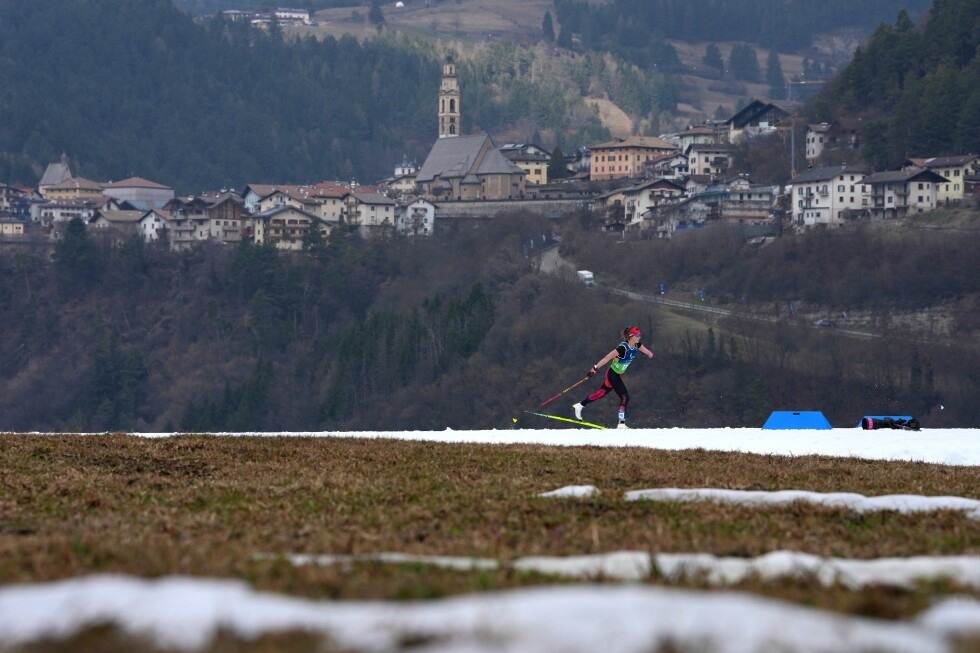
Athletes competing at the Milan Cortina Paralympics are facing unexpected challenges as unseasonably warm temperatures transform winter sports venues into what some competitors describe as “tropical” conditions.
Three-time Paralympic gold medalist Brenna Huckaby of the United States expressed serious safety concerns about the deteriorating snow conditions. “I’m here to represent the disability community on a snowboard, and I want to give the best show that I can,” Huckaby said. “But I’m not going to kill myself in the process… I’ve got two kids at home, and I’m already disabled. I’m not trying to disable myself more.”
The warm weather has prompted some athletes to compete in shorts, T-shirts, and tank tops—unusual attire for winter sports. American Para snowboarder Zach Miller was among those advocating for change, stating: “If it were my decision, I would absolutely move the Olympics and Paralympics” to a time when cold weather is more reliable.
Miller, who finished sixth in the snowboard cross finals, explained that the soft snow conditions can disadvantage lighter athletes like himself who struggle to maintain momentum. “You’re worried about your own safety on course, you don’t feel like you can be the athlete that you know you are,” he said.
Climate experts confirm these concerns aren’t unfounded. Meteorologist Shel Winkley from Climate Central stated that the early March warmth would be “almost impossible” without the influence of climate change. Researchers predict that locations capable of reliably hosting Winter Games will continue to shrink as global temperatures rise.
The International Paralympic Committee (IPC) and International Olympic Committee (IOC) are already considering alternatives. Possible solutions include rotating future Games among a permanent pool of suitable locations and holding them earlier in the year. The Paralympics typically follow two weeks after the Winter Olympics, occurring in March when temperatures are increasingly becoming problematic.
Craig Spence, the IPC’s chief brand and communications officer, acknowledged the trend: “Clearly climate change is not going to go away. We’re very conscious of its impact on not just winter sports, but also summer sports,” he told the AP. “We’ve seen temperatures rising at Paralympic Winter Games for the last few editions now.”
The warm conditions—with afternoon temperatures reaching nearly 50 degrees Fahrenheit (10 degrees Celsius)—have created unique challenges for Para athletes. Dr. Jaap Stomphorst, a sports physician who has studied injuries at past Paralympic Games, explains that poor snow quality significantly increases the risk of injuries for Paralympians.
“For example, sit-ski racers need very good snow to come down the course safely because they can’t adjust for ruts by moving their weight off the ski, and bumps can be particularly problematic for visually impaired skiers,” Stomphorst noted.
Dr. Sarah Eby, head team physician for the U.S. Para Alpine Ski Team, pointed out that Paralympic athletes face additional challenges compared to able-bodied competitors. “Thinking of our Para athletes, maybe they have only one leg, they’re relying more on equipment that they can’t adjust,” she explained.
The deteriorating conditions have forced organizers to cancel practice sessions for skiing and snowboarding to preserve courses. Some race starts have been rescheduled to earlier in the day or moved to different dates to avoid the worst conditions, including anticipated rain.
Despite these efforts, Austrian Markus Salcher partially blamed the soft snow for a fall during the super-G race, while American Patrick Halgren, who won silver in the standing division, described the skiing as feeling “like surfing” in “tropical” conditions.
Canadian Para snowboarder Tyler Turner tries to stay positive about the situation: “We’re a bunch of amputees and injured people up there. We can adapt on the fly. We’re good at this,” Turner said. “For me, I’ve just got to ride and keep my eyes open and stay aware of what’s happening out there on the track.”
As climate change continues to threaten winter sports, the future of the Paralympic Winter Games may depend on finding new approaches to scheduling and location selection that prioritize both athletic performance and competitor safety.
Fact Checker
Verify the accuracy of this article using The Disinformation Commission analysis and real-time sources.

6 Comments
The athletes’ concerns about the snow conditions and safety are understandable. While it’s admirable they are still giving their all, the well-being of the competitors should be the top priority. Moving the timing of the games to when weather is more reliable seems like a reasonable solution worth considering.
The warm weather is certainly posing some unexpected challenges for the Paralympic athletes. Safety should be the top priority, even if it means adjusting the timing of the games. I hope the organizers can find a solution that allows the athletes to perform at their best while protecting their wellbeing.
Competing in shorts and t-shirts for winter sports must feel so wrong. I can understand the athletes’ frustration and concerns about safety. Rescheduling the games to a time with more reliable snow and weather conditions seems like a sensible solution that would allow them to perform at their best.
The warm weather is certainly creating some unique challenges for the Paralympic athletes. While it’s great to see them still competing fiercely, their safety has to come first. Rescheduling the games to a time of year with more reliable winter weather seems like a reasonable solution worth exploring.
It’s impressive to see the Para athletes competing so fiercely despite the challenging conditions. But you’re right, their safety has to be the top concern. Hopefully the organizers can find a solution, like moving the games to a time of year with more reliable winter weather.
It’s great to see the Paralympic athletes advocating for changes to address the difficult conditions. Competing in shorts and t-shirts for winter sports must be incredibly uncomfortable and potentially unsafe. I hope the organizers can find a way to reschedule future games to ensure reliable snow and weather for these incredible athletes.