


Listen to the article
Panama Court Voids Hong Kong Firm’s Canal Port Contract Amid U.S.-China Tensions
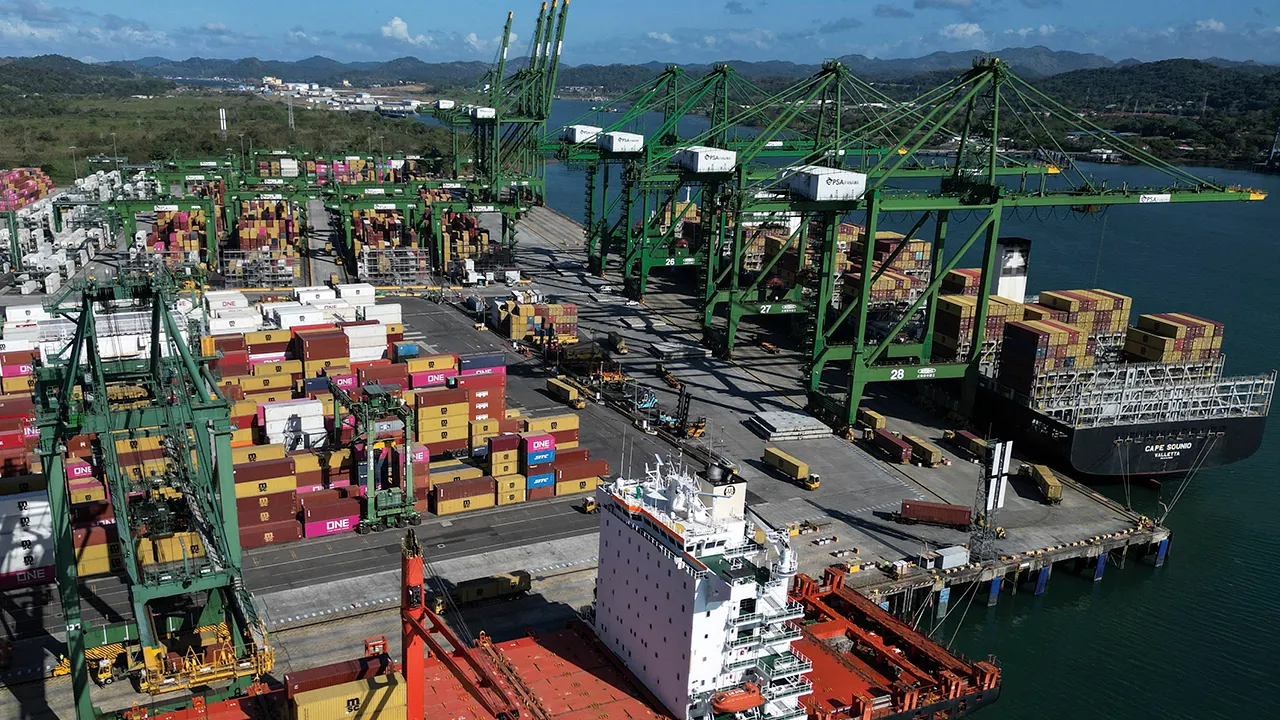
A Panamanian court has invalidated a key port concession held by a Hong Kong subsidiary, marking a significant shift in control over critical infrastructure at one of the world’s most strategic waterways. President José Raúl Mulino moved quickly to reassure global markets that operations along the Panama Canal would continue uninterrupted despite the ruling.
The Supreme Court ruled Thursday that the port concession granted to Panama Ports Company—a subsidiary of Hong Kong’s CK Hutchison Holdings—was unconstitutional. The decision followed an audit by Panama’s comptroller that identified irregularities in a 25-year extension granted to the company in 2021.
The ruling represents a major geopolitical development in the Western Hemisphere, coming amid heightened tensions between the United States and China. U.S. officials welcomed the decision while Beijing criticized the move, highlighting the canal’s importance in the escalating strategic competition between the superpowers.
“The United States is encouraged by the recent Panamanian Supreme Court’s decision to rule port concessions to China unconstitutional,” U.S. Secretary of State Marco Rubio stated on social media Friday, underscoring the significance Washington places on the development.
President Mulino sought to calm any concerns about disruptions to global shipping, announcing that Panama’s Maritime Authority would work with Panama Ports Company to maintain operations during the transition. Once the concession is formally terminated, a local subsidiary of Danish shipping giant A.P. Moller-Maersk will temporarily operate the facilities while Panama initiates a new bidding process for long-term management.
The court decision aligns with long-standing U.S. concerns regarding China’s growing influence near the strategically vital waterway. The Panama Canal remains one of the world’s most crucial maritime chokepoints, facilitating approximately 6% of global trade and serving as a critical passage for U.S. naval vessels.
China experts view the development as part of a broader pattern of the Trump administration working to reduce Beijing’s footprint in Latin America. Gordon Chang, a China analyst, told Fox News Digital that the move follows recent U.S. actions in Venezuela, suggesting a coordinated strategy to diminish Chinese influence throughout the region.
“President Trump, by extracting Nicolás Maduro and his wife from Caracas, ended Chinese influence in Venezuela,” Chang said. “With the termination of the Hutchison port concessions in Panama, countries are getting the message that Trump is determined to drive China out of the region.”
Panama’s strategic significance was highlighted earlier this year when Secretary Rubio made the country his first overseas destination after assuming office. The visit signaled the priority the administration places on securing U.S. interests in the region and limiting Chinese economic and political inroads.
Panama Ports Company responded to the ruling by stating it has not yet received formal notification and arguing the decision lacks legal basis. The company warned that thousands of Panamanian families could be affected by the change and suggested the ruling might undermine legal certainty for foreign investors in the country.
The Hong Kong government also rejected the court’s decision, adding another layer of diplomatic tension to the situation. CK Hutchison Holdings, founded by billionaire Li Ka-shing, has operated in Panama since 1999 and manages facilities at both the Atlantic and Pacific entrances to the canal.
The development represents the latest chapter in the Panama Canal’s complex history, which has long been intertwined with geopolitical competition. The United States controlled the canal for most of the 20th century before transferring ownership to Panama in 1999 under treaties signed during the Carter administration.
As the situation unfolds, shipping industry analysts will be watching closely for any impacts on global supply chains, which have already faced significant disruptions in recent years due to the pandemic, conflicts in Ukraine and the Middle East, and attacks on Red Sea shipping.
Fact Checker
Verify the accuracy of this article using The Disinformation Commission analysis and real-time sources.

10 Comments
The decision by the Panamanian court to void the port concession held by a Hong Kong firm certainly seems to favor US interests in the region. It will be important to monitor whether this sets a precedent for other Chinese investments in Latin America.
This move aligns with the Trump administration’s more confrontational approach towards China’s global infrastructure ambitions. It will be interesting to see if the Biden team continues this policy stance.
The Panama Canal is a vital artery for global trade and shipping, so any disruptions to its operations could have significant economic implications. Maintaining stability and neutrality at this strategic waterway is crucial.
While this court ruling appears to be a win for the US, it’s important that the canal’s operations remain impartial and free from geopolitical tensions between superpowers.
This is an interesting development in the strategic tug-of-war between the US and China over critical infrastructure. The Panama Canal is a vital global trade route, so maintaining stability and security there is paramount.
I’m curious to see how this plays out in the broader US-China geopolitical competition. Control over key chokepoints like the Panama Canal can give major leverage.
The US-China rivalry is playing out in many spheres, and the Panama Canal is a key battleground. This court ruling appears to be a win for American interests, but the long-term implications remain to be seen.
It will be interesting to monitor whether this sets a precedent for Chinese investments in Latin American infrastructure going forward. The region is a growing arena of strategic competition between the two superpowers.
This is a high-stakes situation at the intersection of global trade, geopolitics, and national security. The Panama Canal’s role as a neutral conduit for commerce is critical, so I hope this dispute can be resolved amicably.
The strategic importance of the Panama Canal means that any disruptions could have far-reaching economic consequences. All parties involved should prioritize ensuring the canal’s continued smooth operation.