


Listen to the article
The Rafah border crossing between Gaza and Egypt reopened Monday, marking a significant milestone in the Israel-Hamas ceasefire agreement, though operations began with significant limitations and delays. Only a small number of travelers crossed in either direction, falling short of the expected 50 people officials had said would be permitted to move each way.
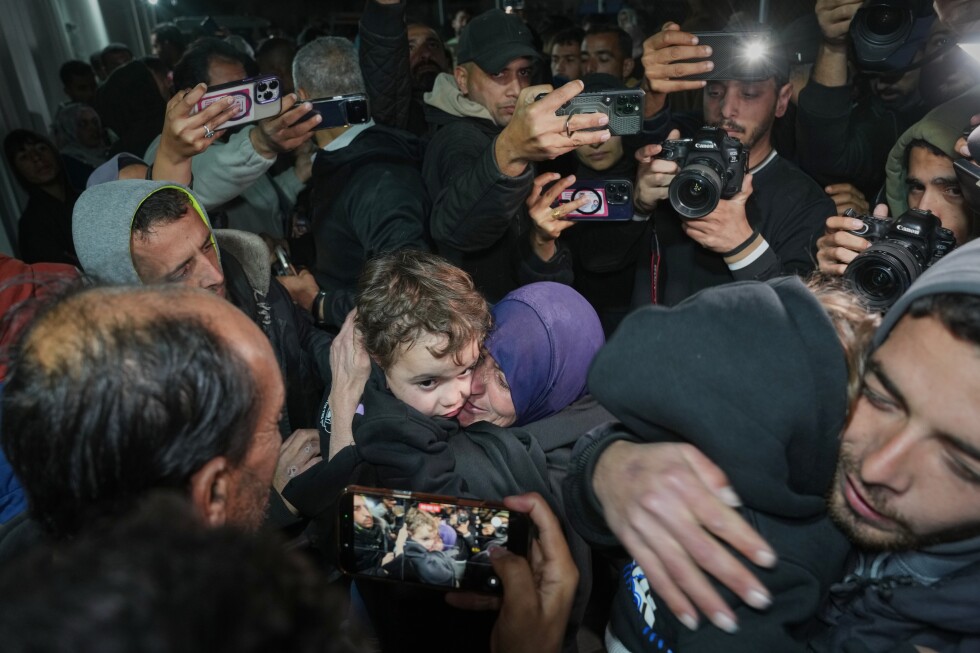
By late Monday, just 12 Palestinian returnees entered Gaza from Egypt, hours after a smaller group of medical evacuees had been transported from the territory into Egypt. The crossing, which had been closed since Israeli forces seized it in May 2024, represents a crucial pathway for thousands of Palestinians seeking medical care or hoping to return home.
According to Gaza health officials, approximately 20,000 Palestinian children and adults in need of urgent medical treatment hope to exit through Rafah. Thousands of other Palestinians who fled during the conflict are waiting to return to their homes in Gaza.
“This time it’s real,” said Iman Rashwan, who was expecting her mother and sister to return. They had left Gaza a year ago when her mother’s heart condition deteriorated, requiring treatment in Egypt. “We have been waiting for it for too long.”
The reopening comes with strict protocols. Israel and Egypt will vet people for exit and entry, with European Union border patrol agents supervising the crossing alongside a small Palestinian presence. The number of travelers is expected to increase gradually if the system proves successful.
Egyptian preparations for receiving wounded Palestinians are extensive. Authorities say about 150 hospitals across Egypt stand ready to accept patients evacuated from Gaza. The Egyptian Red Crescent has prepared “safe spaces” on their side of the border to support evacuees, though the isolated crossing is a six-hour drive from Cairo.
World Health Organization data shows more than 10,000 patients have been evacuated from Gaza since the war began, but Israel’s seizure of the Rafah crossing dramatically slowed evacuations to an average of just 17 patients weekly for most of the period since. Israel has also banned sending patients to hospitals in the Israeli-occupied West Bank and east Jerusalem, cutting off what was previously the main treatment route for Palestinians needing specialized care.
Despite the ceasefire, violence continues across Gaza. Palestinian hospital officials reported that an Israeli navy ship fired on a tent camp in Khan Younis, killing a 3-year-old boy. Israel’s military said it was investigating the incident. Separately, Israeli forces reported killing four Palestinians in northern Gaza who allegedly approached troops near the demarcation line of Israeli-controlled territory.
According to Gaza’s health ministry, more than 520 Palestinians have been killed by Israeli fire since the ceasefire took effect on October 10. They are among the over 71,800 Palestinians killed since the start of the war in October 2023, figures that come from the ministry’s detailed casualty records widely considered reliable by UN agencies and independent experts.
The Rafah crossing’s reopening represents progress in implementing the broader ceasefire agreement. Israel had initially resisted reopening the crossing, citing concerns about arms smuggling by Hamas, but the recovery of the remains of the last hostage in Gaza removed a key obstacle.
The ceasefire, which halted more than two years of conflict, is now moving into its second phase. While the initial phase focused on hostage exchanges, humanitarian aid increases, and partial Israeli troop withdrawal, the upcoming phase involves more complex steps: installing a new Palestinian governing committee for Gaza, deploying an international security force, disarming Hamas, and beginning reconstruction efforts.
For those waiting to cross, the reopening offers a glimmer of hope amid continued hardship. Rajaa Abu Mustafa stood outside a Gaza hospital where her 17-year-old son Mohamed awaited evacuation. He was blinded after being shot in the eye last year while trying to obtain food from aid trucks. “The health ministry called and told us that we will travel to Egypt for his treatment,” she said.
UN officials have called on other countries to accept more patients from Gaza “so that everyone receives the treatment they need” as the humanitarian situation remains dire despite the ceasefire.
Fact Checker
Verify the accuracy of this article using The Disinformation Commission analysis and real-time sources.

7 Comments
The reopening of the Rafah crossing, even with restrictions, is a positive step. However, the details highlight the fragility of the situation and the need for more substantial and sustainable progress on this issue.
The reopening of Rafah is an important milestone, but the details about the slow pace of operations and restrictions on travel are concerning. Reliable and unimpeded access is essential for the wellbeing of Gaza’s residents.
It’s encouraging to see the ceasefire agreement enabling the Rafah crossing to reopen, even if operations are starting slowly. Providing safe passage and access to medical care is crucial for the people of Gaza.
Reopening the Rafah crossing is a significant step forward for Palestinians seeking medical care and returning home. However, the limited number of travelers permitted so far suggests this process will still be gradual and challenging.
The Rafah crossing represents a vital lifeline for thousands of Palestinians in Gaza. I hope the reopening leads to more consistent and reliable movement of people and supplies in both directions.
The reopening of Rafah is an encouraging development, but the details suggest a cautious and constrained process. Fully restoring the functionality of this vital crossing will be crucial for improving the lives of Gaza’s residents.
Providing safe passage for medical evacuations and allowing Palestinians to return home are positive steps. However, the slow pace of the Rafah crossing’s reopening highlights the ongoing challenges and fragility of the situation.