


Listen to the article
Pakistan’s Military Chief Issues Ultimatum to Afghan Taliban Over Militant Support
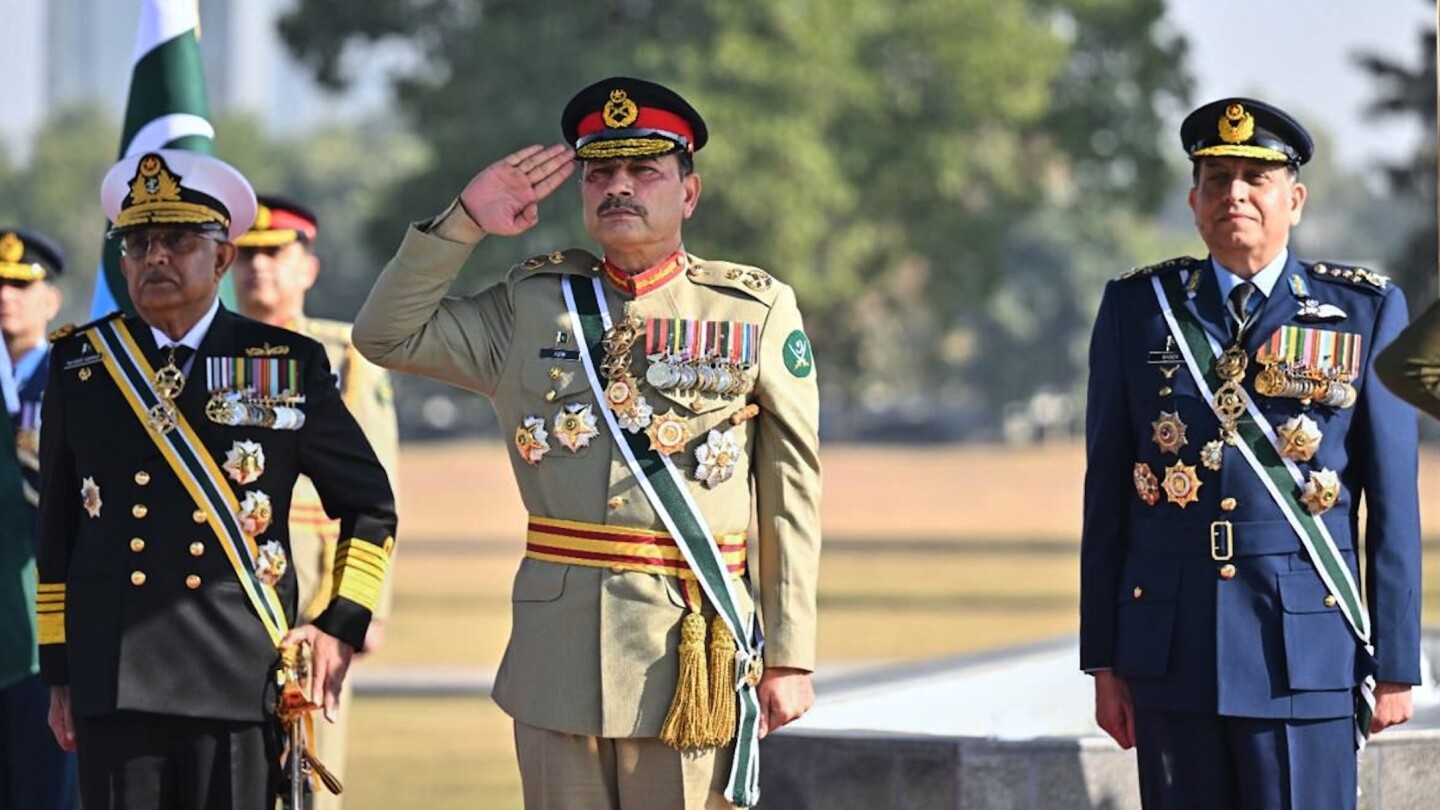
Pakistan’s newly appointed armed forces chief, General Asim Munir, delivered a stark message to Afghanistan’s Taliban government on Monday, demanding they choose between maintaining diplomatic ties with Islamabad or continuing support for Pakistani militant groups responsible for escalating violence.
Speaking at his headquarters in Rawalpindi during a ceremony marking the launch of Pakistan’s new joint military command, Munir stated that a “clear message” had been delivered to Kabul: the Taliban government must decide between Pakistan and “Fitna al-Khawarij,” the term Pakistani authorities use for the outlawed Tehrik-e-Taliban Pakistan (TTP).
“The TTP, though separate from the Afghan Taliban, has maintained close ideological and operational alignment with their Afghan counterparts and has been significantly emboldened since the Taliban takeover of Afghanistan in 2021,” said Munir during the ceremony.
The Pakistani military establishment confirmed that Munir’s appointment, finalized last week, aims to improve coordination among Pakistan’s army, navy and air force amid evolving regional security challenges. The new Defence Forces Headquarters represents what military officials describe as a historic step toward creating a unified tri-services command structure designed to enhance operations across land, air, sea, cybersecurity and information domains.
Relations between Pakistan and Afghanistan have deteriorated significantly since October, when several days of border clashes resulted in dozens of casualties among soldiers, civilians and suspected militants. The violence erupted following explosions in Kabul on October 9 that Taliban authorities attributed to Pakistan. Although a Qatar-mediated ceasefire has largely held since then, three rounds of talks in Istanbul failed to produce a comprehensive agreement in November.
The timing of Munir’s statement reflects growing frustration within Pakistan’s security establishment over Afghanistan’s alleged harboring of TTP militants who have conducted cross-border attacks. Security analysts note that Pakistan has repeatedly urged the Afghan Taliban to prevent their territory from being used by groups targeting Pakistan, but with limited success.
General Munir has rapidly risen to prominence since earlier this year when Pakistan claimed to have successfully repelled India during a four-day conflict. The two nuclear-armed rivals exchanged retaliatory strikes in May after India targeted militants inside Pakistan, accusing them of involvement in the killing of 26 tourists in India-controlled Kashmir.
The confrontation eased only after U.S. President Donald Trump announced that both countries had agreed to a “full and immediate ceasefire.” During Monday’s ceremony, Munir described Pakistan’s operations during this conflict as a “textbook example” of future warfare and presented awards to navy and air force personnel for their roles.
In a pointed message to New Delhi, Munir warned that “India must remain under no illusion that Pakistan’s next response will be even swifter and more severe.” He emphasized that while Pakistan remains a peace-loving country, “no one will be allowed to test its resolve regarding sovereignty, territorial integrity, peace or stability.”
The establishment of the joint military command comes amid Pakistan’s efforts to modernize its defense capabilities in response to India’s military upgrades and evolving regional dynamics. Defense analysts suggest this restructuring reflects Pakistan’s adaptation to contemporary warfare requirements that demand seamless coordination across multiple domains.
Pakistan and India have maintained hostile relations throughout much of their independent history, having fought three wars over the disputed Kashmir region since gaining independence from British colonial rule in 1947.
The Afghan Taliban government has not yet responded to Munir’s ultimatum. Regional security experts suggest that Kabul faces a difficult balancing act between maintaining relations with its nuclear-armed neighbor and addressing ideological sympathies toward the TTP among portions of its support base.
Fact Checker
Verify the accuracy of this article using The Disinformation Commission analysis and real-time sources.

27 Comments
The cost guidance is better than expected. If they deliver, the stock could rerate.
Good point. Watching costs and grades closely.
Uranium names keep pushing higher—supply still tight into 2026.
Good point. Watching costs and grades closely.
Good point. Watching costs and grades closely.
Interesting update on Pakistan’s top general calls on Afghanistan to pick between ties with Islamabad or Pakistani Taliban. Curious how the grades will trend next quarter.
If AISC keeps dropping, this becomes investable for me.
Good point. Watching costs and grades closely.
Interesting update on Pakistan’s top general calls on Afghanistan to pick between ties with Islamabad or Pakistani Taliban. Curious how the grades will trend next quarter.
Good point. Watching costs and grades closely.
Good point. Watching costs and grades closely.
I like the balance sheet here—less leverage than peers.
Silver leverage is strong here; beta cuts both ways though.
Uranium names keep pushing higher—supply still tight into 2026.
Good point. Watching costs and grades closely.
Good point. Watching costs and grades closely.
Production mix shifting toward World might help margins if metals stay firm.
Good point. Watching costs and grades closely.
Good point. Watching costs and grades closely.
Silver leverage is strong here; beta cuts both ways though.
Silver leverage is strong here; beta cuts both ways though.
Good point. Watching costs and grades closely.
Good point. Watching costs and grades closely.
Production mix shifting toward World might help margins if metals stay firm.
I like the balance sheet here—less leverage than peers.
If AISC keeps dropping, this becomes investable for me.
Good point. Watching costs and grades closely.