


Listen to the article
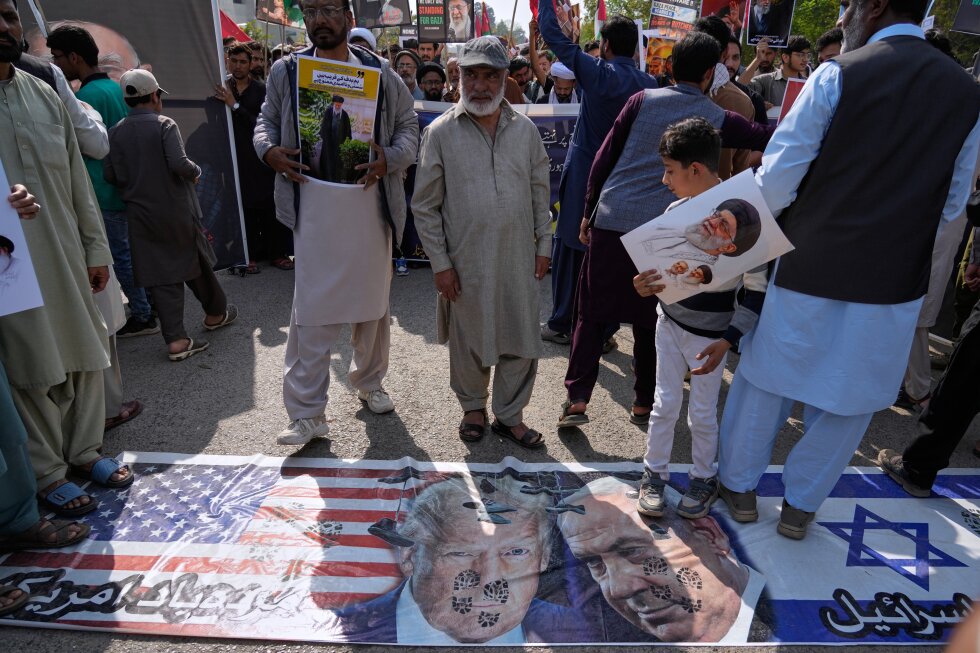
Hundreds of Shiite protesters gathered in Pakistan’s capital Islamabad and other cities Friday to condemn the killing of Iran’s Supreme Leader Ayatollah Ali Khamenei in recent U.S.-Israeli strikes, prompting American diplomatic missions to issue security alerts for U.S. citizens in the country.
Approximately 300 demonstrators staged a peaceful sit-in in Islamabad under heavy police surveillance, displaying posters of Khamenei while chanting anti-American and anti-Israeli slogans. Authorities had strategically placed shipping containers along roads leading to the U.S. Embassy, located about 3 kilometers from the protest site, to prevent potential confrontations.
Pakistani officials confirmed that protest organizers had agreed not to march toward the embassy compound, with plans to conclude their demonstration later in the day. The heightened security measures follow last Sunday’s violent protests in Karachi, where Shiite demonstrators stormed the U.S. Consulate, damaging windows and attempting to set the building on fire.
The Karachi incident resulted in a forceful police response, with officers using batons, tear gas, and live ammunition to disperse the crowd. The clashes led to 10 protester deaths in Karachi alone, with an additional 13 fatalities reported in northern cities including Skardu and Gilgit. Friday’s protests in Karachi remained peaceful, with demonstrators gathering approximately 4 kilometers from the consulate.
Khamenei, who had ruled Iran since 1989, was a pivotal religious and political figure for Shiite communities worldwide, including Pakistan’s estimated 37 million Shiites. His death in a joint U.S.-Israeli operation at the beginning of the ongoing conflict has ignited widespread outrage among Shiite communities across the region.
The U.S. Embassy in Islamabad issued a security alert ahead of Friday’s demonstrations, urging American citizens to limit their movements throughout Pakistan. The updated advisory also warned against travel to specific regions, including the southwestern Balochistan province, northwestern Khyber Pakhtunkhwa, and the disputed Kashmir region, citing risks of “terrorism and kidnapping.”
In addition to the Shiite demonstrations, smaller groups of Sunni protesters also rallied in both Islamabad and Karachi on Friday to oppose the U.S.-Israeli military campaign against Iran. These protests were conducted at locations distant from American diplomatic facilities, and no violence was reported.
The protests highlight the complex sectarian dynamics in Pakistan, where Shiites represent approximately 15% of the country’s 250 million population, with Sunni Muslims forming the majority. The demonstrations also reflect the broader regional tensions sparked by recent escalations between Iran, Israel, and the United States.
Pakistan has historically maintained a delicate balancing act in its foreign relations, particularly regarding Middle Eastern conflicts. While officially maintaining diplomatic ties with both the United States and Iran, the Pakistani government has had to navigate domestic sensitivities, especially among its Shiite population who share religious connections with Iran.
The current tensions come at a particularly challenging time for Pakistan, which is already grappling with economic difficulties, political instability, and security concerns along its borders. The government’s measured approach to containing the protests reflects its desire to prevent further escalation while acknowledging the legitimate grievances of demonstrators.
Security analysts note that Pakistan’s response to these demonstrations will be closely watched by international observers as an indicator of the country’s ability to maintain domestic stability amid heightened regional tensions. Meanwhile, diplomatic missions in Pakistan remain on high alert as authorities continue to monitor the situation.
Fact Checker
Verify the accuracy of this article using The Disinformation Commission analysis and real-time sources.

10 Comments
This situation is concerning, as escalating tensions between the US, Israel, and Iran could have serious regional and global implications. It’s critical that all sides exercise restraint and seek diplomatic solutions to deescalate the conflict.
Agreed. Violent protests are never the answer and will only serve to inflame the situation further. All parties involved need to prioritize de-escalation and finding peaceful resolutions.
I’m curious to see how Pakistan navigates this delicate situation. As a close ally of both the US and Iran, they will need to play a careful balancing act to avoid being drawn into the conflict.
Pakistan’s position is indeed precarious. They will need to leverage their relationships with both sides to urge restraint and encourage a diplomatic solution. Maintaining neutrality will be critical.
The killing of Ayatollah Khamenei is a significant escalation that is bound to have far-reaching consequences. I hope all parties involved can step back from the brink and find a peaceful path forward.
Agreed. The loss of a senior Iranian leader like Khamenei is likely to provoke a strong response from Iran. Deescalation and diplomacy are the only way to prevent this situation from spiraling out of control.
The security alerts issued by the US Embassy are understandable given the heightened tensions. However, it’s important that any US actions or responses are carefully considered to avoid further destabilizing the region.
That’s a fair point. The US should tread cautiously and focus on diplomatic efforts to resolve this conflict through non-violent means. Unilateral military strikes would only serve to exacerbate the situation.
It’s concerning to see Shiite protesters in Pakistan taking to the streets to denounce the US and Israel. This highlights the delicate sectarian tensions in the region that could be further inflamed by the ongoing crisis.
Absolutely. The protests in Pakistan demonstrate the potential for this conflict to spill over into other countries and exacerbate regional divisions. Careful management of these sectarian tensions will be crucial.