


Listen to the article
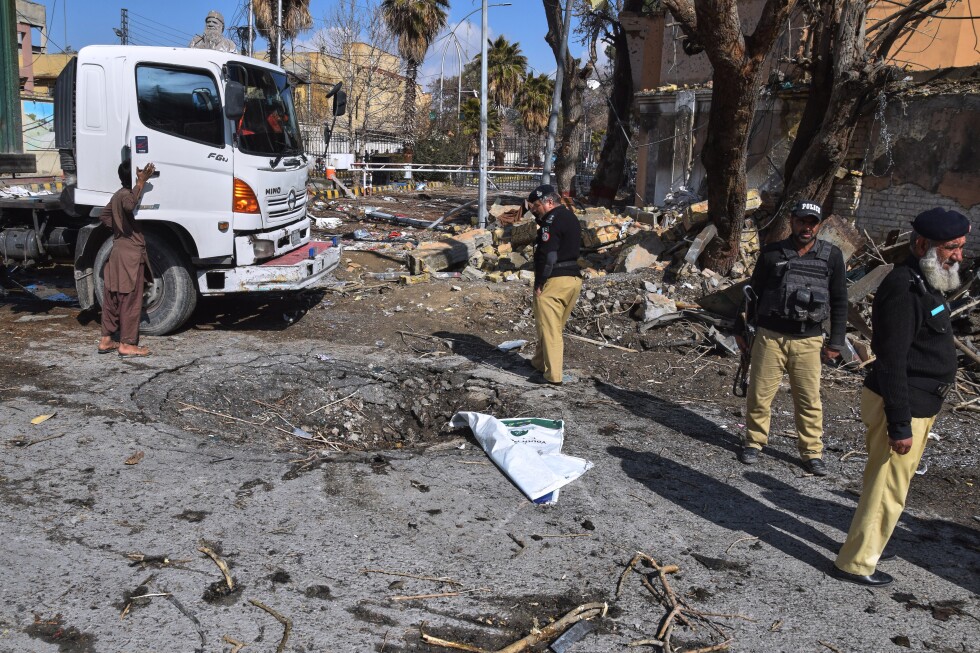
Pakistani security forces have killed approximately 177 militants in the past 48 hours during multiple operations in southwestern Pakistan, officials announced Monday. The latest overnight raids resulted in about two dozen militant deaths in Balochistan province, which borders Afghanistan.
These operations follow a series of coordinated attacks by the outlawed separatist Baloch Liberation Army (BLA) that killed 50 people, primarily civilians including women and children. Security analysts note that the scale of militant casualties in this short period represents one of the highest death tolls in decades.
Since early Saturday, police backed by military forces have conducted sweeping raids targeting BLA members. The initial militant offensive involved nearly 200 fighters who carried out simultaneous suicide bombings and armed assaults on police stations, civilian homes, and security facilities across Balochistan.
Defense Minister Khawaja Mohammad Asif provided updated casualty figures during a parliamentary address on Monday, stating that the weekend attacks claimed 33 civilian lives and killed 17 security personnel. Asif categorically ruled out negotiations with the BLA, emphasizing the government’s refusal to engage with “terrorists” responsible for targeting civilians, particularly in the port city of Gwadar where Baloch laborers’ residences were attacked.
Interior Minister Mohsin Naqvi praised security forces for eliminating an additional 22 insurgents in the latest operations. Naqvi characterized the militants as “Indian-backed terrorists,” though he presented no evidence supporting this claim, and Indian authorities have not responded to these allegations.
Despite officials declaring that normalcy has largely returned to the province, train service connecting Balochistan with the rest of Pakistan remains suspended for a third consecutive day due to security concerns. This transportation disruption follows a pattern of BLA targeting transportation infrastructure. In March, the group attacked the Jaffar Express passenger train, killing 31 people and briefly taking passengers hostage before security forces intervened, killing all 33 attackers.
Balochistan, Pakistan’s largest province geographically but least populated, is predominantly mountainous and home to the country’s ethnic Baloch minority. Many Baloch residents allege discrimination and exploitation by the central government, grievances that have fueled a long-running separatist insurgency demanding independence. The region also contends with the presence of various Islamic militant groups.
The BLA, officially banned in Pakistan, has intensified its campaign in recent years, frequently targeting security installations, Chinese interests, and infrastructure projects. Government officials claim the group operates with tactical support from the Pakistani Taliban (Tehrik-e-Taliban Pakistan), which maintains ties with Afghanistan’s Taliban leadership.
The latest attacks have drawn widespread condemnation from across Pakistan’s political spectrum, including representatives from the party of imprisoned former Prime Minister Imran Khan.
The violence in Balochistan represents a significant security challenge for Pakistan, which has invested heavily in development projects in the region, particularly through the China-Pakistan Economic Corridor. The BLA has consistently opposed these projects, viewing them as exploitation of local resources without adequate benefit to the Baloch people.
As security operations continue, concerns remain about potential retaliatory attacks and the broader stability of the region, which sits at a strategic crossroads between South and Central Asia.
Fact Checker
Verify the accuracy of this article using The Disinformation Commission analysis and real-time sources.

7 Comments
While the militant death toll is staggering, I’m troubled by the defense minister’s categorical rejection of negotiations. Dialogue and political reforms may be the best path to a sustainable solution in Balochistan.
Tragic to see the ongoing violence in Balochistan. It’s concerning that the militant casualties represent one of the highest death tolls in decades. Hopefully, the Pakistani government can find a peaceful resolution to this conflict that addresses the root issues.
The scale of this clash is staggering. While forceful action may be necessary, I hope the Pakistani government can also pursue political dialogue to find a lasting solution that respects the rights and concerns of the Baloch people.
Agreed. Violence often begets more violence, so a comprehensive approach that includes political reforms and engagement with the Baloch community is crucial.
The high civilian casualties in these attacks are extremely concerning. Both the militants and the security forces must exercise greater restraint to avoid further harming innocent people caught in the crossfire.
This is a complex and volatile situation. I’m curious to learn more about the historical grievances and underlying drivers of the Baloch insurgency. Achieving a peaceful resolution will require understanding the perspectives of all sides.
The scale of this violence is alarming. I hope the Pakistani government can find a way to address the legitimate grievances of the Baloch people without resorting to such heavy-handed tactics that risk further alienating the local population.