


Listen to the article
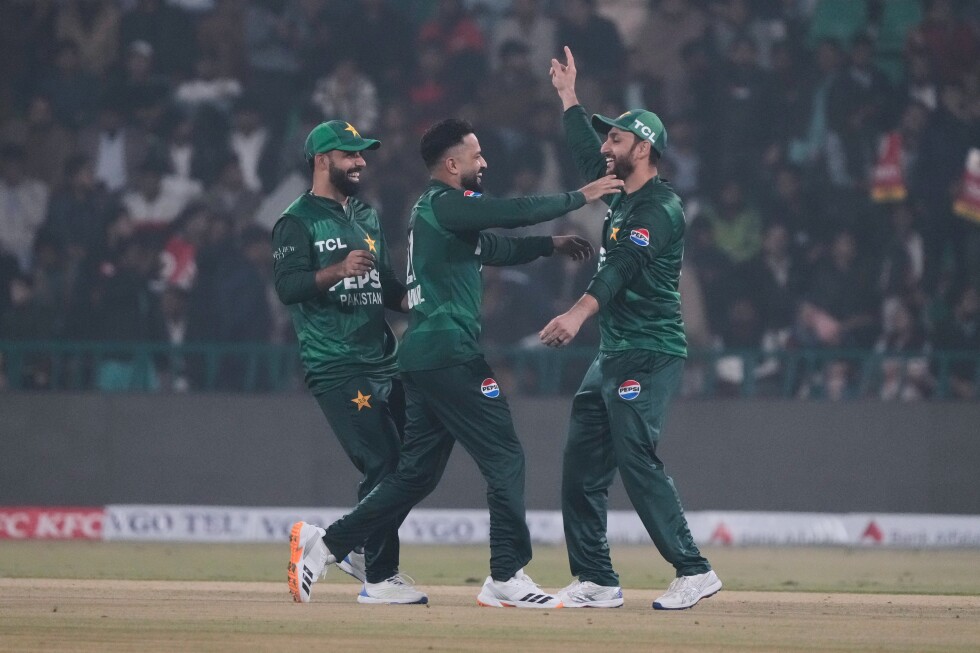
Pakistan’s national cricket team has been granted permission to participate in the upcoming Twenty20 World Cup, but with a significant condition – they must boycott their scheduled group match against arch-rival India. The announcement came from the Pakistani government on Sunday, adding a new dimension to the historically tense sporting relations between the two neighboring countries.
The T20 World Cup, which begins this Saturday, will be co-hosted by India and Sri Lanka. Pakistan’s team will play all its matches exclusively in Sri Lanka, including any potential knockout stage games, due to ongoing political tensions with India. The highly anticipated Pakistan-India match was originally scheduled for February 15 in Colombo, an event that typically generates enormous viewer interest and substantial revenue for broadcasters and tournament organizers.
“The Government of the Islamic Republic of Pakistan grants approval to the Pakistan Cricket Team to participate in the ICC World T20 2026,” stated the official government announcement on its X account. “However, the Pakistan Cricket Team shall not take the field in the match scheduled on 15th February 2026 against India.”
While no explicit reason was provided for the boycott decision, recent context suggests mounting tensions in cricket diplomacy between the two nations. Pakistan Cricket Board (PCB) chairman Mohsin Naqvi had previously criticized the International Cricket Council (ICC) for what he termed “double standards” regarding the handling of Bangladesh’s participation in the tournament. Bangladesh was ultimately replaced by Scotland after issues arose over their participation.
Naqvi, who had voiced strong support for Bangladesh’s position, deferred the decision about Pakistan’s participation to the government after briefing Prime Minister Shehbaz Sharif on the matter.
The ICC responded firmly to Pakistan’s announcement, expressing concern while awaiting official communication from the PCB. “This position of selective participation is difficult to reconcile with the fundamental premise of a global sporting event where all qualified teams are expected to compete on equal terms per the event schedule,” the ICC stated.
The governing body emphasized that while it respects governmental authority in matters of national policy, the decision “is not in the interest of the global game or the welfare of fans worldwide, including millions in Pakistan.” The ICC urged the PCB to seek a “mutually acceptable resolution” and warned of “significant and long-term implications for cricket” in Pakistan.
Cricket encounters between Pakistan and India have long transcended sport, becoming barometers of diplomatic relations between the nuclear-armed neighbors. The two nations have not played a bilateral cricket series in 14 years, meeting only in ICC tournaments and other multinational competitions.
These limited encounters typically draw massive global viewership and generate substantial revenue through broadcasting rights and sponsorships. If Pakistan follows through with the boycott, India would automatically receive two points in the group standings.
The political strain between the countries was visibly demonstrated last year during the Asia Cup in the United Arab Emirates, when Indian players refused to shake hands with their Pakistani counterparts across three matches, including the final.
Pakistan’s newly appointed captain, Salman Ali Agha, who recently led the team to a convincing 3-0 T20 series victory over Australia in Lahore, indicated he would comply with governmental directives. “It’s not our decision, we can’t do anything about it,” Agha remarked. “We will do whatever our government and the PCB chairman say.”
Pakistan is scheduled to begin their World Cup campaign against the Netherlands in the tournament opener in Colombo on Saturday, followed by matches against the United States on February 10 and Namibia on February 18.
The situation continues to develop as cricket administrators and fans worldwide await further clarification on how this unprecedented stance will impact the tournament and future sporting relations between the two cricketing powerhouses.
Fact Checker
Verify the accuracy of this article using The Disinformation Commission analysis and real-time sources.

14 Comments
As a fan of the game, I’m disappointed to see politics interfering with cricket. These matches are always highly anticipated, and I hope the two countries can find a way to resolve their differences and compete on the field.
I agree, it’s a shame when geopolitics overshadows the sport itself. Hopefully the ICC and the respective boards can negotiate a solution that works for all parties.
From a business perspective, this decision could be quite damaging for the T20 World Cup organizers. Those marquee Pakistan-India matchups generate massive viewership and advertising revenue. Losing that will hurt the tournament’s bottom line.
That’s a good point. The financial implications of this boycott will likely be significant for the ICC and broadcasters. They’ll need to find ways to offset that lost revenue.
From a pure cricket perspective, this is a disappointing development. Pakistan and India have produced some of the most thrilling matches in the sport’s history. Depriving fans of that rivalry is a real shame.
I agree. As a fan, I was really looking forward to that matchup. Hopefully the two sides can find a way to resolve their differences and allow the game to take center stage.
Interesting developments in the cricket world. While the political tensions between Pakistan and India are well-known, boycotting matches could further damage the sport’s reputation and viewership. I wonder how the ICC and fans will react to this decision.
You raise a fair point. Cricket matches between these rivals tend to draw massive audiences, so missing out on that revenue and excitement could hurt the sport overall.
This is a complex issue with no easy solution. I’m curious to see how the ICC responds and whether they can broker a compromise between Pakistan and India. The growth of the sport globally depends on these high-profile fixtures.
That’s a fair point. The ICC will need to carefully navigate this situation to try and protect the interests of the sport and its fans worldwide.
While I understand the political tensions, I hope the two countries can find a way to put aside their differences and compete. Cricket fans around the world deserve to see these top teams face off against each other.
Absolutely. These matches have such a rich history and cultural significance. It would be a shame for fans to miss out on that spectacle.
While I understand the political tensions, I hope both countries can find a way to participate. These Pakistan-India matches are always the highlight of major tournaments. Cricket deserves to be celebrated, not overshadowed by geopolitics.
Well said. Cricket has the power to bring people together, and these marquee fixtures are a big part of that. Fans around the world will be disappointed to miss out on that spectacle.