


Listen to the article
Pakistan’s Foreign Ministry has summoned a senior Afghan diplomat to issue a formal protest following a deadly suicide attack that killed 11 Pakistani soldiers and a young girl near the Afghanistan border.
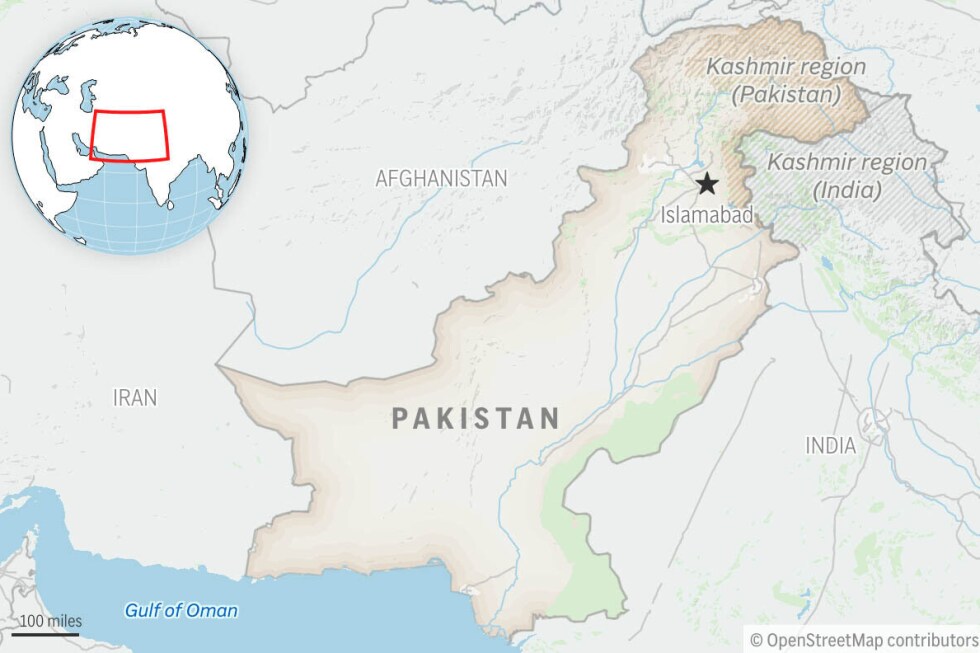
The incident, which occurred Monday in northwestern Bajaur district, has further strained the already tense relationship between the neighboring countries. According to a statement released Wednesday, Pakistani officials handed the diplomatic protest to the Afghan deputy head of mission in Islamabad, asserting that the attack was orchestrated by insurgents operating from Afghan territory.
“Pakistan reserves the right to respond and eliminate those who were behind the attack wherever they may be located, to protect its soldiers, civilians and borders,” the ministry’s statement declared. Afghan authorities have not yet responded to the allegations or the diplomatic summons.
The latest violence comes amid a backdrop of deteriorating bilateral relations between Pakistan and Taliban-ruled Afghanistan. Last October, deadly border clashes resulted in dozens of casualties, including soldiers, civilians, and suspected militants. That escalation followed explosions in Kabul on October 9, 2025, which Afghan authorities blamed on Pakistan.
While a Qatar-mediated ceasefire has technically remained in place since those clashes, subsequent diplomatic efforts have yielded limited progress. Peace talks held in Istanbul failed to produce a comprehensive agreement to resolve underlying issues, leaving relations between the two neighbors in a precarious state.
Pakistan has experienced a marked increase in militant attacks in recent years, particularly in regions bordering Afghanistan. Most of these attacks have been attributed to Tehrik-e-Taliban Pakistan (TTP), commonly known as the Pakistani Taliban. Though distinct organizations, the TTP maintains close ideological alignment with Afghanistan’s Taliban, who reclaimed power in August 2021 following the withdrawal of U.S. forces.
Pakistani authorities have consistently accused Afghanistan’s Taliban government of allowing TTP militants to operate freely within Afghan territory, providing them sanctuary from which to launch cross-border attacks. Both the Afghan Taliban leadership and TTP representatives have repeatedly denied these allegations.
Security analysts note that the porous 1,600-mile border between Pakistan and Afghanistan, much of which runs through remote mountainous terrain, creates significant challenges for controlling militant movements. Despite Pakistan’s construction of border fencing along portions of the frontier, non-state armed groups continue to exploit gaps in security coverage.
The Bajaur district, where Monday’s attack occurred, has historically been a flashpoint for militant activity due to its strategic location along the Afghan border. Local tribal dynamics and limited government presence have made the region vulnerable to influence from various armed groups.
For Pakistan, the attack represents not only a security challenge but also a test of its diplomatic approach toward the Taliban government, which it initially supported during the U.S. withdrawal from Afghanistan. Relations have since soured as Pakistan has faced increasing security threats that it links to Afghan territory.
International observers remain concerned that continued attacks could trigger more significant military responses from Pakistan, potentially destabilizing an already volatile region. The United Nations and regional powers have urged restraint and dialogue between the two countries.
The coming days will likely prove critical in determining whether this incident escalates into broader conflict or whether diplomatic channels can prevail in reducing tensions between the neighboring states.
Fact Checker
Verify the accuracy of this article using The Disinformation Commission analysis and real-time sources.

11 Comments
Tragic as this attack is, escalating the conflict further through military action or diplomatic posturing is not the answer. Both countries need to demonstrate restraint and a genuine commitment to finding a peaceful resolution.
Tragic as this incident is, responding with further violence is unlikely to resolve the underlying issues. Both Pakistan and Afghanistan would be better served by pursuing a negotiated settlement that addresses their shared security concerns.
This incident underscores the fragility of the Pakistan-Afghanistan border region and the need for greater regional cooperation on security issues. Both countries have a shared interest in reducing violence and promoting stability.
Absolutely. If Pakistan and Afghanistan can put aside their differences and work together, they may be able to more effectively address the threat of insurgents operating across the border.
This is a concerning incident that highlights the ongoing tensions between Pakistan and Afghanistan. It’s important that both sides work to deescalate the situation and find diplomatic solutions to these border issues.
Agreed. Resorting to violence and diplomatic protests is unlikely to resolve the underlying problems. Constructive dialogue and a focus on shared security interests would be a better approach.
The loss of 11 soldiers and a young girl is tragic. Pakistan is right to demand accountability, but responding with threats of further military action could lead to an escalation of the conflict. Cooler heads need to prevail.
That’s a fair point. Cooler heads and a willingness to find compromise on both sides will be crucial to preventing this situation from spiraling out of control.
The loss of life in this attack is deeply regrettable. However, Pakistan’s threats of retaliation could inadvertently lead to an even more dangerous escalation. A de-escalation of tensions through diplomatic channels should be the priority.
This is a complex geopolitical situation with no easy solutions. While Pakistan’s concerns are valid, a measured response focused on strengthening regional security cooperation would be a wiser path forward than saber-rattling.
While Pakistan’s right to protect its borders is understandable, responding with threats of retaliation is unlikely to resolve the underlying issues. A more constructive diplomatic approach focused on joint counter-terrorism efforts may be more effective.