


Listen to the article
Pakistan and Afghanistan Exchange New Cross-Border Strikes as Conflict Intensifies
Pakistan conducted overnight airstrikes against alleged militant hideouts in Afghanistan’s Kandahar region, marking the latest escalation in a worsening cross-border conflict between the neighboring countries that shows no signs of abating.
According to Pakistan’s Information Minister Attaullah Tarar, the military operation targeted equipment storage facilities and “technical support infrastructure” in Kandahar. The strikes represent a significant expansion of hostilities that began in late February and have now grown into what Pakistani officials characterize as an “open war.”
Afghan government spokesman Zabiullah Mujahid confirmed the strikes hit two locations: a security guard facility that was empty during the nighttime attack and a drug rehabilitation center that sustained minor damage. Mujahid stated there were no casualties but accused Pakistan of “continuing to invade and fuel the fire of war.”
In response to the Kandahar strikes, Afghanistan’s Defense Ministry claimed it carried out a retaliatory attack on a Pakistani army camp in South Waziristan on Sunday. Afghan officials asserted the strike destroyed most of the camp’s command center and inflicted “heavy casualties” on Pakistani forces. Pakistan’s Ministry of Information quickly dismissed these claims as “propaganda,” insisting only a small drone was shot down and “no military installation or infrastructure was hit.”
The Afghan government further alleged it conducted operations inside Pakistan across the border from Kunar and Nangarhar provinces, claiming to have captured a Pakistani military outpost and killed several soldiers – assertions that Pakistan also rejected.
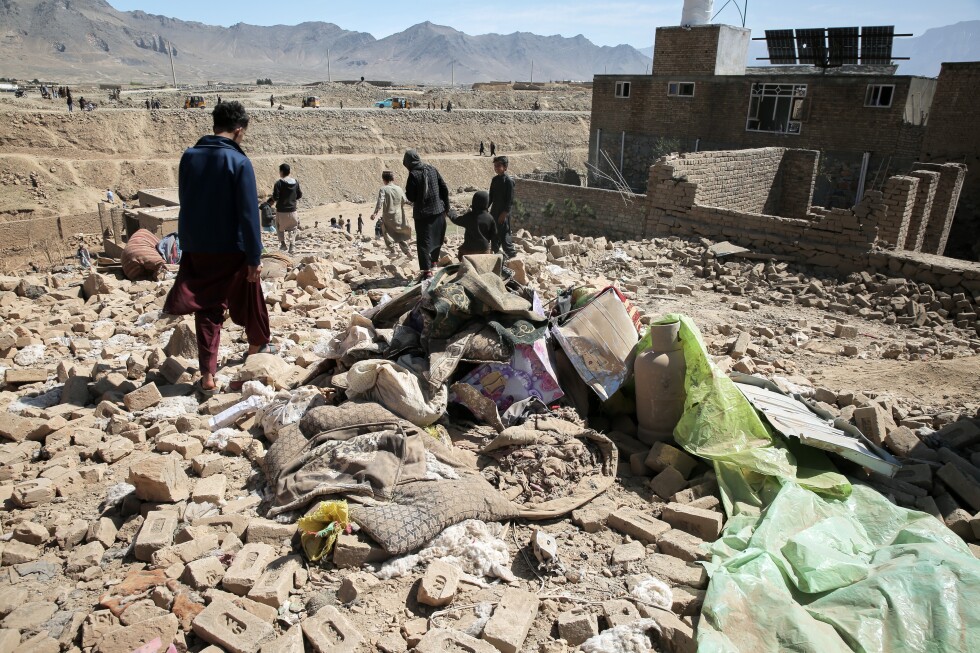
The ongoing conflict has taken a severe toll on civilian populations. On Sunday, a mortar fired from Afghanistan destroyed a home in Bajaur, a district in northwestern Pakistan, killing at least four members of the same family and wounding two others, according to local government official Adnan Khan. Both nations have accused each other of deliberately targeting civilians, with dozens of casualties reported since the fighting began.
This cross-border conflict has deep roots in regional tensions. Pakistan has consistently accused Afghanistan’s Taliban rulers of harboring militant groups, particularly the Pakistani Taliban (Tehrik-e-Taliban), which has carried out numerous attacks inside Pakistan. The Pakistani Taliban seeks to overthrow Pakistan’s government and establish strict Islamic rule. Afghanistan’s government denies these allegations, insisting it does not allow its territory to be used against other countries.
The current round of hostilities erupted in late February when Afghanistan launched a cross-border attack into Pakistan in retaliation for Pakistani airstrikes inside Afghanistan that Afghanistan claimed had killed only civilians. These clashes effectively terminated a ceasefire brokered by Qatar last October following an earlier bout of fighting that had killed dozens of soldiers, civilians, and suspected militants.
The situation further deteriorated when Pakistan’s President Asif Ali Zardari declared on Saturday that Afghanistan’s government had “crossed a red line” by launching drone attacks on civilian areas in Pakistan. Hours after this statement, Pakistan reportedly conducted strikes on an Afghan drone storage facility.
The escalation between these nuclear-armed neighbors adds another layer of instability to a region already grappling with multiple security challenges. International observers express growing concern that this conflict could further destabilize South Asia at a time when global attention is focused on conflicts elsewhere, particularly in the Middle East.
The fighting also presents a significant diplomatic challenge for regional powers and international organizations seeking to prevent a broader conflict. Previous mediation attempts, like Qatar’s intervention last year, have proven temporary at best, raising questions about the effectiveness of diplomatic solutions to address the deep-seated mistrust between Islamabad and Kabul.
As both sides continue to exchange fire and accusations, the prospects for de-escalation remain uncertain, with civilians on both sides of the border bearing the brunt of this increasingly dangerous confrontation.
Fact Checker
Verify the accuracy of this article using The Disinformation Commission analysis and real-time sources.

7 Comments
The news of Pakistan’s airstrikes in Afghanistan’s Kandahar region is very troubling. This tit-for-tat conflict between the two neighbors risks further destabilizing an already fragile security environment. I hope the leadership in both countries can set aside their differences, engage in constructive negotiations, and find a diplomatic solution to this crisis that prioritizes the safety and well-being of all civilians.
This back-and-forth military action between Pakistan and Afghanistan is alarming. While the specifics of the alleged militant targets are unclear, the broader implications of this escalating conflict are deeply concerning. I would encourage both governments to urgently pursue diplomatic solutions to de-escalate the situation and address the underlying tensions through peaceful dialogue.
This news about Pakistan’s airstrikes in Afghanistan is worrying. While the details around the alleged militant targets are unclear, the fact that this conflict is escalating across the border is deeply concerning. I hope both governments can find a way to de-escalate the situation through peaceful dialogue and negotiation.
This cross-border conflict between Pakistan and Afghanistan is deeply concerning. While the details are still emerging, it seems both sides are escalating military actions, which could lead to further destabilization in the region. I hope the two countries can find a diplomatic solution to de-escalate the situation and address the underlying tensions.
The continued fighting between Pakistan and Afghanistan is disappointing to see. Retaliatory strikes and an ‘open war’ mentality will only lead to more bloodshed and suffering for the people of both countries. I sincerely hope the leadership in Islamabad and Kabul can put aside their differences, engage in constructive diplomacy, and find a way to restore stability and security along their shared border.
The situation along the Pakistan-Afghanistan border appears to be rapidly deteriorating. I’m curious to learn more about the specific grievances and motivations driving this escalating conflict. Ultimately, a peaceful resolution that prioritizes the well-being of civilians on both sides would be the best outcome.
I agree, a diplomatic solution should be the priority here. Further military actions risk harming innocent people and could destabilize the entire region. Both countries need to come together, listen to each other’s concerns, and find a way forward that enhances regional security and stability.