


Listen to the article
Pakistani Security Forces Kill Over 140 Militants Following Coordinated Attacks in Balochistan
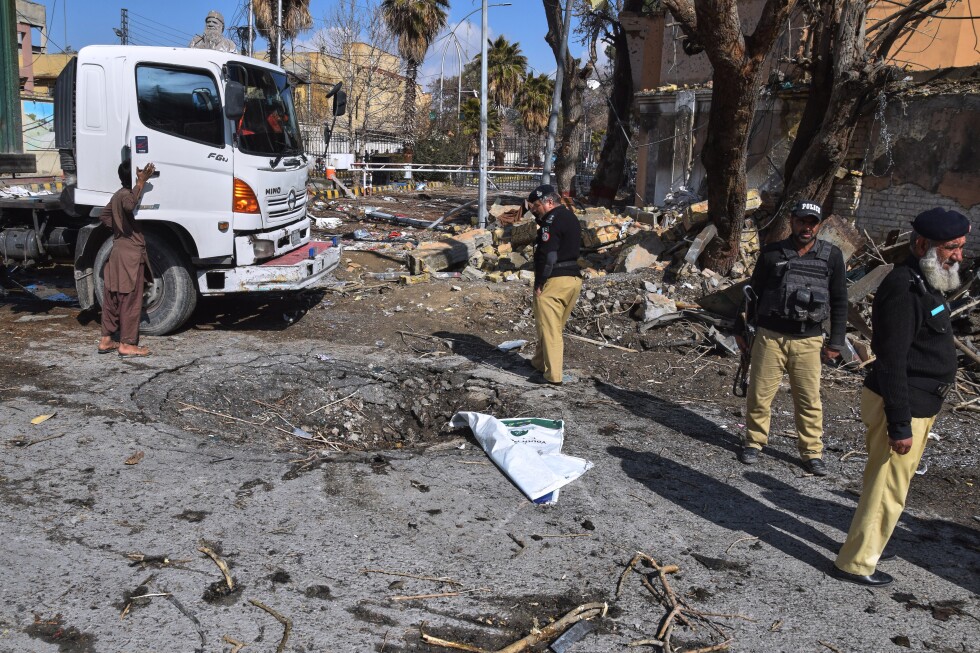
Pakistani military and police forces killed more than 145 alleged militants during a 40-hour counterterrorism operation across Balochistan province, officials announced Sunday. The sweeping raids came in response to coordinated suicide bombings and gun attacks that left 33 people dead on Saturday, including 18 civilians.
Provincial Chief Minister Sarfraz Bugti told reporters in Quetta that security forces swiftly responded to attacks by what officials described as “Indian-backed terrorists” affiliated with the banned Baloch Liberation Army (BLA). The death toll represents the highest number of militants killed in a single operation in the region in decades.
“The bodies of these 145 killed terrorists are in our custody, and some of them are Afghan nationals,” Bugti stated during a press conference alongside senior government official Hamza Shafqat, who oversees counterinsurgency operations in the province. “These Indian-backed terrorists wanted to take hostages but failed to make it to the city center.”
Saturday’s attacks shook the resource-rich southwestern province, where Pakistan has been working to attract foreign investment in mining and mineral development. Among the civilian casualties were five women and three children killed when militants stormed the home of a Baloch laborer in Gwadar, according to officials.
“It was a very scary day in the history of Quetta,” said local resident Khan Muhammad, describing scenes of panic following a suicide bombing that killed several police officers. “Armed men were roaming openly on the roads before security forces arrived.”
Throughout the press conference, Bugti repeatedly accused both India and Afghanistan of supporting the BLA, claiming that senior leaders of the organization operate from Afghan territory. He specifically referenced the Taliban-led government in Afghanistan, stating that despite pledges made under the 2020 Doha agreement not to allow Afghan soil to be used for attacks against other countries, “unfortunately, the Afghan soil was still being used against Pakistan.”
Both Kabul and New Delhi have consistently denied Pakistan’s allegations of supporting militant groups in Balochistan.
The attacks come amid heightened regional tensions. In early October, Pakistan conducted airstrikes on what it claimed were Pakistani Taliban hideouts inside Afghanistan, reportedly killing dozens of suspected insurgents. The incident further strained relations between the neighboring countries.
Balochistan province has long been plagued by a separatist insurgency led by ethnic Baloch groups demanding greater autonomy or independence from Pakistan’s central government. The BLA, which claimed responsibility for the latest attacks, has carried out numerous operations in recent years, often targeting Pakistani security forces, Chinese interests, and infrastructure projects.
The timing of these attacks is particularly significant as Pakistan seeks to develop Balochistan’s considerable natural resources. In September 2025, a U.S. metals company signed a $500 million investment agreement with Pakistan, coming just a month after the U.S. State Department designated the BLA and its armed wing as a foreign terrorist organization.
According to Pakistani authorities, the BLA has operational ties with the Pakistani Taliban, known as Tehrik-e-Taliban Pakistan (TTP). While the TTP is a separate organization, it maintains alliances with Afghanistan’s Taliban government that returned to power in August 2021.
Chief Minister Bugti claimed the attackers had planned to seize hostages after storming government offices in Quetta’s high-security zone but were thwarted by prepared security forces. “We were aware of their plans, and our forces were prepared,” he said.
The recent violence underscores the complex security challenges facing Pakistan’s least developed province, where Chinese investment in the China-Pakistan Economic Corridor has made Chinese nationals working on various projects frequent targets for militant attacks.
As operations continue across Balochistan, officials remain on high alert for potential follow-up attacks, while local residents attempt to return to normal life following one of the most violent weekends in recent memory.
Fact Checker
Verify the accuracy of this article using The Disinformation Commission analysis and real-time sources.

14 Comments
This strikes me as an escalation in the conflict. While the government claims the militants were ‘Indian-backed,’ it’s important to avoid inflammatory rhetoric and focus on verifiable facts.
Absolutely. Inflammatory language can inflame tensions further and undermine efforts to find a peaceful resolution.
While the government claims these were ‘Indian-backed terrorists,’ the reality on the ground is often complex. Nuanced analysis and independent reporting will be essential to understanding this situation.
Well said. Jumping to conclusions without thorough investigation risks further inflaming regional tensions.
Balochistan has long been a flashpoint, with a history of ethnic tensions and insurgency. I hope this incident does not derail efforts to address the region’s deep-seated socioeconomic challenges.
The high death toll highlights the intensity of the security situation in the region. It will be critical for the government to address the underlying grievances that fuel this insurgency in a sustainable way.
Agreed. Relying solely on military force is unlikely to resolve the complex political and economic issues driving the unrest in Balochistan long-term.
This is a concerning development in the ongoing conflict in Balochistan. While the Pakistani government claims these were Indian-backed terrorists, independent verification will be important to fully understand the situation.
You raise a fair point. Caution is warranted until we have more details on the identities and affiliations of those killed.
With so many reported casualties, one hopes the Pakistani authorities have followed due process and international norms regarding the use of force. Transparency around these operations would help build confidence.
This appears to be a significant security operation, but the true nature of the militants and the circumstances of their deaths remain unclear. I hope the authorities provide more detailed, verified information.
The high death toll raises concerns about potential human rights abuses. Impartial monitoring and investigation will be crucial to ensuring accountability and justice for any unlawful killings.
You make a valid point. Transparency and adherence to the rule of law should be priorities in counterterrorism operations.
The scale of the operation and reported casualties is alarming. I hope the authorities exercise restraint and prioritize protecting civilian lives, even in the face of security challenges.