


Listen to the article
Pakistan’s imprisoned former Prime Minister Imran Khan underwent a medical procedure for an eye ailment at a government hospital, a Pakistani official confirmed Thursday, as concerns mount over his health and treatment in detention.
“He is in good health,” Information Minister Attaullah Tarar told the private Geo News television channel, addressing growing speculation about Khan’s condition. The former premier was examined by doctors at Rawalpindi’s Adiala prison before being transported to a government hospital on Saturday for a 20-minute procedure that officials claim was performed with his consent.
The government’s acknowledgment follows days of rumors on social media that Khan had been taken to a hospital under heavy security over the weekend. The former cricket star turned politician has been out of public view since his arrest in 2023 on corruption charges.
Khan’s son, Kasim, revealed on social media platform X that his father has been diagnosed with central retinal vein occlusion, a dangerous blockage that can cause permanent vision loss if not properly treated. “Yet authorities continue to block his treatment and deny him access to the doctors he trusts,” he wrote, adding that even he hasn’t been permitted to speak with his father.
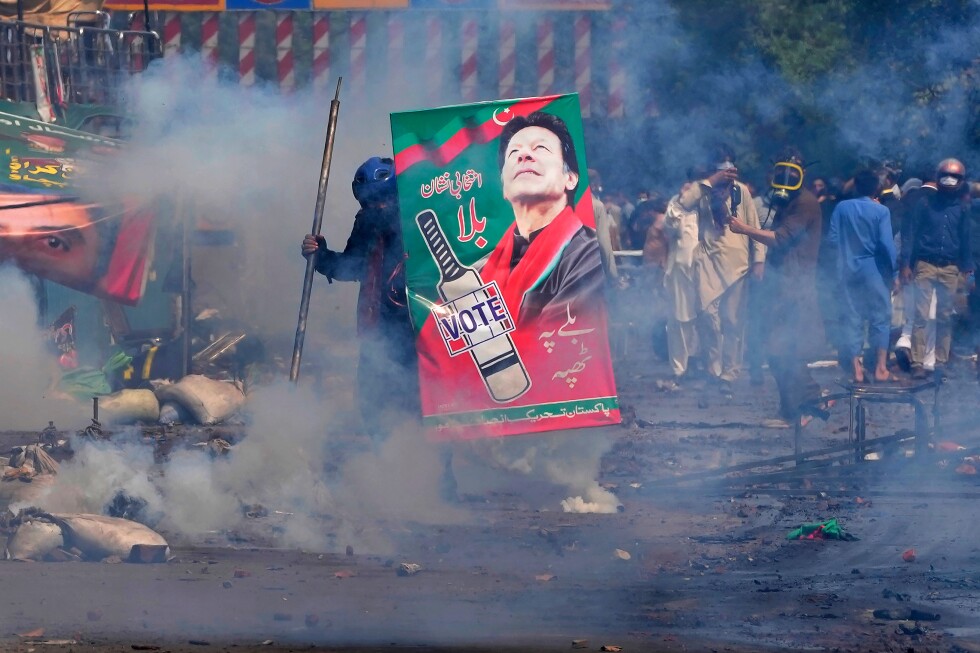
The situation has sparked protests, with leaders and supporters of Khan’s Pakistan Tehreek-e-Insaf (PTI) party staging a sit-in outside Adiala prison, demanding that Khan’s doctors and family members be granted access to him.
Zulfikar Bukhari, a spokesman for Khan’s party, called the government’s handling of the health issue “opaque and alarming.” In a statement released Thursday, Bukhari criticized authorities for not informing Khan’s family or legal team before or after he was taken from prison for medical treatment. He also expressed concern that officials had provided no verifiable details about Khan’s condition, the treatment administered, or the doctors involved.
“The government’s attempt to portray the eye condition as a routine medical matter raises more questions than answers,” Bukhari said, calling for immediate access for Khan’s family and personal physicians, as well as full disclosure about the procedure and his current condition.
Suhail Afridi, a chief minister in northwest Pakistan and prominent PTI member, joined the protest outside the prison. “The very first question is: how did his health deteriorate to the point that he had to be transferred to the hospital?” Afridi asked. “If it reached this stage, it means he was already unwell — so why was the illness concealed? Why was he not allowed to meet his family or his personal doctor?”
Khan, who remains widely popular in Pakistan, has seen his access to visitors restricted in recent months. Authorities have limited meetings between Khan and his family after relatives publicly conveyed political messages urging supporters to stage rallies against the government of Prime Minister Shehbaz Sharif.
The former prime minister has used social media to criticize both the military and Sharif for his removal from office in April 2022 through a no-confidence vote. Khan has consistently alleged that his ouster was the result of a U.S.-backed conspiracy carried out with support from Sharif and Pakistan’s military establishment — accusations that Washington, the military, and his political opponents have all denied.
After Khan’s initial arrest in 2023, his party launched a campaign demanding his release, but these efforts gradually subsided as the government maintained its stance. The current health concerns have reignited attention on his detention conditions and treatment.
Human rights observers note that the treatment of a former elected prime minister in custody reflects broader concerns about rule of law, prisoners’ rights, and due process in Pakistan’s increasingly polarized political landscape.
Fact Checker
Verify the accuracy of this article using The Disinformation Commission analysis and real-time sources.

16 Comments
Eye conditions can be quite serious, so I’m glad the authorities are acknowledging Khan’s medical needs. However, concerns about potential restrictions on his access to trusted doctors are worrying. Transparency and due process should be priorities.
Absolutely. Allowing Khan to consult the medical professionals of his choice would help build confidence in the fairness of the process. Denying that access could undermine perceptions of objectivity.
It’s good that the government is providing updates on Khan’s health, but the concerns about his ability to choose his own doctors are troubling. Upholding the basic rights of detainees, including access to appropriate medical care, is a fundamental responsibility of the state.
I agree. The authorities should strive to balance security needs with respecting Khan’s fundamental rights. Allowing him to consult the medical professionals he trusts would help demonstrate the fairness and transparency of the process.
This situation highlights the challenges in providing fair and humane treatment for political prisoners. I hope the authorities can balance security concerns with ensuring Khan’s medical needs are met. Transparency and impartiality are important.
You raise a good point. The government should demonstrate that Khan is receiving appropriate care and not being unfairly targeted. Maintaining the rule of law is crucial, even in sensitive political cases.
Glad to hear Imran Khan is receiving medical treatment, even if it’s under detention. His health and well-being should be the priority, regardless of political differences. Timely intervention is crucial for an eye condition like this.
Agreed. Access to proper healthcare is a basic human right, even for detained individuals. I hope Khan is able to get the care he needs and recover fully.
It’s good to see the government providing updates on Khan’s health status. However, the details around his treatment and ability to choose his own doctors remain unclear. Ensuring proper medical care for detainees is an important human rights issue.
You make a fair point. Transparency and access to independent medical care are crucial, even for high-profile political prisoners. The authorities should demonstrate they are upholding due process and Khan’s basic rights.
While the government’s acknowledgment of Khan’s medical procedure is a positive step, the reports of restrictions on his access to trusted doctors are concerning. Ensuring the wellbeing of detainees, regardless of their political status, should be a priority.
You make a fair point. The authorities should demonstrate their commitment to Khan’s welfare by allowing him to consult the medical professionals of his choice. Transparency and due process are essential, even in high-profile cases.
This situation highlights the complex balance between security concerns and individual rights. While the government has a duty to ensure public safety, denying Khan’s access to trusted doctors raises questions about the fairness of his treatment. Careful oversight is needed.
I agree. The authorities should strive to address security needs while also respecting Khan’s basic rights and medical requirements. Transparent communication and independent monitoring could help build trust in the process.
It’s reassuring to hear that Khan’s health condition is being addressed, but the lingering concerns about restrictions on his medical care are worrying. Ensuring proper treatment for detainees, even high-profile ones, is an important principle of justice.
Absolutely. The government should be transparent about Khan’s treatment and allow him access to the medical professionals he trusts. Upholding human rights standards, even in sensitive cases, is crucial for maintaining the rule of law.